

TL;DR:
- Postbiotics are stable, bioactive byproducts of probiotic bacteria that support skin health.
- They improve barrier function, hydration, inflammation, microbiome balance, and antioxidant protection.
- Incorporating postbiotics into simple routines provides effective results for sensitive, acne-prone, and aging skin.
Prebiotics and probiotics get most of the attention in skincare conversations, but postbiotics are quietly becoming the most exciting ingredient category of 2026. If you’ve ever felt confused by these three terms, you’re not alone. Most people assume probiotics are the gold standard, but the science tells a different story. Postbiotics, the byproducts produced when probiotic bacteria do their work, are more stable, more targeted, and often more effective than their better-known cousins. In this article, we break down what postbiotics actually are, how they work, and why they belong in your routine.
Table of Contents
- What are postbiotics? Demystifying the science
- How postbiotics work: Pathways and skin benefits
- Why postbiotics are ideal for simple, effective routines
- How to add postbiotics to your skincare routine
- Why postbiotic skincare is the underestimated secret to real results
- Discover gentle, effective postbiotic skincare solutions
- Frequently asked questions
Key Takeaways
| Point | Details |
|---|---|
| Postbiotics explained simply | Postbiotics are non-living extracts from beneficial bacteria, not live cultures, and offer powerful skin benefits. |
| Proven results in studies | Clinical trials show postbiotics can reduce acne, boost hydration, and improve skin elasticity rapidly. |
| Ideal for gentle routines | Postbiotic products fit seamlessly into simple, minimal routines and are especially good for sensitive or reactive skin. |
| Easy integration steps | Adding postbiotics to your daily skincare is straightforward: cleanse, hydrate, treat, and protect for best results. |
What are postbiotics? Demystifying the science
Let’s clear up the confusion once and for all. Postbiotics are non-living byproducts produced when probiotic bacteria ferment or break down. Think of it this way: probiotics are the workers, and postbiotics are the finished products they leave behind. These byproducts include peptides, enzymes, short-chain fatty acids, and other bioactive compounds that your skin can use directly.
This is where the real difference lies. Prebiotics feed the good bacteria on your skin. Probiotics are the live bacteria themselves. Postbiotics are what those bacteria actually produce, and those compounds are what your skin responds to.
| Feature | Prebiotics | Probiotics | Postbiotics |
|---|---|---|---|
| What they are | Food for bacteria | Live bacteria | Bacterial byproducts |
| Source | Plant fibres, sugars | Fermented foods, cultures | Fermentation processes |
| Stability | High | Low (needs refrigeration) | Very high |
| Skin mechanism | Feeds microbiome | Balances microbiome | Direct bioactive action |
| Key skin benefit | Microbiome support | Rebalancing | Barrier repair, hydration, calm |
Here’s something that might surprise you. Many ‘probiotic’ skincare products are actually postbiotics, formulated with greater stability and efficacy than true live-bacteria products. Keeping live bacteria viable in a cream or serum is extremely difficult. Postbiotics sidestep that problem entirely.
Key reasons postbiotics are gaining ground in skincare:
- Stability: They don’t degrade quickly or require special storage
- Gentleness: No live organisms means a lower risk of irritation
- Targeted action: Bioactive compounds act directly on skin cells
- Versatility: Suitable across most skin types and formulations
- Emerging clinical support: Research on skin barrier reinforcement confirms their effectiveness
We believe this is exactly the kind of ingredient that fits the philosophy of skincare simplified: fewer steps, better results, no unnecessary complexity.
How postbiotics work: Pathways and skin benefits
With a clearer definition in hand, it’s time to explore exactly how postbiotics support your skin and why experts are genuinely excited about these effects.
Postbiotics work through several well-documented pathways. They don’t just sit on the surface. They interact with your skin’s cells and microbiome in ways that produce real, measurable improvements.
The five main mechanisms:
- Barrier support: Postbiotics strengthen the skin’s protective outer layer, reducing water loss and keeping irritants out
- Moisture retention: They signal skin cells to produce more natural moisturising factors, directly supporting boosting skin hydration
- Calm inflammation: Bioactive peptides reduce redness, swelling, and the discomfort associated with reactive skin
- Microbiome balance: They create an environment where beneficial bacteria thrive and harmful bacteria are suppressed
- Antioxidant benefits: Certain postbiotic compounds neutralise free radicals that accelerate visible ageing
The clinical evidence is building fast. Mechanisms include reinforcing skin barrier function, reducing inflammation, providing antimicrobial action, and boosting hydration and wound healing. These aren’t minor effects. They address the core concerns most people have about their skin.
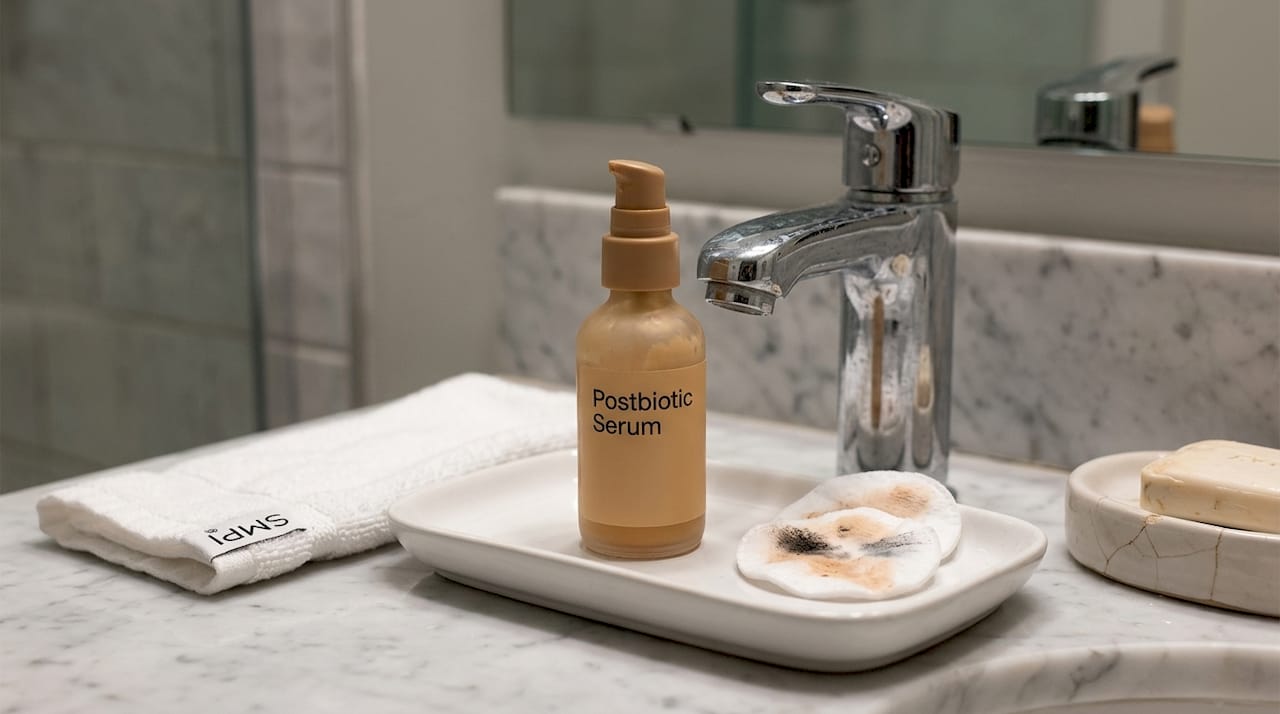
Look at what the numbers show:
| Outcome | Improvement observed | Timeframe |
|---|---|---|
| Acne lesion reduction | ~50% | 4 weeks |
| Skin hydration increase | Significant | 1-2 weeks |
| Dermal density improvement | Measurable | 4-8 weeks |
| Elasticity gains | Notable | 4-6 weeks |
| Barrier function | Rapid improvement | 1-2 weeks |
Clinical evidence from systematic reviews shows postbiotics reduce acne by approximately 50% and improve dermal density and skin hydration significantly across multiple trials.
“In clinical trials, postbiotic formulations produced visible improvements in hydration and barrier function within just one to two weeks, outpacing many traditional skincare actives.”
Pro Tip: Use your postbiotic products consistently for at least one to two weeks before judging results. The clinical postbiotic results confirm that the biggest gains come with regular, daily use rather than occasional application.
Why postbiotics are ideal for simple, effective routines
Having explored how postbiotics work, let’s look at why they’re especially well-suited for people who want effectiveness without complexity.
One of the biggest advantages of postbiotics is how easily they slot into an existing routine. You don’t need to overhaul what you’re already doing. A simple cleanser and moisturiser routine can become significantly more effective just by choosing products that include postbiotic ingredients.
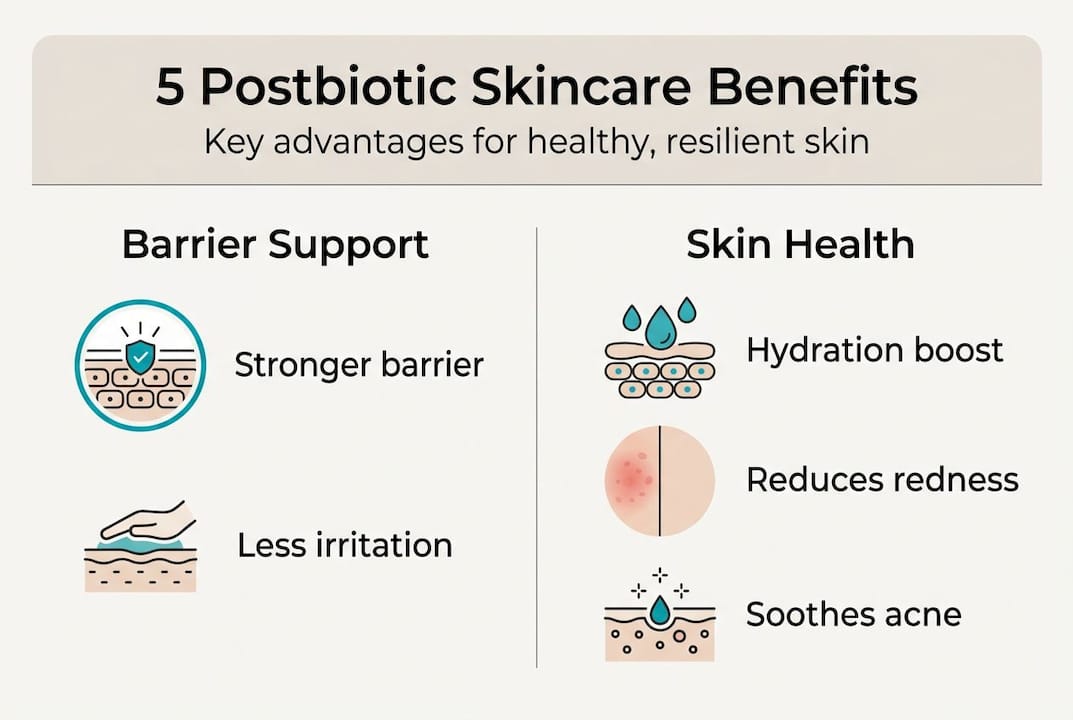
Postbiotics are gentle and suitable for sensitive, acne-prone, or ageing skin, and they complement basic cleansing and moisturising without causing irritation. That’s a big deal for anyone who has struggled to find products that don’t react badly with their skin.
Postbiotic benefits by skin concern:
- Sensitive skin: Reduces reactivity and soothes flare-ups without introducing live organisms that could cause imbalance
- Acne-prone skin: Antimicrobial action targets breakout-causing bacteria while calming the inflammation that makes acne worse
- Ageing skin: Supports collagen signalling, improves elasticity, and reduces the appearance of fine lines
- Eczema-prone skin: Reinforces the barrier that eczema compromises, reducing dryness and irritation
- Oily skin: Helps rebalance the microbiome so skin produces less excess sebum over time
For the minimalist skincare fan, postbiotics are genuinely ideal. You get multiple benefits from a single ingredient category. No stacking five different actives. No complicated routines. Just effective, targeted results.
Building a simple skin regimen around postbiotics also pairs well with simple skin detox routines that reset your skin without overwhelming it.
Experts also note that combining postbiotics with prebiotics creates a synergistic effect. The prebiotics feed your skin’s existing good bacteria, while the postbiotics deliver direct bioactive benefits. Together, they support a healthy, balanced microbiome from two angles at once.
Pro Tip: When shopping for products, look for the words ‘postbiotic,’ ‘fermented extract,’ or specific compounds like ‘lysate’ on the ingredient label. These are the clearest signals that a product is genuinely postbiotic-powered.
How to add postbiotics to your skincare routine
You know the ‘why’. Here’s exactly how to make postbiotics a practical part of your daily routine.
The good news is that adding postbiotics doesn’t mean starting from scratch. It means making smarter choices within the steps you already follow.
Step-by-step routine with postbiotics:
- Cleanse: Start with a gentle, pH-balanced cleanser. Look for one that doesn’t strip your skin’s natural oils, as a healthy barrier is essential for postbiotics to work effectively
- Hydrate: Apply a postbiotic-infused toner or essence while your skin is still slightly damp. This helps the bioactive compounds absorb more efficiently
- Treat: If you use a serum, choose one with postbiotic or fermented ingredients to target your specific concern, whether that’s acne, ageing, or dullness
- Moisturise: Lock everything in with a moisturiser that supports barrier function. Postbiotic moisturisers are especially effective here
- Protect: Finish with SPF in the morning. A healthy barrier amplifies sun protection by reducing inflammation caused by UV exposure
What to look for on product labels:
- ‘Postbiotic’ or ‘fermented extract’ listed in the key ingredients
- Lysates (like Lactobacillus ferment filtrate)
- Short-chain fatty acids or peptides derived from fermentation
- Products described as microbiome-friendly or barrier-supporting
For sensitive or reactive skin, prefer postbiotics over live probiotics because the direct bioactive delivery is gentler and more predictable. Combining them with a prebiotic step adds even more synergy without adding complexity.
If you’re building or refining your routine, these easy skincare routines are a great starting point for understanding how to layer products effectively. Consistency matters more than perfection. Use your postbiotic products daily, and give them at least two weeks before evaluating results.
Why postbiotic skincare is the underestimated secret to real results
Here’s an honest perspective: the skincare industry has spent years marketing probiotics as the microbiome miracle, but the science has quietly moved on. Postbiotics are where the real action is, and most consumers don’t know it yet.
The reason is simple. Live bacteria in a jar face enormous stability challenges. Most probiotic skincare products can’t actually deliver viable organisms to your skin. What they can deliver are the fermented byproducts, which are postbiotics. So in many cases, you’ve already been using postbiotics without realising it.
We think this is worth saying clearly: don’t chase the marketing. Chase the mechanism. Postbiotics work because they deliver bioactive compounds directly, without the instability of live cultures. For anyone who values a clean, effective, no-fuss routine, that’s a significant advantage.
Exploring skincare alternatives with this knowledge puts you ahead of the trend. Stay curious, read labels carefully, and trust the ingredients that have clinical backing rather than just clever branding.
Discover gentle, effective postbiotic skincare solutions
At SMPL SKIN, we’re passionate about ingredients that actually deliver. Everything we formulate is built around the principle that your routine should be simple, effective, and kind to your skin. Postbiotic-aligned formulations fit that philosophy perfectly.
If you’re ready to experience the difference, our Gentle Cleanser & SPF 15 Moisturiser Duo is a great place to start, combining barrier-supportive cleansing with daily protection in two easy steps. For more targeted treatment, the Pro Firm Serum delivers high-performance actives in a simple application. Browse our full range of postbiotic skincare options and find what works for your skin.
Frequently asked questions
Are postbiotics safer than probiotics in skincare?
Yes, postbiotics are generally more stable and less likely to cause irritation because they contain no live bacteria. Many ‘probiotic’ products are actually postbiotics, offering superior stability and efficacy.
How soon can I see results with postbiotic skincare?
Clinical studies report noticeable improvements, including reduced acne and increased hydration, within one to two weeks of consistent use. Empirical benchmarks show acne lesion reduction of around 50% and hydration gains exceeding 100% in trials.
Can postbiotic skincare help with sensitive or acne-prone skin?
Absolutely. Postbiotics are especially effective for sensitive, reactive, or troubled skin because of their soothing and barrier-supporting properties. Benefits for simple routines confirm they suit acne-prone, eczema, and ageing skin without causing irritation.
How do I know if a product uses postbiotics?
Look for terms like ‘postbiotic,’ ‘fermented extract,’ or specific compounds such as Lactobacillus ferment filtrate on the ingredient label. These are the clearest indicators that a product contains genuine postbiotic actives.
Recommended
- Detoxify your skin at home: simple routines for results – SMPL SKIN South Africa
- Build a healthy skin regimen: simple routines for hydration – SMPL SKIN South Africa
- 10 simple ways to boost skin hydration for glowing skin – SMPL SKIN South Africa
- Simple men’s skincare: Easy routines for hydrated skin – SMPL SKIN South Africa
- Regenerative Skincare: Science, Benefits & How to Use It – Cellure
- Facials and Skin Health: Real Benefits Explained