

The skincare world is buzzing with words like “sustainable,” “clean,” and “eco-friendly.” But for most of us, these terms create more confusion than clarity. Here’s something worth pausing on: the UK skincare market is projected to reach $4.77 billion by 2025, driven largely by sustainable demand. Yet most consumers who say they care about the environment still don’t actually buy green products. That gap between intention and action is real, and it’s exactly what we want to help you close. This guide cuts through the noise and gives you a clear, simple path to building a sustainable skincare routine that actually works.
Table of Contents
- Defining sustainable skincare: What it really means
- The attitude-behavior gap: Why do consumers struggle to buy sustainably?
- Effective ingredients that support sustainability and skin health
- Building a simple sustainable skincare routine
- Why sustainable skincare is simpler (and more impactful) than you think
- Explore simple, sustainable skincare solutions
- Frequently asked questions
Key Takeaways
| Point | Details |
|---|---|
| Sustainability defined | True sustainable skincare balances safe ingredients, minimal packaging, and transparency. |
| Simple routines win | Minimalist approaches using a few proven products deliver better skin health and impact. |
| Understand the attitude gap | Despite wanting green products, most people struggle due to costs, confusion, and skepticism. |
| Focus on ingredients | Plant-based ingredients with scientific evidence offer safe, eco-friendly skin routines. |
Defining sustainable skincare: What it really means
Sustainable skincare is not just about a leaf on the label. It covers the full picture: where ingredients come from, how products are made, what goes into the packaging, and whether the brand is honest about all of it. When we talk about sustainability in skincare, we mean routines and products that protect your skin without harming the planet or misleading you in the process.
Here are the core pillars of genuinely sustainable skincare:
- Responsibly sourced ingredients: Plant-derived and naturally occurring ingredients that are harvested without depleting ecosystems
- Minimal and recyclable packaging: Less plastic, more refillable or biodegradable options
- Transparent manufacturing: Brands that share how and where products are made
- Safe, effective formulations: Ingredients backed by science, not just marketing language
One of the biggest traps in this space is greenwashing. That’s when a brand uses eco-sounding language without any real commitment behind it. Words like “natural” or “clean” have no regulated definition in most markets, so they can mean almost anything.
“Real sustainability is not a trend. It’s a commitment to doing less harm, consistently, across every part of the product lifecycle.”
What we’ve found is that skincare simplified is often the most sustainable approach. Fewer products, better ingredients, and clear labeling. While positive attitudes exist toward plant-derived ingredients, a behavior gap still persists between what people believe and what they actually buy. Closing that gap starts with knowing what to look for.
The attitude-behavior gap: Why do consumers struggle to buy sustainably?
Most people genuinely want to make better choices. So why don’t they? A Frontiers review of 59 studies found that while consumers hold positive attitudes toward sustainable skincare, actual green purchasing remains limited. This is the attitude-behavior gap, and it affects even the most well-intentioned shoppers.
The main barriers come down to three things:
| Barrier | Why it happens | How to overcome it |
|---|---|---|
| Price | Sustainable products often cost more upfront | Focus on fewer, multi-use products |
| Unclear labeling | Vague terms like “natural” create confusion | Look for ingredient transparency |
| Skepticism | Greenwashing erodes trust | Seek third-party certifications |
Price is the most common obstacle. Sustainable products can feel like a premium purchase. But here’s the counter-intuitive truth: a minimalist routine with three well-chosen products often costs less over time than a cluttered shelf of ineffective ones. Quality over quantity is both a sustainability win and a budget win.
Labeling confusion is another real issue. When a product says “clean” or “green” without explaining what that means, it’s hard to trust. Learning to read ingredient lists is one of the most empowering skills you can build. If you want to detoxify your skin without the guesswork, start by checking for recognisable, plant-based ingredients near the top of the list.
Building a healthy skin regimen does not require a degree in chemistry. It requires consistency and a few trusted products.
Pro Tip: Look for third-party certifications like COSMOS, Ecocert, or Leaping Bunny on product packaging. These are independently verified and give you real confidence that a brand’s claims hold up.
Effective ingredients that support sustainability and skin health
At the heart of every great sustainable routine are ingredients that do the work without the waste. The good news is that many of the most effective skincare ingredients are also the most eco-friendly. Plant-derived ingredients are safe for skin, according to scientific reviews, and they’re increasingly preferred by both consumers and formulators.
Here are some standout sustainable ingredients worth knowing:
- Aloe vera: Deeply hydrating, soothing, and fast-absorbing. Widely cultivated with low environmental impact.
- Jojoba oil: Technically a liquid wax, it mimics skin’s natural sebum and has a long shelf life, reducing waste.
- Oat extract: Calms sensitive or reactive skin. Oats are a low-impact crop with minimal processing requirements.
- Squalane: Derived from sugarcane or olives, it’s a lightweight moisturiser that suits almost every skin type.
Let’s compare some common synthetic versus plant-derived alternatives:
| Ingredient type | Example | Benefit | Sustainability note |
|---|---|---|---|
| Synthetic | Mineral oil | Occlusive moisturiser | Petroleum-derived, not biodegradable |
| Plant-derived | Jojoba oil | Balances and hydrates | Renewable, biodegradable |
| Synthetic | Silicone (dimethicone) | Smooth texture | Slow to break down in environment |
| Plant-derived | Squalane | Lightweight hydration | Sugarcane-sourced, eco-friendly |
Minimalism and sustainability go hand in hand here. When you choose ingredients that do more with less, you need fewer products overall. Exploring skin hydration tips built around these kinds of ingredients is a practical first step toward a routine that’s both effective and responsible.
Building a simple sustainable skincare routine
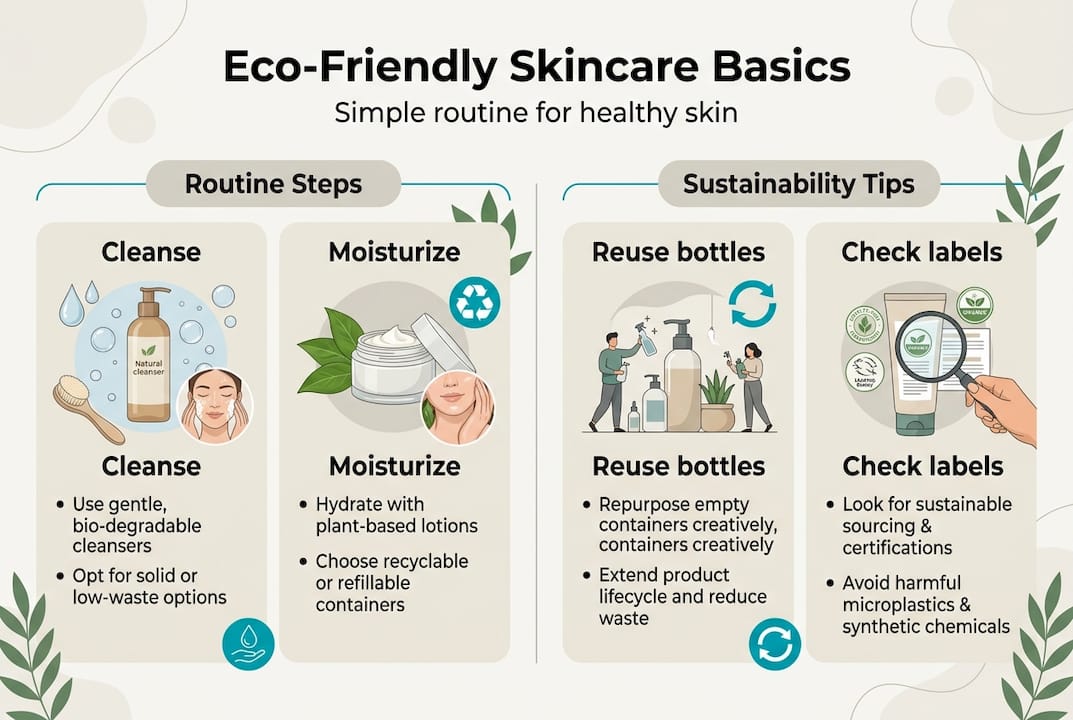
With ingredient knowledge in hand, let’s map a sustainable routine anyone can build. The goal is not to overhaul your entire bathroom cabinet overnight. It’s to make intentional, small shifts that add up over time.
Here’s a step-by-step approach:
- Start with a gentle cleanser. Choose one that removes dirt and excess oil without stripping your skin’s natural barrier. Look for plant-based surfactants and minimal fragrance.
- Add an SPF moisturiser. Sun protection is non-negotiable. A moisturiser with built-in SPF simplifies your routine and reduces the number of products you need.
- Introduce a targeted serum. A serum with active ingredients like niacinamide, vitamin C, or hyaluronic acid addresses specific concerns without layering on unnecessary steps.
- Evaluate packaging. Choose products in glass, aluminium, or clearly marked recyclable plastic where possible.
- Track what you use. If a product sits untouched for weeks, it’s not serving your routine or the planet.
“A routine that you actually follow consistently will always outperform a complicated one you abandon after two weeks.”
The UK market’s projected growth reflects a clear consumer shift toward minimalist, sustainable routines. You don’t need ten steps. You need the right three. For practical guidance on keeping things straightforward, easy men’s skincare routines are a great reference point for anyone starting fresh.
Pro Tip: Keep a simple notes app list of the products you finish completely. Those are the ones worth repurchasing. Empty bottles tell you what your skin actually needed.
Why sustainable skincare is simpler (and more impactful) than you think
Here’s our honest take: the skincare industry often profits from complexity. More steps, more products, more eco-labels on things that don’t need them. We’ve seen it, and we think it’s worth calling out.
The most impactful sustainable routines we’ve come across are also the simplest. Three products, used consistently, with ingredients you can pronounce and packaging you can recycle. That’s it. The environmental benefit of cutting your routine from eight products to three is not small. Less production, less packaging, less waste.
The industry wants you to believe that more is better. We disagree. Real skin health comes from consistency and quality, not volume. And real sustainability comes from buying less, not just buying “green.”
We’ve found that exploring skincare alternatives that prioritise simplicity over spectacle leads to better outcomes for your skin and a lighter footprint overall. Less really is more, and that’s not a cliché. It’s the most practical skincare advice we can offer.
Explore simple, sustainable skincare solutions
If you’re ready to put this into practice, we’ve made it easy. At SMPL SKIN, we build products around the idea that your skin deserves effective, honest care without the clutter.
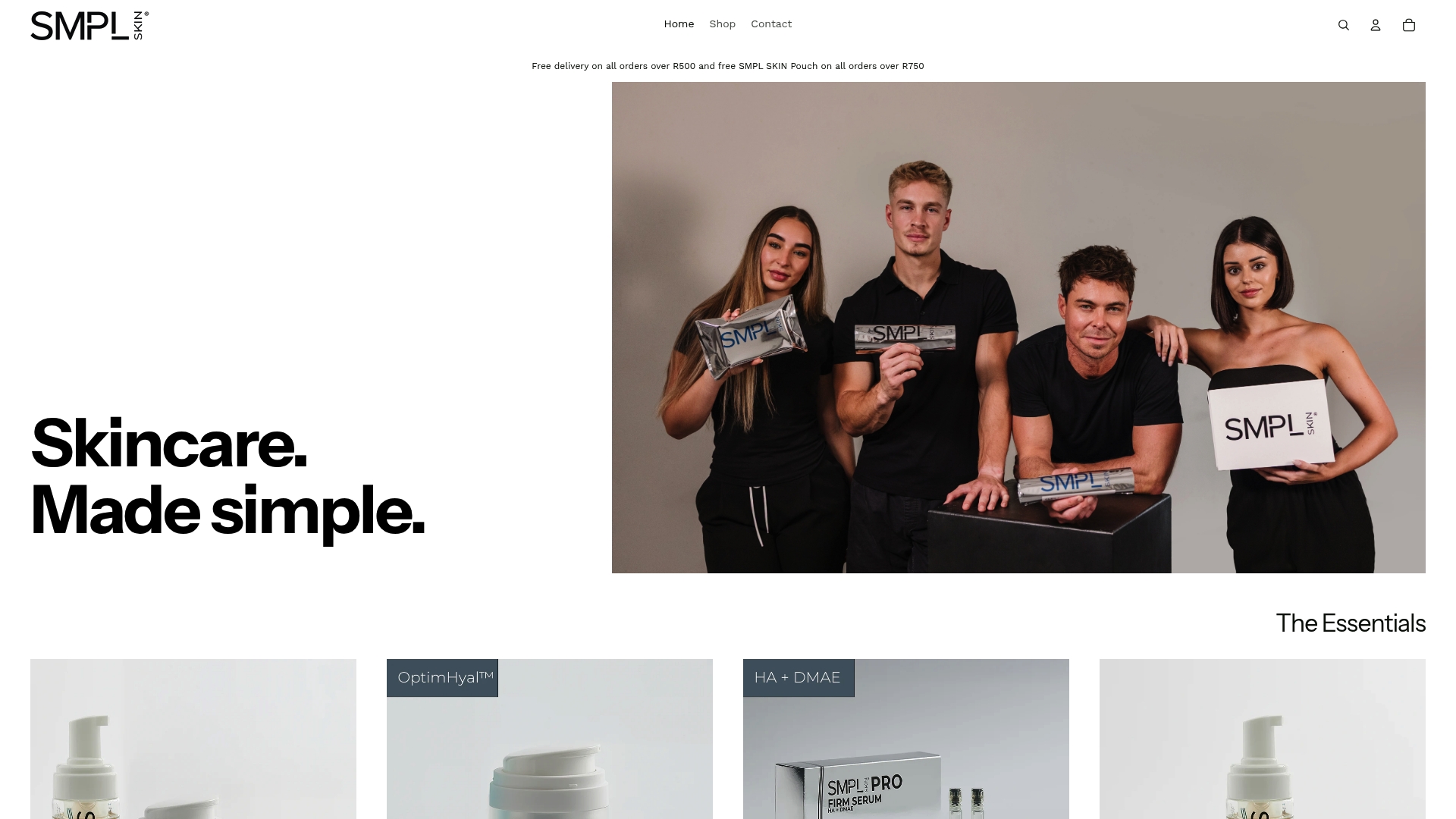
Our cleanser and moisturiser duo is a great starting point. It covers the two most essential steps in any routine: clean skin and daily sun protection, in one simple bundle. For those looking to go a step further, our pro firm serum delivers targeted results with a clean, plant-forward formulation. Every product we offer is designed to do more with less, because that’s what sustainable skincare actually looks like in practice.
Frequently asked questions
What makes a skincare product sustainable?
A sustainable skincare product uses responsibly sourced ingredients, minimal packaging, and transparent manufacturing practices. Plant-derived ingredients are considered safer and more eco-friendly than many synthetic alternatives.
How can I tell if a company is greenwashing?
Look for clear ingredient lists, scientific backing, and third-party certifications rather than vague claims. The gap between attitudes and behavior often stems from unclear or misleading labeling that makes it hard to verify real sustainability.
What is an easy sustainable skincare routine for beginners?
A minimalist routine includes a gentle cleanser, an SPF moisturiser, and a serum, each with safe, plant-derived ingredients and low-waste packaging. Minimal routines built with effective, eco-friendly ingredients are one of the strongest trends in the market right now.
Why is there a gap between consumer intentions and purchases?
Barriers like price, confusing labels, and skepticism about brand claims lead many people to abandon sustainable options despite genuinely wanting to make better choices. Despite positive attitudes, green purchasing is consistently limited by these practical obstacles.
Recommended
- Detoxify your skin at home: simple routines for results – SMPL SKIN South Africa
- Build a healthy skin regimen: simple routines for hydration – SMPL SKIN South Africa
- Simple men’s skincare: Easy routines for hydrated skin – SMPL SKIN South Africa
- 10 simple ways to boost skin hydration for glowing skin – SMPL SKIN South Africa
- Why Simple Skincare Matters for Modern Men – NORML