

TL;DR:
- A simple 4-step routine effectively improves skin hydration and protection.
- Focus on essential products: cleanser, serum, moisturizer, and SPF for best results.
- Consistency and proper application order are key to skincare success.
You splash water on your face, grab three different serums, two moisturisers, and an SPF, and somehow still walk out the door feeling like your skin is tight and dull. Sound familiar? Overly complex routines are not just hard to follow; they can actually irritate your skin barrier and make hydration worse. Dermatologists consistently recommend a focused, minimal approach: cleanse, hydrate, protect. That’s it. In this guide, we walk you through a simple, step-by-step morning skincare routine built around hydration and protection, so your skin feels good and your mornings stay stress-free.
Table of Contents
- What you need for a minimalistic morning skincare routine
- Step-by-step morning routine: Execution and application order
- Hydration essentials: Ingredients that make a difference
- Protect and personalise: SPF and tailoring to your skin type
- Why minimalism outperforms complex routines: A skincare truth
- Elevate your skincare with minimal, effective products
- Frequently asked questions
Key Takeaways
| Point | Details |
|---|---|
| Minimal steps, maximum impact | A 3–5 step morning routine delivers better results and is easier to stick with than complex regimens. |
| Hydration ingredients matter | Hyaluronic acid, glycerin, ceramides, and niacinamide are proven to boost skin moisture and support barrier health. |
| SPF is essential daily | Applying broad-spectrum SPF every morning is clinically proven to prevent up to 90% of visible aging. |
| Customize for your skin type | Adapt cleanser, serum, and moisturizer formulas to suit oily, dry, or sensitive skin for optimal results. |
What you need for a minimalistic morning skincare routine
Now that you understand why a simple approach works, let’s see exactly what you’ll need to get started.
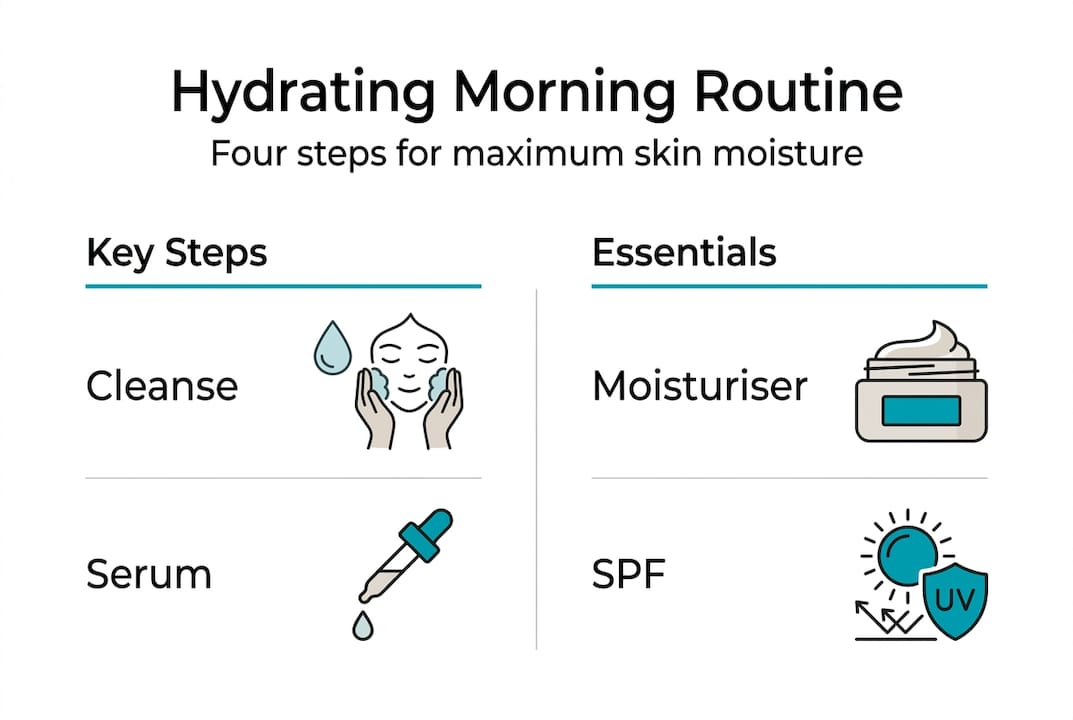
A great morning routine does not need a shelf full of products. In fact, a 4-step routine is all most people need to see real results. According to Cleveland Clinic, a standard morning routine covers 3 to 5 steps: cleanser, serum, moisturiser, and SPF. Each step has a clear purpose, and cutting the clutter means your skin gets exactly what it needs without the overwhelm.
Here are the four essentials and why each one earns its place:
- Gentle cleanser: Removes overnight sebum and prepares your skin to absorb what comes next. Look for a pH-balanced, soap-free formula.
- Hydrating serum: Delivers concentrated active ingredients deep into the skin. This is where hydration ingredients like hyaluronic acid (HA), glycerin, and niacinamide do their best work.
- Lightweight moisturiser: Locks in the serum and reinforces your skin barrier with ceramides and glycerin.
- Broad-spectrum SPF: The final, non-negotiable shield against UV damage and premature ageing.
When choosing products, keep your eye on a few key ingredients. Hyaluronic acid draws moisture into the skin. Glycerin softens and soothes. Ceramides repair and protect the skin barrier. Niacinamide (vitamin B3) reduces redness and evens skin tone. These four ingredients form the backbone of a hydration-focused morning routine that actually delivers visible results.
To help you get started without overspending, here’s a quick comparison:
| Step | Budget option | Premium option |
|---|---|---|
| Cleanser | Simple Kind to Skin Gel Wash | SMPL SKIN Gentle Cleanser |
| Serum | The Ordinary Hyaluronic Acid 2% | SMPL SKIN PRO Firm Serum |
| Moisturiser | Neutrogena Hydro Boost | SMPL SKIN SPF15 Daily Moisturiser |
| SPF | Nivea Sun Face Fluid SPF50 | SMPL SKIN SPF15 Daily Moisturiser |
Both budget and premium options can work well. What matters most is consistency and ingredient quality, not price.
Pro Tip: Always choose fragrance-free formulations, especially if your skin is sensitive or reactive. Fragrance is one of the most common causes of contact dermatitis and can undermine an otherwise solid routine.
Step-by-step morning routine: Execution and application order
After gathering your products, here’s a simple, evidence-based sequence for your morning skincare routine.
The order you apply your products matters more than most people realise. Applying a thick moisturiser before a serum, for example, blocks the serum from reaching your skin cells. The golden rule, as noted by Cosmopolitan’s beauty experts, is to apply thinnest to thickest and wait 30 to 60 seconds between layers for proper absorption.
Here is your step-by-step morning sequence:
- Gentle cleanse (60 seconds): Use lukewarm water and a small amount of cleanser. Massage gently in circular motions, then rinse. Pat dry with a clean towel. Do not rub.
- Hydrating serum (30 seconds to apply, 60 seconds to absorb): Apply 2 to 3 drops to your fingertips and press gently into damp skin. Damp skin helps HA and glycerin pull in more moisture. Let it absorb before moving on.
- Lightweight moisturiser (30 seconds): Apply a pea-sized amount and smooth outward from the centre of your face. This seals in the serum and adds a second layer of hydration. Check out these hydration routine basics for more guidance.
- SPF (last step, always): Apply generously to your face and neck. SPF goes on last because it needs to sit on top of your skin to work correctly. Wait 2 to 3 minutes before applying makeup.
Here is a quick reference for the full sequence:
| Step | Product texture | Wait time |
|---|---|---|
| Cleanser | Gel or foam | Rinse off |
| Serum | Watery or lightweight gel | 30 to 60 seconds |
| Moisturiser | Lotion or cream | 30 seconds |
| SPF | Fluid or gel | 2 to 3 minutes |
Following this product order ensures each layer absorbs fully and does its job without interference.

Pro Tip: Short on time? Use a moisturiser with built-in SPF to combine two steps into one. This cuts your routine to three steps without sacrificing protection or hydration.
Hydration essentials: Ingredients that make a difference
Understanding the order is one part; knowing which ingredients power your skin’s hydration will help you choose the best products.
Not all hydrating ingredients work the same way. Some pull water into the skin, others lock it in, and some strengthen the barrier so moisture does not escape. Knowing the difference helps you pick products that actually work for your skin type.
Here is a quick breakdown of the key players:
- Hyaluronic acid (HA): A humectant that binds up to 1000x its weight in water. Clinical studies show a 7 to 30% improvement in skin hydration with regular use. Best for all skin types.
- Glycerin: Another humectant that softens skin and draws moisture from the air. Affordable, gentle, and effective for sensitive skin.
- Ceramides: Lipids that repair and reinforce the skin barrier. Especially beneficial for dry and eczema-prone skin.
- Niacinamide: Reduces redness, minimises pores, and improves uneven skin tone. Works well for oily and combination skin types.
Clinical research published in Nature also confirms that HA improves skin elasticity alongside hydration, making it one of the most versatile ingredients in any routine.
“Hydration is the foundation of healthy skin. Without it, even the most advanced treatments will underperform. A simple, consistent routine built around proven humectants and barrier-repair ingredients is what most people actually need.” — Leading dermatologist consensus on skin hydration
When selecting your serum or moisturiser, look for products that combine at least two of these ingredients. A serum with HA and niacinamide, paired with a ceramide-rich moisturiser, covers all your bases without overcomplicating things. Explore more ways to boost hydration if you want to go deeper on ingredient choices.
Practical advice: always patch-test a new product on your inner arm for 24 hours before applying it to your face. This is especially important if your skin is reactive or sensitive.
Protect and personalise: SPF and tailoring to your skin type
With hydration covered, protecting your skin and adjusting your routine to your specific needs is the final step.
SPF is not optional. Full stop. Daily SPF use reduces skin cancer risk and prevents up to 90% of visible ageing caused by UV exposure. UVA rays penetrate clouds and windows, which means indoor days are not SPF-free days. Apply a broad-spectrum SPF30 or higher every single morning as the last step in your routine.
But here’s the thing: one routine does not fit all skin types. Here’s how to personalise each step:
- Oily skin: Use a gel-based or water-light cleanser, a niacinamide serum, and a gel or lightweight formula moisturiser. Choose a mattifying or fluid SPF to avoid shine.
- Dry skin: Use a cream or oil-based cleanser, a HA-rich serum, and a ceramide-heavy moisturiser. Opt for a hydrating SPF formula.
- Sensitive skin: Skip actives like retinol or AHAs in the morning. Stick to gentle, fragrance-free products. Read more about solutions for sensitivity to find what works for reactive skin.
“The morning routine should be about protection and hydration, not treatment. Save your actives for the evening when your skin is in repair mode.” — Dermatology consensus on AM routine design
One common debate: should you cleanse in the morning at all? If your skin is dry or not particularly oily, a simple water rinse is enough. A full cleanse is more important for oily or acne-prone skin types. Tailor it to what your skin actually needs, not what a 10-step routine tells you to do.
Pro Tip: To prevent SPF pilling (where SPF balls up over your moisturiser), let your moisturiser absorb fully before applying SPF. Press SPF gently into the skin rather than rubbing it in. Check out this routine sequencing guide for more layering tips. You can also explore our daily SPF moisturiser for a two-in-one option that simplifies this step.
Why minimalism outperforms complex routines: A skincare truth
Now that you know how to build a routine, let’s explore why simplicity is so effective in real life.
We have seen it time and again: people invest in 8-step routines, use them for a week, and then abandon the whole thing because it takes too long. The irony is that a complex routine often does more harm than good. Layering too many actives disrupts your skin barrier, causes irritation, and makes it nearly impossible to identify which product is actually working.
Research from Cleveland Clinic confirms that consistent minimal routines outperform complex ones for both adherence and barrier health. Hydration improvements typically appear within 2 to 4 weeks of consistent use. That is not a long wait for real, visible results.
Consistency is the real secret. A 4-step routine you do every single morning beats a 10-step routine you do twice a week. Your skin responds to regularity, not volume. We also recommend exploring eco-friendly routines as a way to simplify further and reduce waste.
Pro Tip: Track your skin’s progress by taking a photo in the same lighting every two weeks. It is the most honest way to see what is actually working, and it keeps you motivated to stay consistent.
Elevate your skincare with minimal, effective products
Ready to put your new knowledge into action? Discover how thoughtfully designed products can make your mornings even easier.
At SMPL SKIN, we built our range around exactly this kind of routine. Simple steps, clean ingredients, and real hydration. Our cleanser and moisturiser duo covers two of your four steps in one convenient bundle, making it easy to start without the guesswork.
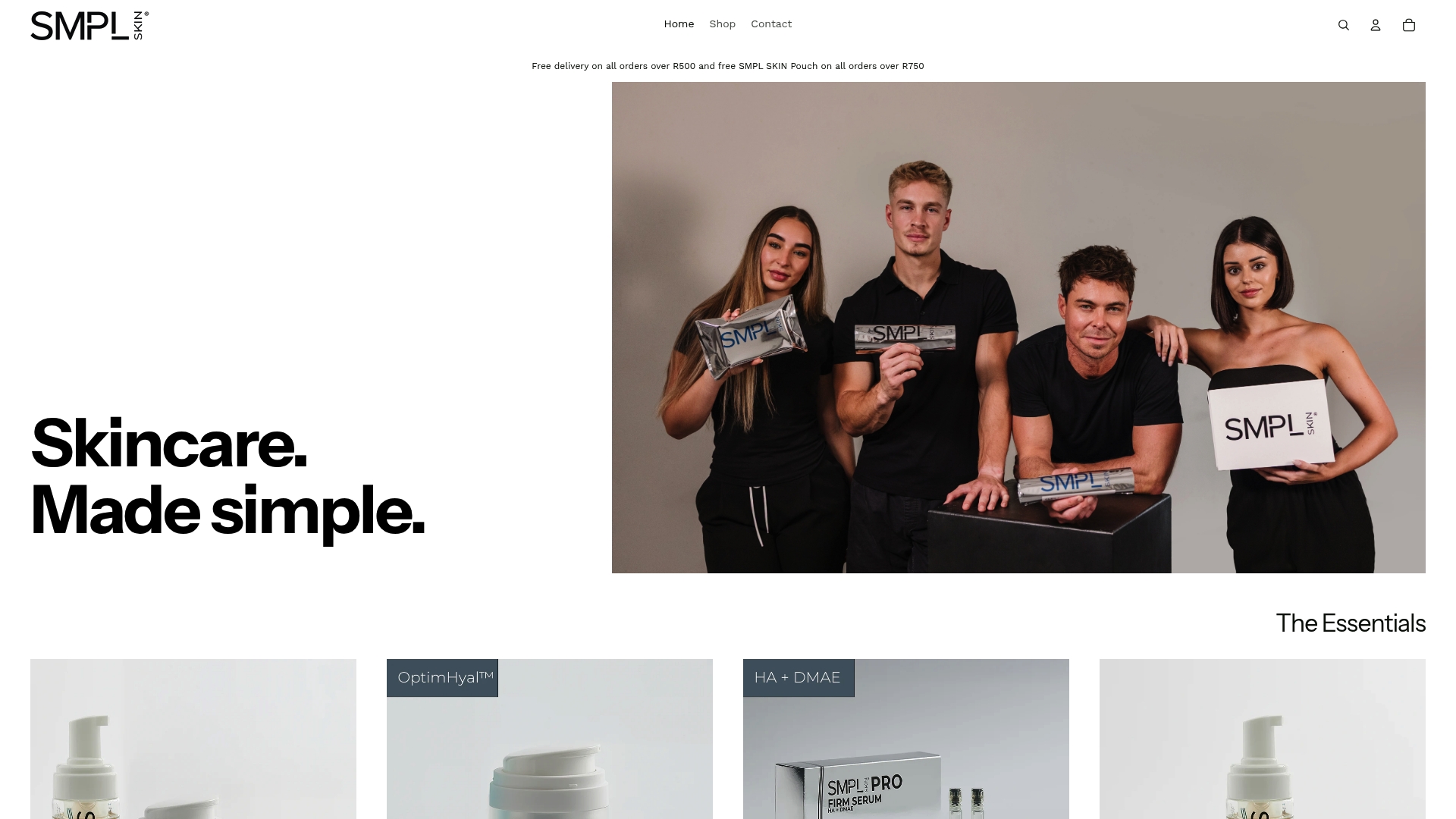
For your serum step, the SMPL SKIN PRO Firm Serum delivers concentrated hydration with targeted ingredients designed for at-home use. No complexity, no confusion. Just effective skincare that fits into your morning without slowing you down. Browse the full SMPL SKIN range and find the products that match your skin type and goals.
Frequently asked questions
How many steps should a morning skincare routine include?
A minimal morning routine generally covers 3 to 5 steps: cleanser, serum, moisturiser, and SPF. Four steps is the sweet spot for most people.
Can I skip cleansing my face in the morning?
Yes, if your skin is dry or not oily, a water rinse is often enough. Some dermatologists recommend tailoring your morning cleanse to your skin type rather than following a one-size-fits-all rule.
Why is SPF necessary even when indoors?
UVA rays penetrate glass windows and cause both skin ageing and DNA damage. Daily SPF use reduces skin cancer risk and prevents the majority of UV-related visible ageing, regardless of whether you step outside.
What’s the best order to apply skincare products in the morning?
Always apply thinnest to thickest: cleanser first, then serum, then moisturiser, with SPF as the final step to ensure maximum absorption and protection.
How soon will I see results from a minimal morning skincare routine?
Most people notice visible hydration improvements within 2 to 4 weeks of consistent daily use. Texture and tone improvements may take a little longer, around 8 to 12 weeks.
Recommended
- Skincare routine tips: 4 steps to a daily glow – SMPL SKIN South Africa
- 10 simple ways to boost skin hydration for glowing skin – SMPL SKIN South Africa
- How to achieve healthy skin with a simple routine – SMPL SKIN South Africa
- Simple men’s skincare: Easy routines for hydrated skin – SMPL SKIN South Africa
- The Role of Humectants in Skincare: Why Your Skin Craves Moisture – ZenChemy Lab