

TL;DR:
- Effective skin formulations focus on the right ingredients delivered in optimal concentrations and stable packaging, not on quantity.
- Choosing well-balanced, scientifically supported actives like niacinamide and retinol within proper ranges yields real results over time, with formulation quality being essential.
Most people assume the longer an ingredient list, the more effective the product. That belief is costing them money and possibly their skin health. The truth is that great skin formulations are not about quantity. They are about the right ingredients, in the right concentrations, delivered in the right way. This article breaks down how formulations actually work, which ingredients have real science behind them, and how you can read a label and know whether a product is worth your time and money.
Table of Contents
- Key takeaways
- What skin formulations are actually made of
- Ingredients with real science behind them
- The challenges that affect formulation quality
- How to choose and layer products smartly
- My honest take on skincare formulation marketing
- Simple formulations that actually protect your skin
- FAQ
Key takeaways
| Point | Details |
|---|---|
| Formulation quality matters | Delivery systems are as important as active ingredients for real skin results. |
| Proven actives have optimal ranges | Retinol, niacinamide, and hydroxy acids each work best within specific concentration windows. |
| Stability affects efficacy | Unstable ingredients like vitamin C lose potency without proper packaging and preservation. |
| Layering order counts | Applying products in the wrong order reduces absorption and may cause unnecessary irritation. |
| Simplicity outperforms complexity | Fewer, well-chosen ingredients in quality formulations consistently beat overcrowded product lists. |
What skin formulations are actually made of
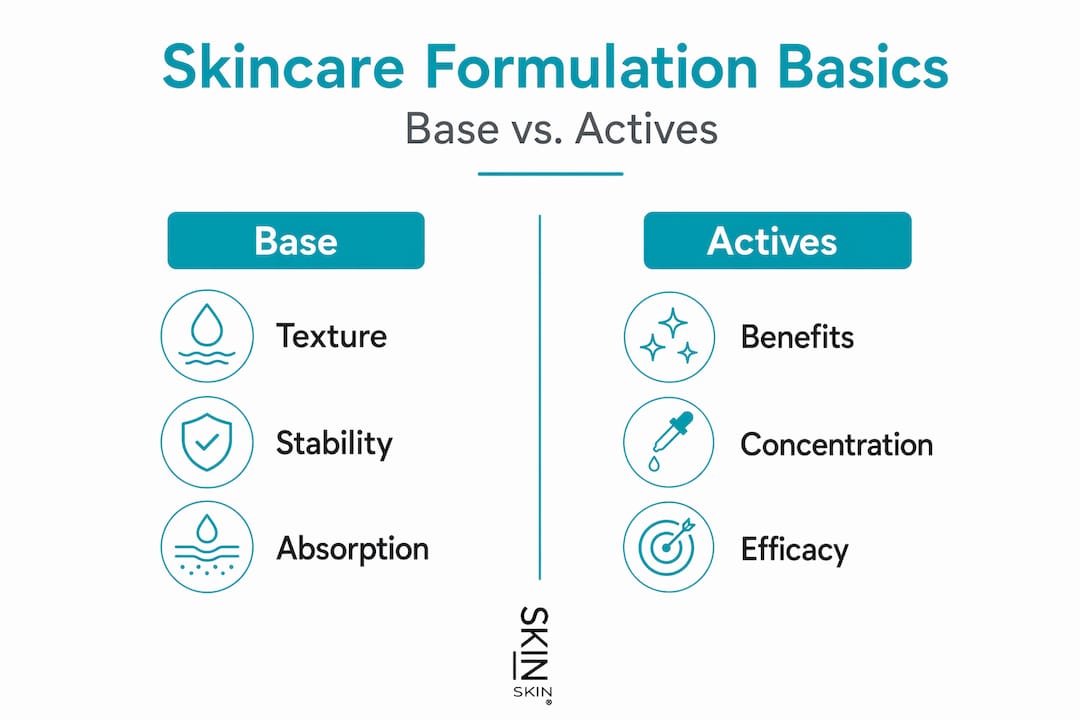
Understanding a product starts with understanding its structure. Every skincare formulation contains two broad ingredient categories: actives and inactives. Actives are the ingredients that directly change or improve your skin. Inactives, often called the base or vehicle, carry and deliver those actives to where they need to go.
The base is not just filler. It determines how well actives penetrate, how stable they remain, and how the product feels on your skin. You can learn more about how actives function and what concentrations actually produce results before committing to any product.
Emulsion types and why they matter
Most skin care products are emulsions, which are stable mixtures of water and oil held together by emulsifiers. There are two main types. Oil-in-water emulsions feel lighter, absorb faster, and suit oily or combination skin. Water-in-oil emulsions are richer and more occlusive, meaning they lock in moisture more effectively.
This distinction matters because water-in-oil serums help key actives pass the skin’s outer layer more effectively than lighter formats. If you are using a niacinamide serum and not seeing results, the emulsion type could be the reason.
Here is what the base of a well-made formulation needs to do:
- Stabilise actives so they do not degrade before you open the bottle
- Control penetration depth so actives reach the right layer of skin
- Maintain skin comfort by balancing hydration without clogging pores
- Extend shelf life through preservatives and antioxidants that protect ingredient integrity
Pro Tip: When a serum or moisturiser feels thin and watery but claims strong active percentages, check the packaging. Airless pumps and opaque containers indicate the brand is protecting ingredient stability, which is a good sign.
Ingredients with real science behind them
Not every ingredient earns its place. The ones below have consistent research support and show up in the best skin formulations for good reason.
| Ingredient | Primary benefit | Effective OTC range | Best product format |
|---|---|---|---|
| Retinol | Anti-aging, cell turnover | 0.25% to 1.0% | Serum, night cream |
| Niacinamide | Barrier repair, brightening | 2% to 5% | Serum, moisturiser |
| Hyaluronic acid | Surface hydration | 0.1% to 2% | Serum, hydrogel |
| Glycerin | Humectant, moisture draw | 3% to 10% | Moisturiser, toner |
| AHA (glycolic/lactic) | Exfoliation, texture | 5% to 10% | Toner, exfoliant |
| Salicylic acid (BHA) | Pore clearing, anti-acne | 0.5% to 2% | Cleanser, toner |
| Vitamin C | Antioxidant, brightening | 10% to 20% | Serum |
| Peptides | Collagen support | Variable | Serum, cream |
Retinol OTC products perform comparably to prescription tretinoin for boosting collagen and skin turnover when used consistently. It is ten times less potent than tretinoin, but a 0.25% to 1% serum used three to four nights a week delivers real anti-aging results over several months.
Niacinamide is one of the most underrated ingredients in anti-aging skin formulas. At 2% to 5%, it strengthens the skin barrier, reduces redness, boosts ceramide production, and visibly improves tone and texture within 8 to 12 weeks. It is also one of the most stable actives in formulations, which means it rarely degrades before it reaches your skin.
Hyaluronic acid gets more credit than it deserves. Its large molecule size prevents deep skin penetration, so it primarily moisturises the surface rather than the deeper layers. Glycerin is equally effective as a humectant and often less expensive. Both are useful. Neither is magic.
Pro Tip: If you want to start with one proven active, niacinamide is the easiest to incorporate because it plays well with almost every other ingredient and rarely causes irritation at standard concentrations.
The challenges that affect formulation quality
Even the right ingredients can fail in a badly made product. This is where formulation science becomes as critical as ingredient selection.
Stability and shelf life
Vitamin C is the classic example of a powerful active that is notoriously hard to stabilise. Vitamin C oxidizes on exposure to air, light, and heat, losing its brightening activity quickly. If your vitamin C serum has turned yellow or orange in the bottle, it has already degraded. A well-formulated vitamin C product uses encapsulation technology and comes in airless, tinted packaging. Stability and shelf life depend heavily on packaging choices and antioxidant presence, and these factors often determine whether actives remain effective at point of use.
Irritancy and compatibility
Not all exfoliants cause the same level of irritation. LHA is preferred over salicylic acid for acne-prone skin because of better pore affinity and less surface irritation at concentrations between 0.4% and 1%. Effective OTC concentrations of LHA typically fall between 0.1% and 1% to deliver benefits without stripping the skin.
Ingredient compatibility is something most consumers do not think about. Some pairings enhance results. Others cancel each other out or cause irritation. Here is a practical breakdown:
- Vitamin C and niacinamide: Once thought to be incompatible, these can actually coexist in modern formulations. Earlier studies used very high concentrations that are not found in real products.
- Retinol and AHAs: Both increase cell turnover. Using them together without building tolerance first can lead to significant sensitivity and peeling.
- Peptides and vitamin C: Vitamin C’s acidic pH can degrade certain peptides. Products that combine these need careful buffering to preserve both actives.
- Hyaluronic acid and occlusives: Apply HA first while skin is slightly damp, then seal with a moisturiser. Without the occlusif layer, HA can actually pull moisture out of your skin in dry climates.
The synergy between actives must be carefully balanced, particularly for sensitive skin where tolerance thresholds are lower. If you experience redness, tightness, or breakouts when introducing a new product, it is likely a compatibility or concentration issue rather than an allergy.
How to choose and layer products smartly
Knowing the science is one thing. Applying it to your daily routine is another. Here is how to approach building a routine around effective skin formulations.
- Read the ingredient list from the top down. Ingredients are listed in descending order by concentration. If your key active appears near the bottom, the product likely contains very little of it.
- Check the concentration. Not every brand lists percentages, but many do. Cross-reference with the effective ranges in the table above to confirm the product can actually deliver.
- Layer from thinnest to thickest. Water-based serums go first. Moisturisers go second. Oils and occlusives go last. This order protects absorption and prevents lighter formulas from being blocked.
- Introduce one new active at a time. Patch-test new products and give your skin two to four weeks before judging results or adding anything else.
- Match formulations to your skin concern. Oily or acne-prone skin benefits from targeted skin treatments using lightweight, water-based formats. Dry or mature skin benefits from richer emulsions that support the skin barrier and lock in hydration.
If you have sensitive skin, building a routine requires extra care. Many products marketed for sensitive skin still contain potentially irritating fragrances, alcohols, or high concentrations of actives. A gentle skincare routine focuses on barrier support first, then introduces actives slowly and at the lower end of effective concentration ranges.
AHAs effective OTC range between 5% and 10% across product types like cleansers, toners, and serums. Starting at the lower end of that range and using them two to three times per week is smarter than jumping straight to a high-concentration daily formula.
My honest take on skincare formulation marketing
I have spent a long time watching the skincare industry do what it does best: make simple science sound complicated, then sell solutions to the confusion it created.
The biggest mistake I see people make is chasing ingredients instead of formulations. Someone reads about peptide potential and immediately buys a peptide serum without asking whether the formulation actually allows those peptides to penetrate. Peptides face real challenges with skin absorption, and real-world efficacy is variable depending heavily on formulation quality. The ingredient alone tells you nothing.
My honest opinion is that most people would see better results from a well-formulated three-step routine than from a cluttered shelf of trending products. Marketing claims around ingredients frequently exaggerate efficacy. The skin’s natural barrier actively limits what gets in, which means the delivery vehicle and formulation approach matter as much as the ingredient itself. Patience is the other undervalued factor. Most actives require 8 to 12 weeks of consistent use before results are visible. Switching products every few weeks because you are not seeing overnight changes is the fastest way to waste money and disrupt your skin barrier.
Emerging actives like peptides are genuinely interesting. I am optimistic about where the science is going. But I would not pay a premium for them unless the product clearly demonstrates sophisticated delivery technology and third-party testing to back the claims.
Start simple. Choose proven actives at effective concentrations. Give them time. That approach has never failed.
— Werner
Simple formulations that actually protect your skin
If reading about effective formulation has you wondering where to start, we have kept it simple for you. Smplskin’s Gentle Cleanser and SPF 15 Moisturiser Duo was developed with dermatologist input and built around the principles in this article: proven ingredients, appropriate concentrations, and formulations designed for real skin tolerance. The cleanser uses German Chamomile and Cucumber Extract to soothe while cleansing without stripping the barrier. The SPF 15 moisturiser delivers daily hydration and sun protection in a single lightweight formula. No unnecessary complexity. Just a clean, effective starting point for anyone who wants results without the guesswork. Shop the duo and build your routine on a foundation that works.
FAQ
What are skin formulations in skincare?
Skin formulations are products made by combining active ingredients with a base or delivery vehicle to achieve a specific skin benefit. The formulation determines how actives are absorbed, stabilised, and tolerated by skin.
Which ingredients should every good formulation include?
The best skin formulations for most people include at least one proven active such as niacinamide, retinol, or a hydroxy acid, combined with humectants like glycerin or hyaluronic acid and a stable delivery base appropriate for the skin type.
Why does vitamin C go bad so quickly?
Vitamin C oxidizes when exposed to air, light, and heat, which rapidly degrades its brightening activity. Look for formulations in airless, opaque packaging and discard any product that has turned orange or brown.
Is hyaluronic acid as effective as brands claim?
Hyaluronic acid is a useful surface humectant but its large molecule size limits deep penetration, so it moisturises the outer skin layer rather than deeper tissues. Glycerin is equally effective and often more affordable in well-formulated hydrating skin solutions.
How long before skin formulations show results?
Most proven actives require consistent use for 8 to 12 weeks before visible changes appear. Switching products too quickly prevents any single formulation from completing its full cycle of action on the skin.
Recommended
- Skin health explained: simple science for better results – SMPL SKIN South Africa
- How to layer skincare products for effective hydration – SMPL SKIN South Africa
- Why serum goes before moisturizer for hydrated skin – SMPL SKIN South Africa
- Understand skin sensitivity: simple solutions for hydration – SMPL SKIN South Africa