

TL;DR:
- Sensitive skin reacts easily to weather, products, or stress, but a simple, gentle routine can reduce flare-ups. Using barrier-repair ingredients like ceramides, hyaluronic acid, and niacinamide helps restore calm, while avoiding fragrances and irritants prevents further reactions. Consistent, patience-driven care and professional support when necessary can improve skin resilience over time.
Sensitive skin does not need much to react. A change in weather, a new product with a single unfamiliar ingredient, or even a stressful week can leave your face red, stinging, or flaking. If that sounds familiar, you are not alone, and more importantly, you are not stuck with discomfort forever. A gentle, thoughtfully built routine can restore calm, strengthen your skin barrier, and reduce how often those frustrating flare-ups happen. This guide walks you through exactly what sensitive skin is, which ingredients to trust, and how to build a simple daily routine that actually works.
Table of Contents
- What is sensitive skin and common triggers
- Key ingredients and products for sensitive skin
- Step-by-step routine: morning and night care
- Troubleshooting: when and how to seek extra help
- What most advice gets wrong about treating sensitive skin
- Discover gentle care options for your sensitive skin
- Frequently asked questions
Key Takeaways
| Point | Details |
|---|---|
| Avoid harsh triggers | Fragrances, alcohol, and overuse of products are leading causes of reactions. |
| Simplify your routine | A gentle cleanser, moisturizer, and mineral sunscreen form the ideal foundation. |
| Choose barrier-repair ingredients | Look for ceramides, hyaluronic acid, and niacinamide in your skincare. |
| Patch test everything | Always trial new products on a small area before full use to prevent flare-ups. |
| Seek help if needed | See a dermatologist if symptoms persist beyond a week for advanced care. |
What is sensitive skin and common triggers
Sensitive skin is not a medical diagnosis. It is a skin type that reacts more easily than average to products, environmental changes, or internal stress. If your face frequently feels tight, itchy, or looks flushed after washing or applying a product, your skin is likely sensitive. That reaction is your skin’s barrier sending a clear signal: something is off.
The symptoms vary from person to person, but the most common include:
- Burning or stinging after applying products
- Persistent redness or flushing
- Tingling, especially around the nose and cheeks
- Flaking or tightness after cleansing
- Breakouts or bumps with no obvious cause
What triggers these reactions? The list is longer than most people expect. Harsh products, fragrances, alcohol, and irritants are the most common culprits. But weather changes, over-washing, hot water, and even emotional stress can push sensitive skin into overdrive. The tricky part is that triggers are personal. What irritates your skin may not bother someone else at all.
Starting to understand your own patterns is the most practical step you can take. One easy way to do this is by reading about understanding skin sensitivity so you know what to look for. From there, you can begin connecting specific products or situations to your skin’s reactions.
Keeping your routine minimal reduces your risk of irritation significantly. The fewer products on your skin, the fewer chances there are for a reaction. Think of it this way: every new product is an experiment. The more experiments running at once, the harder it is to find the one causing trouble.
Pro Tip: Keep a simple skin diary for one week. Write down what you apply each morning and evening, and note any reactions. You will spot patterns faster than you think.
Key ingredients and products for sensitive skin
With triggers in mind, the next step is selecting ingredients and products that soothe instead of irritate. This is where many people go wrong. They look for the most advanced serum or the trendiest formula, when what sensitive skin actually needs is straightforward, barrier-loving ingredients.
The science is clear on this. Ceramides, hyaluronic acid, and niacinamide are highly recommended for sensitive skin. They repair the skin barrier, attract and retain moisture, and reduce redness without causing irritation. Ceramides are essentially the building blocks of your skin barrier. Hyaluronic acid pulls moisture into the skin. Niacinamide (vitamin B3) calms inflammation and evens tone gently.
On the other side, certain ingredients are consistently problematic for reactive skin. Fragrance, alcohol, essential oils, and synthetic preservatives are among the most common offenders. Even natural-sounding ingredients like tea tree oil or citrus extracts can cause reactions in sensitive skin.
Here is a quick reference to guide your ingredient choices:
| Ingredient | Role | Recommendation |
|---|---|---|
| Ceramides | Barrier repair | Highly recommended |
| Hyaluronic acid | Deep hydration | Highly recommended |
| Niacinamide | Calms inflammation | Highly recommended |
| Glycerin | Moisture retention | Safe and gentle |
| Fragrance (synthetic) | Scent | Avoid |
| Denatured alcohol | Texture agent | Avoid |
| Essential oils | Scent or active | Use with caution or avoid |
| AHAs/BHAs | Exfoliation | Introduce slowly or skip |
For product types, the same minimalist principle applies. A mild, pH-balanced, non-foaming cleanser preserves your natural oils and avoids stripping the barrier. Foaming cleansers with sulfates can feel clean but leave sensitive skin dry and reactive. A barrier-repair moisturiser applied immediately after cleansing is essential, not optional.

Some good resources to help you identify the right skincare essentials for sensitive skin and tips on choosing gentle skincare products can make this process far less overwhelming.
Pro Tip: When shopping for a new product, read the first five ingredients on the label. Those make up the largest proportion of the formula. If fragrance or alcohol appears there, put it back.
Step-by-step routine: morning and night care
Once you know what to use, here is a practical guide to putting your sensitive skin care routine into action. The good news is that an effective sensitive skin routine is not complicated. In fact, simpler is better.
Morning routine
- Rinse your face with cool or lukewarm water, or use a gentle non-foaming cleanser if your skin feels oily or heavy.
- Apply a lightweight, fragrance-free moisturiser while your skin is still slightly damp. This locks in hydration.
- Follow with a broad-spectrum SPF 30+ sunscreen as the final step. Sunscreen is non-negotiable, even in winter or when working indoors.
Evening routine
- Cleanse with your gentle, pH-balanced cleanser to remove the day’s pollution, sunscreen, and buildup.
- Apply a richer moisturiser or barrier-repair cream to support overnight skin recovery.
- Skip actives like retinol or acids until your skin is consistently calm and tolerating your basic routine.
For sunscreen specifically, we strongly recommend mineral options. Zinc oxide and titanium dioxide sit on top of the skin rather than being absorbed, making them far less likely to cause reactions compared to chemical filters. They are the gold standard for sensitive skin sun protection.
Here is a simple comparison of morning versus evening priorities:
| Step | Morning | Evening |
|---|---|---|
| Cleanse | Optional rinse or light cleanse | Full gentle cleanse |
| Moisturise | Lightweight formula | Rich, barrier-focused formula |
| Sun protection | Mineral SPF 30+ | Not needed |
| Actives | Avoid initially | Avoid until skin is stable |
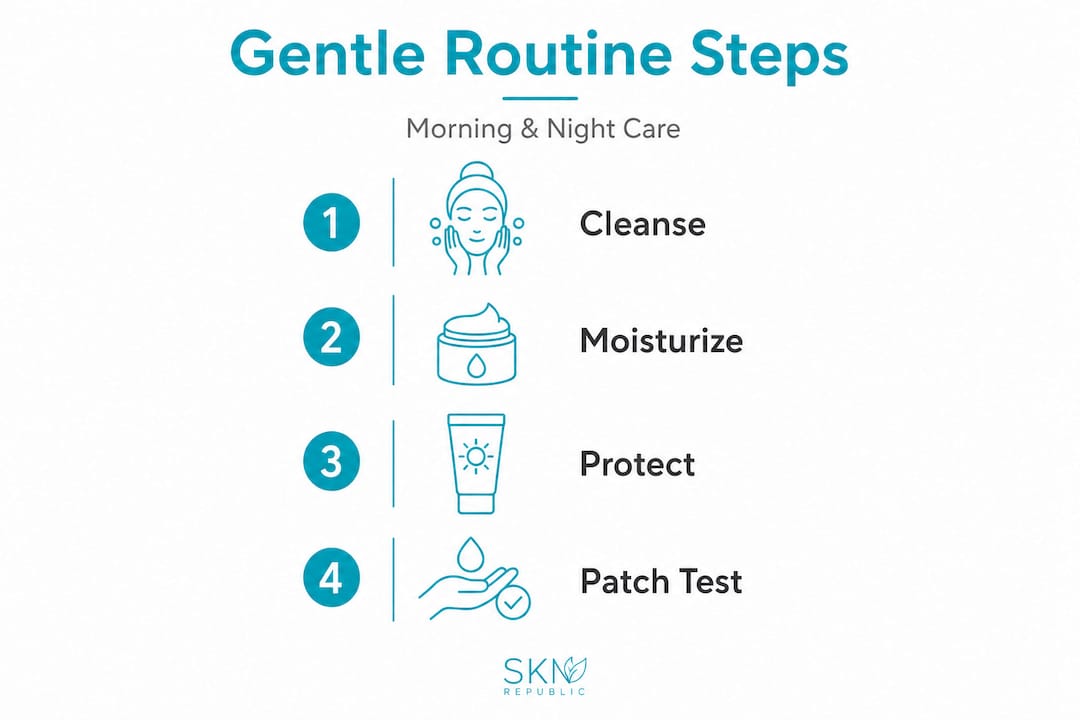
When you introduce any new product, patch test on a small area first, such as the inside of your forearm or behind the ear. Wait 24 to 48 hours before applying it to your face. This single habit prevents most unnecessary reactions and helps you feel confident when trying something new.
Useful guides worth bookmarking include daily skincare routine tips, a focused guide on morning routine for hydration, and practical advice on layering products for sensitivity to make sure products work together and not against each other.
Pro Tip: Apply your moisturiser within 60 seconds of washing your face. That small window, often called the “damp skin rule,” dramatically improves how much hydration your skin actually absorbs and retains throughout the day.
Troubleshooting: when and how to seek extra help
While most sensitive skin concerns improve with careful routines, sometimes professional support is needed. Gentle products and a simple routine go a long way, but they are not a cure for every skin condition. Knowing when to stop self-managing and when to see a dermatologist is part of taking your skin seriously.
Signs that your skin may need professional attention include:
- Redness and irritation that does not improve after one to two weeks on a gentle routine
- Swelling or puffiness that was not there before
- Blisters or weeping patches on the skin
- Symptoms that look like a rash spreading beyond where you applied products
- Intense itching that disrupts sleep or daily activities
If home care fails after one week, a dermatologist can investigate whether an underlying condition such as rosacea, eczema, or contact dermatitis is driving your symptoms. Prescription options include topical corticosteroids for short-term calming and calcineurin inhibitors like pimecrolimus or tacrolimus for longer-term management without the steroid side effects.
It is also worth understanding that not all treatments are equal for every person. Most cases respond to OTC gentle care, but severe or persistent cases may need prescription topicals, light therapy, or professional guidance on emerging approaches like antioxidant treatments. These are not first-line options and are not needed for most people. But they exist, and knowing that gives you more options if standard care is not cutting it.
An expert routine for persistent sensitivity can also point you toward more targeted approaches once you have covered the basics.
Do not wait for symptoms to become severe before asking for help. Persistent redness, blistering, or a burning feeling that does not ease within a week or two is your skin asking for more than a gentle cleanser can offer. Early professional guidance avoids months of unnecessary discomfort.
What most advice gets wrong about treating sensitive skin
After exploring the steps and troubleshooting, let us look deeper at what mainstream guidance often misses. Most skincare advice, even the well-meaning kind, encourages you to add things. Add a serum for brightness. Add an acid for texture. Add a facial oil for glow. For people with sensitive skin, this approach is almost always counterproductive.
We have seen many people come to gentle skincare after months or years of layering products in search of the perfect combination. The irony is that stripping the routine back, sometimes to just a cleanser, moisturiser, and sunscreen, is when their skin finally starts to settle. Less really is more here, and this is not a cliché. It is a pattern we observe again and again.
What gets missed in most guides is the patience factor. Sensitive skin does not reset in three days. Your skin barrier, once disrupted, takes time to repair. Changing products every week because you have not seen results yet is the single biggest mistake reactive skin types make. Choose your three to four products carefully. Stick with them for at least three to four weeks. Then, and only then, evaluate what is actually working.
The other piece that advice tends to overlook is self-advocacy. You know your skin better than any influencer or algorithm does. If a product stings even once, stop using it. That is not a sign you need to persevere. That is feedback. Trust it. Building holistic and realistic skin routines means respecting your skin’s individual signals rather than following a formula designed for an average person who may not look anything like you.
Gradual, patient changes are not glamorous advice. But they work. They work far better than any miracle serum or ten-step system ever will for sensitive skin.
Discover gentle care options for your sensitive skin
You have the knowledge now. You know your triggers, the ingredients that help, the routine steps that protect, and when to ask for professional support. Taking action does not have to feel overwhelming.

We designed our gentle cleanser and moisturiser duo specifically for skin that needs calm, effective daily care without unnecessary extras. Both products are formulated with soothing ingredients and free from fragrance and common irritants, making them a practical starting point for anyone building a sensitive skin routine from scratch. If you want to go a step further in calming and refreshing your skin, our guide on gentle detox routines gives you simple, results-driven steps to try at home. Your calm, resilient skin starts with one good decision today.
Frequently asked questions
How can I tell if my skin is sensitive or allergic?
Sensitive skin symptoms like redness, stinging, and itching typically appear after using common products, while true allergies usually cause more dramatic reactions such as hives, swelling, or blisters that need medical attention.
Are there specific products to always avoid for sensitive skin?
Fragrances, alcohol, and irritants are consistently problematic for reactive skin; always choose fragrance-free, non-irritating formulas and double-check ingredient lists before buying anything new.
Do I have to use sunscreen if I rarely go outdoors?
Yes, because even brief or incidental sun exposure adds up over time, and mineral sunscreens with zinc oxide offer the gentlest, most effective protection for sensitive skin without causing irritation.
How long should I try a new routine before I see results?
Most improvement happens within one to two weeks, but if irritation continues, consult a dermatologist after one week to rule out underlying conditions that may require prescription treatment.
Should I completely stop using actives like retinol or vitamin C if I have sensitive skin?
It is best to avoid active ingredients initially, including retinoids, AHAs, and vitamin C, until your skin consistently tolerates your basic gentle routine without any signs of irritation or redness.
Recommended
- Top cleansers for sensitive skin: gentle picks that work – SMPL SKIN South Africa
- Understand skin sensitivity: simple solutions for hydration – SMPL SKIN South Africa
- How to achieve healthy skin with a simple routine – SMPL SKIN South Africa
- Detoxify your skin at home: simple routines for results – SMPL SKIN South Africa