

TL;DR:
- Actives are ingredients that produce noticeable skin improvements at a cellular level.
- Results from actives typically appear in 4 to 12 weeks with consistent use.
- A minimalist routine focusing on one or two proven actives is more effective than over-layering products.
Most of us have been told that a longer routine means better skin. More steps, more products, more results. But that’s simply not true. The real drivers of skin change are actives, specific ingredients proven to create real, noticeable improvements in how your skin looks and functions. Not masking issues. Not just adding moisture. Actually changing your skin at a cellular level. In this guide, we’ll break down exactly what actives are, how they work, and how to use them in a simple, effective routine that doesn’t require a cabinet full of products.
Table of Contents
- What are actives and inactives in skincare?
- How do actives work? Mechanisms, timelines, and results
- How to choose and use actives in a minimalist skincare routine
- Safety tips: Mixing actives, sensitivity, and avoiding irritation
- Why less is more: The real secret behind radiant skin with actives
- Ready to upgrade to smarter skincare? Explore minimalist solutions
- Frequently asked questions
Key Takeaways
| Point | Details |
|---|---|
| Actives drive real change | Ingredients labeled as ‘actives’ are responsible for visible and lasting skin improvements. |
| Consistency beats quantity | Using a few well-chosen actives regularly is more effective than using many products together. |
| Minimalism prevents damage | Keeping routines simple with gentle actives reduces irritation and supports strong, healthy skin. |
| Start slow, watch results | Introduce actives one at a time to monitor your skin’s response and avoid adverse reactions. |
What are actives and inactives in skincare?
Now that we’ve set the stage on why less is more, let’s break down what ‘actives’ actually are and how they differ from other ingredients in your routine.
An active ingredient is any ingredient that causes a visible or measurable change in your skin. Think fewer breakouts, smoother texture, reduced pigmentation. These are ingredients that induce measurable skin changes, and the most well-known examples include retinoids, vitamin C, niacinamide, AHAs, BHAs, hyaluronic acid, and peptides. You can explore a broader skincare actives overview to see how these fit into a complete routine.
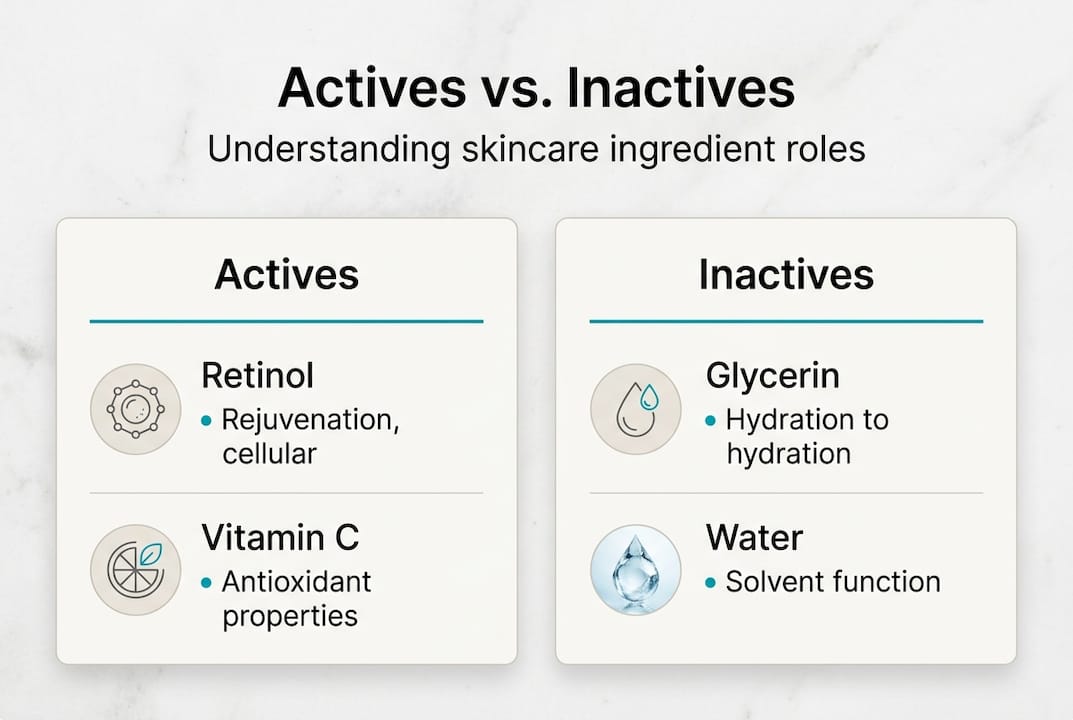
Inactive ingredients, on the other hand, are the supporting cast. They don’t change your skin directly, but they make the formula stable, pleasant to use, and effective at delivering actives where they need to go. Emulsifiers, preservatives, fragrances, and thickeners all fall into this category.
Here’s a quick comparison:
| Ingredient type | Role | Examples |
|---|---|---|
| Active | Changes skin function or appearance | Retinol, niacinamide, salicylic acid |
| Inactive | Supports formula stability and delivery | Glycerin (as base), emulsifiers, scents |
It’s worth noting that the FDA regulates actives differently depending on their intended use. Sunscreens and acne treatments, for example, are classified as drug products because their actives change how the body functions. Most cosmetic actives sit in a different category but still require evidence to back their claims.
Common actives and what they target:
- Retinoids: fine lines, texture, cell turnover
- Vitamin C: brightening, antioxidant protection, pigmentation
- Niacinamide: pore appearance, oil control, barrier support
- AHAs (glycolic, lactic acid): exfoliation, radiance, uneven tone
- BHAs (salicylic acid): acne, congestion, oiliness
- Hyaluronic acid: hydration, plumpness
- Peptides: firmness, collagen support
“Not every ingredient on a label is doing real work. Actives are the ones earning their place.”
Understanding the difference between actives and inactives helps you read labels with confidence. You’ll stop being swayed by fancy packaging and start focusing on what actually matters. For a deeper look at how ingredients like postbiotics are changing the game, check out these postbiotic skincare insights.
How do actives work? Mechanisms, timelines, and results
Once you know which ingredients are actives, it’s crucial to understand how they interact with your skin and what outcomes to expect.
Actives work through several distinct mechanisms. Some exfoliate dead skin cells to reveal fresher skin underneath. Others neutralise free radicals (unstable molecules that damage skin cells) through antioxidant activity. Some stimulate collagen production, while others draw moisture into the skin or reinforce the skin barrier. The mechanism depends entirely on the active.
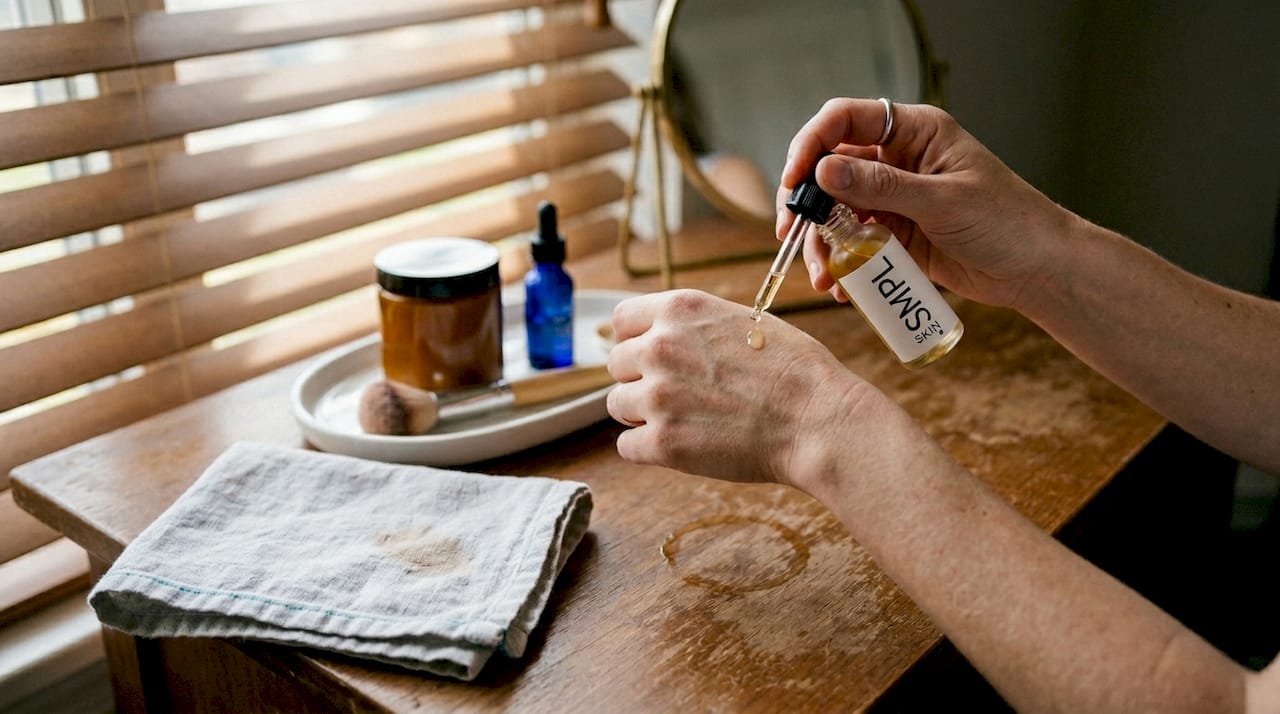
Here’s a practical comparison of popular actives and their timelines:
| Active | Mechanism | Visible results |
|---|---|---|
| Retinoid | Cell turnover, collagen boost | 4 to 12 weeks |
| Niacinamide | Barrier support, sebum control | 4 to 8 weeks |
| Vitamin C | Antioxidant, brightening | 4 to 8 weeks |
| AHA | Exfoliation, texture | 2 to 4 weeks |
| Hyaluronic acid | Hydration, plumpness | 1 to 2 weeks |
One of the most important things we can tell you: actives are not overnight fixes. Results appear in 4 to 12 weeks with consistent use. That’s not a flaw. That’s how real skin change works.
For example, niacinamide at 5% improves lines and elasticity by up to 23% over 12 weeks. Retinoids deliver visible texture changes in 4 to 12 weeks. These aren’t dramatic overnight transformations. They’re steady, lasting improvements.
How to set realistic expectations:
- Take a baseline photo before starting a new active
- Commit to at least 8 weeks before evaluating results
- Track one change at a time (texture, tone, breakouts)
- Adjust concentration or frequency if irritation appears
- Stay consistent, even when progress feels slow
Consistency beats intensity every time. A gentle active used daily outperforms a harsh one used twice before your skin rebels. For practical guidance on building this into your day, our daily skincare steps guide walks you through the process. You can also explore a morning routine for hydration that layers actives effectively without overcomplicating things.
The goal is meaningful improvement, not perfection. Fewer breakouts, smoother texture, more even tone. Those are the benchmarks worth chasing.
How to choose and use actives in a minimalist skincare routine
Understanding how actives work sets the stage. Here’s how to bring them into your routine confidently and simply.
Start by identifying your primary skin concern. One concern. Not five. Then match it to a proven active:
- Acne and congestion: salicylic acid (BHA)
- Signs of ageing: retinoid paired with niacinamide
- Dark spots and dullness: vitamin C
- Dehydration and tightness: hyaluronic acid
- Uneven texture: lactic or glycolic acid (AHA)
When reading a product label, look for your chosen active in the first half of the ingredient list. Actives above 1% near the top of the ingredient list are working at a meaningful concentration. If an active appears near the very bottom, it’s likely present in a trace amount that won’t deliver results.
A simple, minimalist routine blueprint:
- Cleanse: remove dirt, oil, and SPF without stripping the skin
- Treat: apply your chosen active (serum or treatment)
- Moisturise: lock in hydration and support the barrier
- SPF (morning only): protect against UV damage that undoes your actives’ work
Pro Tip: Introduce one new active at a time. Use it every other day for the first two weeks, then daily once your skin adjusts. This prevents overwhelm and helps you pinpoint any reactions.
Ignore the hype around trending ingredients. Focus on actives with clinical backing and a track record. For expert minimalist routines built around proven actives, we’ve done the research so you don’t have to. And if you’re starting from scratch, our guide to building a hydration routine is a great place to begin.
Simple, focused, and consistent. That’s the formula.
Safety tips: Mixing actives, sensitivity, and avoiding irritation
Even the right actives can backfire if used poorly. Here’s how to keep your skin safe and healthy.
Actives are powerful. That’s the point. But that same potency means they can trigger flares in sensitive skin, rosacea-prone skin, eczema-prone skin, or skin that’s already been over-exfoliated. If your skin barrier is compromised, even a gentle active can cause stinging, redness, or worsening dryness.
High concentrations or mixing actives can cause irritation that sets your skin back rather than forward. The solution is to repair your barrier first before reintroducing actives at a lower concentration.
Combinations to avoid:
- Acids (AHAs/BHAs) with retinoids: both are potent and can cause severe dryness and peeling when used together
- High-dose vitamin C with niacinamide: can cause flushing in some skin types
- Multiple exfoliating acids at once: more exfoliation does not equal faster results
Red flags to watch for:
- Burning or stinging that doesn’t settle within a few minutes
- Increased dryness or tightness after use
- Redness that worsens rather than calms
- New breakouts or texture changes after starting an active
Pro Tip: If your skin reacts, don’t push through. Pause all actives for one to two weeks, focus on a gentle cleanser, a barrier-supporting moisturiser, and SPF. Once your skin is calm, reintroduce one active at a time at a lower concentration.
“Active is often a marketing term. What matters is clinical backing, not clever labelling.”
This is an important point. Over-layering actives can cause barrier fatigue, and not every product marketed as ‘active-powered’ has the evidence to back it up. For targeted advice on managing sensitive skin solutions, we’ve covered the most common triggers and how to work around them.
Less is genuinely more. A routine you can sustain without irritation will always outperform an aggressive one that your skin fights back against.
Why less is more: The real secret behind radiant skin with actives
Having covered how to choose and use actives wisely, let’s explore why an ultra-simple approach outperforms even the fanciest 10-step routines.
We’ve seen it time and again. Someone starts using three actives at once because they want faster results. Within weeks, their skin is red, reactive, and worse than when they started. The irony? Their desperation for better skin created the very problem they were trying to solve.
The urge for dramatic, rapid results is completely understandable. But skin doesn’t respond well to being rushed. It responds to consistency, patience, and the right ingredients given enough time to work.
In our experience, the people who see the healthiest, most resilient skin are the ones who strip back to one or two well-chosen actives and simply stick with them. No rotation, no stacking, no chasing the next big thing. Just a simple skin routine that works.
Beautiful skin isn’t over-engineered. It’s consistent. Ingredient literacy, patience, and a willingness to trust the process will take you further than any trending 12-step routine ever could. That’s not a compromise. That’s the smarter path.
Ready to upgrade to smarter skincare? Explore minimalist solutions
If you’re ready to turn these insights into a simple, effective routine, we’ve made it easy to take the next step.
At SMPL SKIN, every product is formulated around evidence-based actives, designed to work hard without overwhelming your skin. Whether you’re starting fresh or simplifying what you already have, our gentle cleanser and SPF duo gives you the foundation every good routine needs. For those ready to target specific concerns with a more advanced active, the SMPL SKIN PRO Firm Serum delivers clinically backed ingredients in one focused step. Simple. Effective. No guesswork required.
Frequently asked questions
What does ‘active’ mean on a skincare label?
An active is an ingredient proven to change skin appearance or function, not just improve feel or scent. If it’s doing real, measurable work, it’s an active.
How long do actives take to show results?
Most actives deliver visible change in 4 to 12 weeks with consistent use. Patience and daily application are non-negotiable for real results.
Can using more actives speed up results?
Over-layering actives typically leads to irritation and barrier fatigue, not faster results. One or two well-chosen actives will always outperform a crowded routine.
What should I do if actives cause redness or stinging?
Pause all actives and focus on barrier repair with a gentle moisturiser and SPF. Only reintroduce actives once your skin is fully calm and comfortable.
Recommended
- Skincare routine tips: 4 steps to a daily glow – SMPL SKIN South Africa
- How to layer skincare products for effective hydration – SMPL SKIN South Africa
- Postbiotic skincare: 5 key benefits for healthy skin – SMPL SKIN South Africa
- Detoxify your skin at home: simple routines for results – SMPL SKIN South Africa
- Skin booster con ácido hialurónico ✔