

TL;DR:
- Target the outer epidermis with appropriate ingredients for effective skincare.
- Maintaining a healthy skin barrier prevents dryness, sensitivity, and irritation.
- Simplified routines focusing on ceramides and gentle care outperform complex, multi-step regimens.
Most people assume that a longer skincare routine means better skin. More steps, more products, more results. But the science tells a different story. Research consistently shows that targeting the right layer of your skin with the right ingredients outperforms any 10-step routine. This guide cuts through the noise. We’ll walk you through how your skin actually works, what keeps it healthy, and how a few smart, evidence-backed choices can give you results that rival professional treatments at home. No complicated routines. No guesswork. Just clear, practical skin science.
Table of Contents
- The basics: your skin’s hidden architecture
- What makes a healthy skin barrier?
- Ceramides and moisturizers: do they really make a difference?
- When skin health goes off track: edge cases and targeted solutions
- What most routines get wrong about skin health
- Upgrade your routine with science-backed skincare
- Frequently asked questions
Key Takeaways
| Point | Details |
|---|---|
| Understand your skin | Knowing the structure and function of your skin helps you choose simpler, more effective routines. |
| Barrier is key | A healthy barrier prevents dryness and sensitivities, so focus on supporting it with the right products. |
| Ceramides matter | Look for ceramide-rich moisturizers with longer acyl chains, which are proven to improve hydration and repair. |
| Simple can work best | Minimal, professional-grade products often outperform complicated routines, saving you time and money. |
The basics: your skin’s hidden architecture
Your skin is far more than a surface. It’s a living, working system made up of distinct layers, each with its own job. Understanding this changes how you think about every product you put on your face.
Skin consists of three main layers: the epidermis, the dermis, and the hypodermis. Here’s what each one does:
| Layer | Location | Primary role |
|---|---|---|
| Epidermis | Outermost | Protection, hydration, barrier |
| Dermis | Middle | Collagen, elastin, sensation |
| Hypodermis | Deepest | Insulation, fat storage, support |
The epidermis is where most skincare products work. It’s your first line of defence against the environment, and it controls how much water your skin holds. The dermis sits beneath it, housing collagen and elastin fibres that give your skin its firmness and bounce. The hypodermis is the deepest layer and acts as a cushion and insulator.
Here’s something most people don’t realise: the majority of topical products never reach the dermis. They work on or within the epidermis. That’s not a flaw. It’s actually by design. Your skin is built to keep things out, including most of what you apply to it.
“The epidermis is the most critical layer for barrier function and is where most skincare ingredients exert their effect.”
This is why piling on more products doesn’t automatically mean more results. If you’re not targeting the right layer with the right ingredient, you’re just adding weight to your routine without adding value. Read more about how layering affects each skin layer before you add another step to your morning routine.
Key takeaways about skin layers:
- The epidermis is your primary target for hydration and protection products
- The dermis responds to ingredients like retinoids and peptides over time
- More layers of product don’t penetrate deeper. Formulation matters more than quantity
- Knowing your layer helps you choose products that actually do something
Simple, targeted care beats complicated layering every time.
What makes a healthy skin barrier?
Understanding your skin’s layers sets up the next key concept: the barrier that guards everything inside.
The skin barrier is your epidermis’s outermost section, called the stratum corneum. Think of it like a brick wall. The “bricks” are dead skin cells called corneocytes, and the “mortar” holding them together is a mix of lipids, including ceramides, cholesterol, and fatty acids. This brick-and-mortar structure is what keeps moisture in and irritants out.
When this structure is intact, your skin looks and feels healthy. When it breaks down, you start to notice dryness, sensitivity, redness, and tightness.

Intact vs. impaired barrier: a quick comparison
| Condition | Intact barrier | Impaired barrier |
|---|---|---|
| Moisture | Retained effectively | Lost rapidly (high TEWL) |
| Sensitivity | Low | High |
| Appearance | Smooth, even tone | Dry, flaky, red |
| Reaction to products | Tolerates most | Reacts to many |
Trans-epidermal water loss, or TEWL, is the measure of how much water evaporates through your skin. A healthy barrier keeps TEWL low. An impaired one lets water escape, leaving skin dehydrated even when you drink plenty of water. This is why external moisturising matters, not just internal hydration.
Steps to repair a damaged barrier:
- Stop using harsh cleansers or exfoliants while your skin recovers
- Apply a ceramide-rich moisturiser within 60 seconds of cleansing
- Avoid fragrance and alcohol-based products during repair
- Use SPF daily to prevent UV-driven barrier damage
- Give your skin at least two weeks of consistent, gentle care
Pro Tip: When choosing a moisturiser for barrier repair, look for ceramides listed in the first half of the ingredient list. Products that also maintain moisture balance with humectants like glycerin work even better alongside ceramides.
Ceramides and moisturizers: do they really make a difference?
With a strong barrier in mind, let’s explore the real evidence for the most common skin product ingredient: ceramides.
The short answer is yes. Ceramides are not just a marketing buzzword. They are a structural component of your skin barrier, and when your barrier is depleted, replenishing ceramides through a moisturiser genuinely helps. Ceramide moisturizers reduce TEWL and improve barrier scores, particularly in people with atopic dermatitis.
But not all ceramides are equal. Research into ceramide science shows that longer acyl chain ceramides (C24 to C30) are more effective at restoring the barrier and improving hydration than shorter chain versions. When you’re reading a label, this is the kind of detail that separates a genuinely effective product from one that just sounds good.
How to spot a high-quality ceramide moisturiser:
- Ceramides appear in the first half of the ingredient list
- The formula includes supporting lipids like cholesterol and fatty acids
- It’s free from unnecessary fragrance and harsh preservatives
- The texture suits your skin type without feeling heavy or greasy
- It’s formulated at a skin-friendly pH (between 4.5 and 5.5)
Pro Tip: Simpler formulas often perform better than long ingredient lists. A moisturiser with five well-chosen ingredients will usually outperform one with thirty. Complexity in a formula doesn’t mean complexity in results. Check out a daily glow routine built around exactly this principle.
If you’re building or refining your routine, hydration routines that focus on ceramide-rich products and minimal steps tend to deliver the most consistent results. The science supports simplicity here, not complexity.
When skin health goes off track: edge cases and targeted solutions
Even with science-backed products, sometimes your skin needs more. Here’s what matters in special cases.
For most people, a gentle cleanser and a ceramide moisturiser with SPF will keep their skin in good shape. But for some, the barrier dysfunction runs deeper. Conditions like atopic dermatitis (eczema) and psoriasis involve chronic inflammation driven by a compromised barrier. Standard moisturisers help, but they’re not always enough on their own.
“Barrier dysfunction drives inflammation in atopic dermatitis; new non-steroidal topicals are now preferred for long-term maintenance over traditional steroids.”
This is a meaningful shift in dermatology. For years, topical steroids were the go-to for managing flares. But long-term steroid use can thin the skin and cause rebound flares. Newer non-steroidal options like ruxolitinib, tapinarof, and roflumilast are now available and offer effective inflammation control without those risks. If you’re dealing with a chronic condition, these advanced topical therapies are worth discussing with your dermatologist.
Signs your routine isn’t enough:
- Persistent redness or itching that doesn’t improve after two weeks of gentle care
- Skin that cracks or weeps, especially in skin folds
- Recurring flares despite consistent moisturising
- Reactions to products that most people tolerate easily
- Sleep disruption due to itching or discomfort
If any of these sound familiar, it’s time to move beyond a standard routine. Hydrating sensitive skin is a good starting point, but professional guidance is essential when these symptoms persist. Your skin is telling you something. Listen to it.
What most routines get wrong about skin health
Here’s our honest take: the skincare industry profits from complexity. More steps, more products, more spend. But the science doesn’t support that approach. It supports the opposite.
We’ve seen it over and over. People come to us with 12-step routines and skin that’s irritated, dehydrated, and reactive. When they strip back to the basics, a good cleanser, a ceramide moisturiser, and SPF, their skin often improves within weeks. Not because they added something magical. Because they stopped overwhelming their barrier.
The evidence is clear. Fewer, targeted steps are gentler and more effective than piling on actives. It’s the barrier science that matters, not the marketing. A simple expert-backed routine built on real ingredients will always outperform a trendy 10-step regimen.
Pro Tip: Give any new product a full two weeks before you judge it. Your skin needs time to adjust, and most people abandon good products too soon because they expect overnight results.
Trust the evidence. Trust your skin’s response. And resist the urge to add more when less is working.
Upgrade your routine with science-backed skincare
Ready to put skin health principles into practice? Here’s where to start with minimal products and maximum benefit.
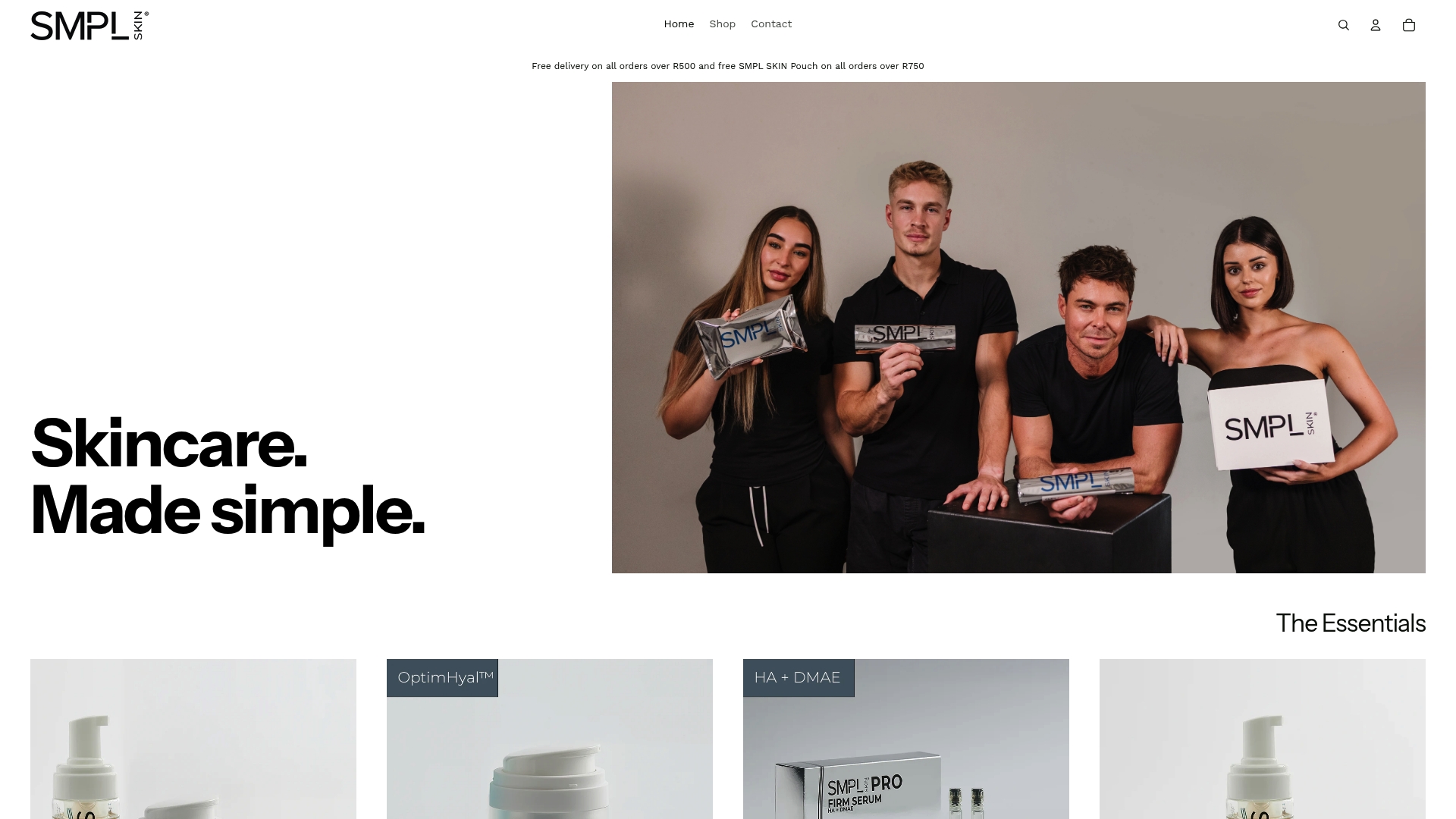
At SMPL SKIN, we built our range around exactly what the science supports: simple formulas, effective ingredients, and nothing unnecessary. Our SPF 15 Daily Moisturiser delivers daily hydration and UV protection in one step. For a complete, streamlined routine, the gentle cleanser with SPF moisturiser duo gives you everything you need without the clutter. Clean skin, protected skin, healthy skin. That’s the whole routine. Shop the duo and experience what simple, evidence-based skincare actually feels like.
Frequently asked questions
What are the main skin layers and what do they do?
The skin has three main layers: the epidermis protects and hydrates, the dermis provides structural support and sensation, and the hypodermis insulates and cushions the body.
How does a damaged skin barrier show up?
A damaged barrier causes increased TEWL and sensitivity, showing up as dryness, redness, itchiness, and a tendency to react badly to products that most people tolerate fine.
Do ceramide moisturisers really work for everyone?
Ceramide moisturisers improve barrier function for most people, but those with chronic conditions like eczema may need additional targeted therapies alongside regular moisturising.
What should I do if my skin doesn’t improve with basic moisturiser?
If gentle cleansing and moisturising don’t show improvement after two weeks, see a dermatologist, as special therapy may be needed for conditions like eczema or psoriasis.
Recommended
- How to achieve healthy skin with a simple routine – SMPL SKIN South Africa
- Postbiotic skincare: 5 key benefits for healthy skin – SMPL SKIN South Africa
- Detoxify your skin at home: simple routines for results – SMPL SKIN South Africa
- Build a healthy skin regimen: simple routines for hydration – SMPL SKIN South Africa
- Natural vs Synthetic Skincare: What Science Actually Says – ZenChemy Lab
- Types of skin boosters: what to know for glowing skin