

TL;DR:
- Choosing the right facial cleanser depends on your skin type and concerns, with gel for oily skin and cream or balm for dry or sensitive skin. Avoid overstripping your skin by selecting pH-balanced, gentle formulas with barrier-supporting ingredients like glycerin and ceramides, and practice double cleansing if wearing SPF or makeup. Prioritizing skin health over marketing claims leads to better, more consistent results and a simpler skincare routine.
Walk into any pharmacy and the cleanser aisle alone will make your head spin. Types of facial cleansers range from light micellar waters to rich cleansing balms, and choosing the wrong one can leave your skin dry, broken out, or just underwhelmed. The good news is that once you understand what each format actually does, matching one to your skin concerns becomes straightforward. This guide breaks down every major cleanser type, what it is best suited for, and how to make a confident decision for your routine.
Table of Contents
- Key takeaways
- How to evaluate the types of facial cleansers before you buy
- The main types of facial cleansers explained
- Quick comparison: cleanser types at a glance
- How to choose the right facial cleanser for your situation
- Common cleanser myths worth clearing up
- My honest take on choosing a cleanser
- Start simple with Smplskin’s gentle cleanser duo
- FAQ
Key takeaways
| Point | Details |
|---|---|
| Match cleanser to skin type | Gel suits oily skin; cream and balm suit dry or sensitive skin. |
| pH matters more than bubbles | A cleanser with pH 5.0 to 5.5 protects your skin barrier better than any foaming product. |
| Squeaky clean is a warning sign | That tight feeling after washing signals barrier damage, not cleanliness. |
| Double cleansing works | An oil cleanser followed by a water-based cleanser removes makeup and SPF without stripping skin. |
| Label claims can mislead | “Natural” or “non-toxic” labels do not guarantee safety. Ingredient lists do. |
How to evaluate the types of facial cleansers before you buy
Before you focus on specific products, it helps to know what to look for. The best facial cleanser types are not just about what feels nice in your hand. They are about how well they work with your skin’s biology.
Skin type is your starting point. Oily skin handles stronger surfactants better. Dry or sensitive skin needs gentler, more hydrating formulas. Combination skin often does best with a mild gel or a gentle foam that cleans without stripping.
Here are the key factors to weigh when selecting any cleanser:
- pH level. Your skin’s natural surface sits at around pH 4.5 to 5.5. pH-balanced cleansers in that range prevent the barrier disruption that alkaline soaps cause by stripping your skin’s natural lipids.
- Surfactant strength. Sodium lauryl sulfate creates big lather but is one of the most irritating surfactants available. Milder alternatives like cocamidopropyl betaine or sodium cocoyl isethionate clean effectively without the harshness.
- Barrier-supportive ingredients. Look for glycerin, ceramides, and hyaluronic acid in your cleanser. These help maintain moisture while the surfactants do their job.
- Fragrance and irritants. Fragrances are among the most common causes of contact dermatitis. If your skin reacts easily, fragrance-free is the safer default.
- Cleansing frequency. Evening cleansing is non-negotiable; morning cleansing is optional for dry or sensitive skin types who may only need a water rinse.
Pro Tip: If your skin feels tight or “squeaky clean” after washing, that is not a sign of a thorough cleanse. It is a sign the product is stripping your barrier. Switch to something gentler.
The main types of facial cleansers explained
Understanding what each format does will save you from buying the wrong thing repeatedly. Here is a detailed look at the most popular face wash types and how they perform in real use.
Gel cleansers
Gel cleansers are water-based, clear or translucent, and produce a light lather. They are the go-to facial cleanser for oily skin and acne-prone complexions because they cut through excess sebum effectively. Many formulas contain salicylic acid, which also exfoliates inside pores to reduce breakouts.
The downside is that stronger gel cleansers can leave dry or sensitive skin feeling tight. If you have combination skin, look for a gel with added humectants like glycerin to offset any drying effect.
Cream cleansers
Cream cleansers are thicker, more emollient, and rinse away without stripping moisture. They are ideal for dry, mature, or sensitive skin types that need gentle facial cleansing options. Many contain ceramides, niacinamide, or fatty acids that actively support the skin barrier while cleansing.
They do not remove heavy makeup as effectively as oil-based formats, so pairing one with a first-cleanse oil is a smart move on days you wear SPF or foundation.
Foam cleansers
Foam cleansers produce the satisfying lather many people associate with “clean.” They work well for normal to oily skin types but carry a real risk of barrier disruption if the formula relies on harsh sulfates. The key is finding a foam cleanser with a mild surfactant system. A gentle foam can absolutely be effective without being aggressive.
Oil cleansers and cleansing balms
Oil cleansers work on the principle that like dissolves like. They emulsify sunscreen, makeup, and excess sebum far more effectively than water-based formats alone. Oil cleansers and balms are excellent first-cleanse options for anyone who wears SPF daily, which should be everyone.
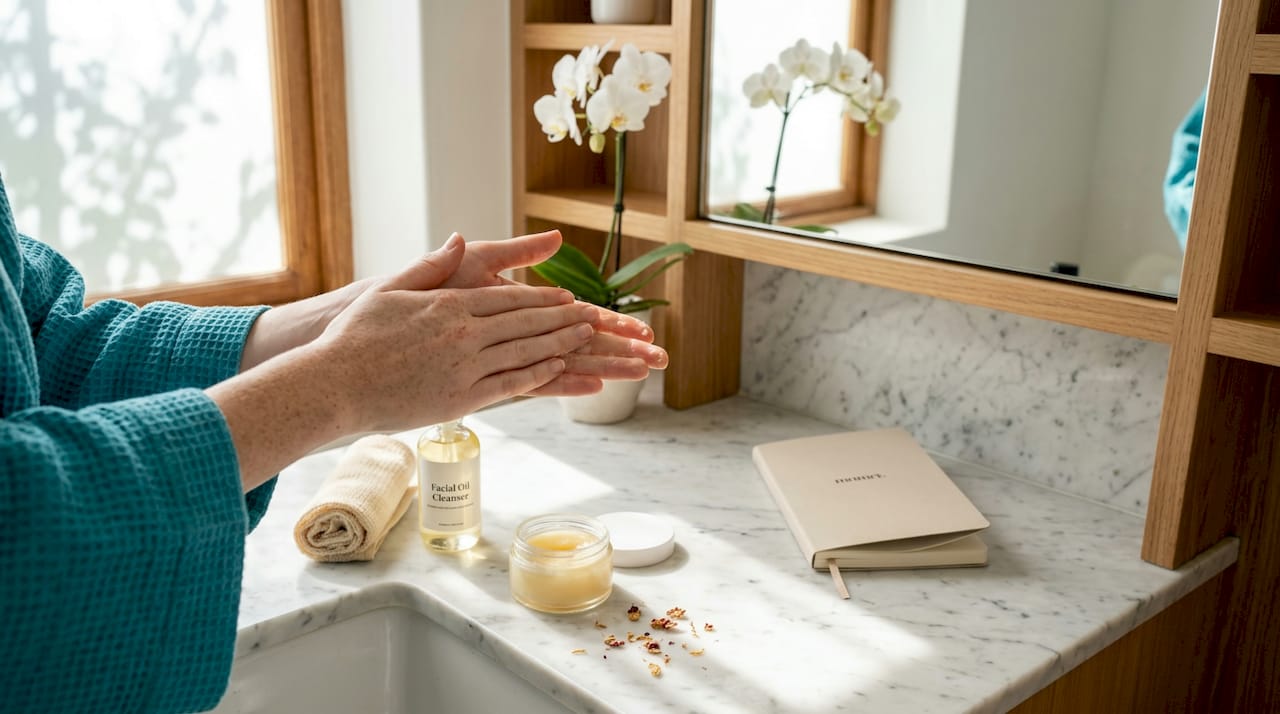
Balms are a solid or semi-solid version of oil cleansers. They feel luxurious to use and are particularly nourishing for dry and combination skin. They rinse clean and leave skin soft rather than greasy.
Micellar water
Micellar water uses tiny micelle molecules that attract and lift away oil and dirt without rinsing. It is convenient for light cleansing or as a first step, but it is not a complete standalone cleanser at night. Residue can remain on skin if it is not followed up with a proper rinse-off cleanser. Think of it as a useful tool for specific situations, not an everyday replacement.
Pro Tip: Try double cleansing by starting with an oil cleanser or balm to dissolve SPF and makeup, then following with your regular water-based cleanser. You will notice a real difference in how your skin looks the next morning.
Quick comparison: cleanser types at a glance
Use this table as a reference when you are deciding which format fits your skin and lifestyle best.
| Cleanser type | Best for | Pros | Cons | Key ingredients |
|---|---|---|---|---|
| Gel | Oily, acne-prone | Deep cleanse, controls sebum | Can dry out sensitive skin | Salicylic acid, glycerin |
| Cream | Dry, sensitive, mature | Hydrating, gentle, barrier-friendly | Less effective on heavy makeup | Ceramides, fatty acids |
| Foam | Normal to oily | Satisfying lather, good oil removal | Risk of stripping if sulfate-heavy | Mild surfactants, niacinamide |
| Oil or balm | All types, especially dry | Removes SPF and makeup thoroughly | Can feel heavy if not emulsified well | Plant oils, emulsifiers |
| Micellar water | Light cleansing, travel | No-rinse convenience | Not sufficient as sole night cleanser | Micelles, glycerin |
How to choose the right facial cleanser for your situation
Knowing the formats is only half the work. Applying that knowledge to your specific skin concerns and habits is where real results come from. Here is how to approach it for common skin situations.
- Oily or acne-prone skin. Start with a gel cleanser containing salicylic acid for your second cleanse. Use an oil cleanser first if you wear SPF or makeup to avoid rubbing excess product into pores.
- Dry or dehydrated skin. A cream cleanser morning and evening works well. Avoid foams unless they are explicitly formulated for dry skin. Your goal is cleansing without compromising moisture retention.
- Sensitive or reactive skin. Fragrance-free, sulfate-free options with barrier-supportive ingredients are non-negotiable. Micellar water can work for your morning routine if your skin is easily irritated by rinse-off products.
- Combination skin. A mild gel or gentle foam for your second cleanse usually works. Double cleansing at night helps manage the oilier zones without over-drying the drier areas.
- SPF and makeup wearers. Double cleansing is the most thorough method. Oil-based first cleansers break down sunscreen and foundation in a way that water-based formats simply cannot match on their own.
Pro Tip: When trying a new cleanser, give your skin at least two to three weeks before judging. Initial purging or adjustment is normal. If irritation persists beyond that window, the formula likely is not right for your barrier.
For a step-by-step cleansing routine that ties all of this together, including technique and timing, that guide walks you through the full process.
Common cleanser myths worth clearing up
The cleanser market is full of bold claims and well-meaning but inaccurate advice. A few of the most persistent myths are worth addressing directly.
Myth: squeaky clean skin means a thorough cleanse. This is one of the most damaging ideas in skincare. That tight, stripped feeling is your skin telling you its barrier has been compromised. Healthy skin feels soft and comfortable after washing. If yours does not, the product is too harsh.
Myth: natural or non-toxic products are always safe. Marketing language is not the same as ingredient science. Labels like “natural” or “non-toxic” carry no regulated definition and are not a reliable guide to how a product performs or whether it will irritate your skin. What matters is the actual ingredient list and whether it contains known irritants or barrier-supportive actives.
Myth: you must wash your face twice a day no matter what. Dermatologists consistently note that morning cleansing is optional for dry and sensitive skin types. A gentle water rinse in the morning can be enough for people whose barrier is already fragile from over-cleansing.
The cleanser’s job is to remove impurities while leaving the stratum corneum intact. Anything that goes beyond that is not cleaning your skin. It is damaging it.
Keeping this principle in mind cuts through most of the noise in the cleanser market. The goal is clean and comfortable, not stripped and tight.
My honest take on choosing a cleanser
I’ve spent years watching people cycle through cleanser after cleanser looking for something that works, and the pattern I keep seeing is the same. People choose cleansers based on how they feel in the moment rather than what their skin actually needs. A foamy, tingly, intensely scented cleanser feels like it is doing something. Calm, unscented, and gentle feels underwhelming. But skin health does not reward intensity. It rewards consistency and compatibility.
What I’ve found is that most people would solve about 60% of their skin concerns just by switching to a gentler, barrier-supporting cleanser. Over-cleansing and harsh surfactants are among the most common causes of barrier damage, excess oil production, and chronic sensitivity. Your skin produces more oil when you strip it. That is not a coincidence.
My advice is to start simpler than you think you need to. Choose a format suited to your skin type, check the ingredient list for known irritants, and give it time. If your skin feels good after four weeks, you have found your answer. If it does not, adjust one variable at a time. That is genuinely how you figure out what works, not by chasing trends or marketing claims.
Learning how to choose skincare products based on your own skin rather than someone else’s recommendation is a skill worth building. Once you have it, your routine becomes much simpler and much more effective.
— Werner
Start simple with Smplskin’s gentle cleanser duo
If you are ready to put what you’ve learned into practice, Smplskin has made it straightforward. The Gentle Cleanser and SPF 15 Moisturiser Duo pairs a barrier-friendly cleanser with daily sun protection in one simple set. No unnecessary complexity. Just what your skin actually needs.
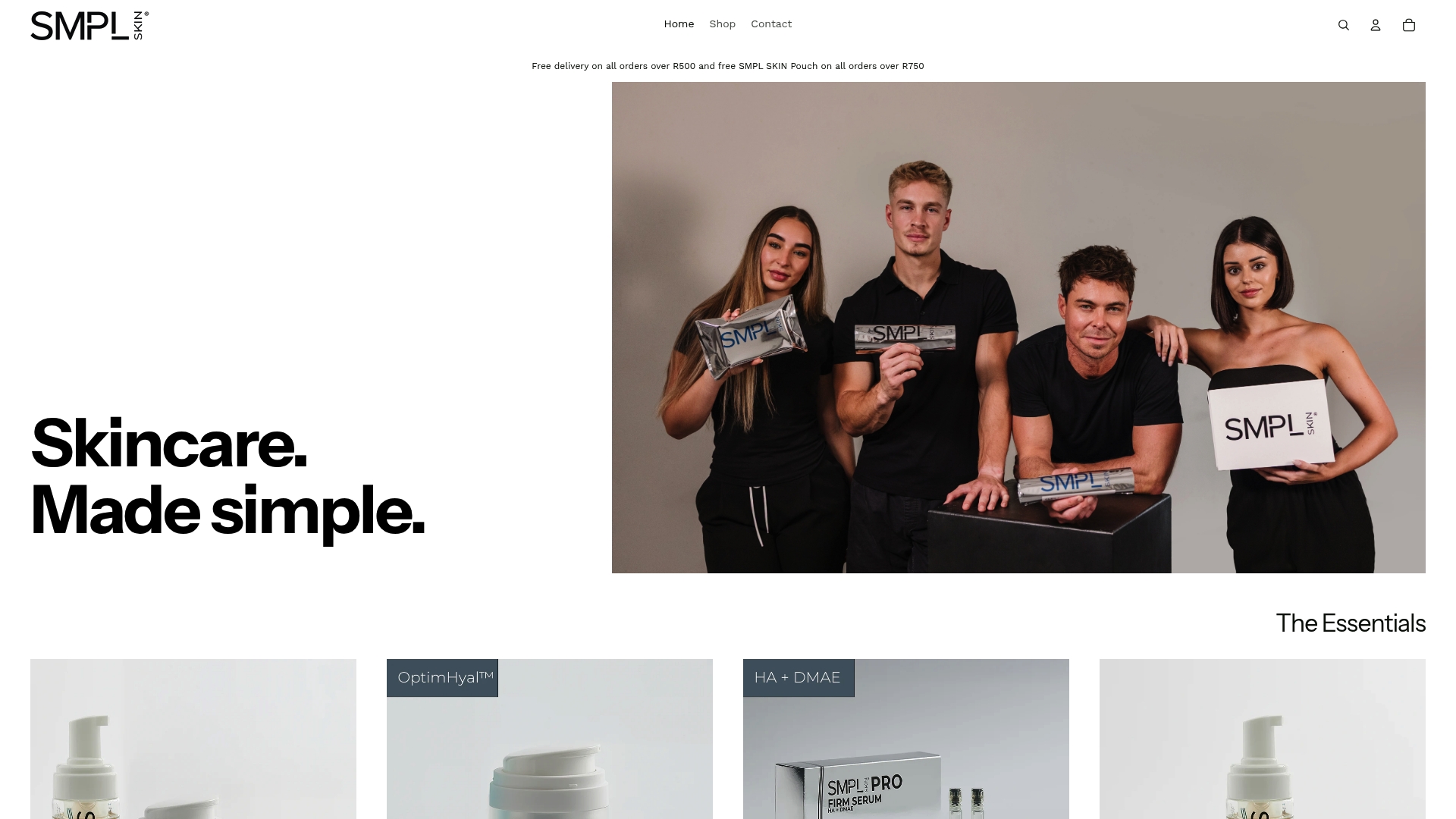
The cleanser is formulated to remove impurities without stripping your barrier, drawing on ingredients like German Chamomile and Cucumber Extract that soothe rather than stress your skin. The SPF 15 moisturiser then locks in hydration and protects against daily UV exposure. Together, they form the kind of simple, effective morning routine that consistently delivers results. It is skincare that works with your skin, not against it.
FAQ
What are the main types of facial cleansers?
The main types are gel, cream, foam, oil or balm, and micellar water. Each suits different skin types and concerns, with gel working best for oily skin and cream or balm working best for dry or sensitive skin.
How do I choose a facial cleanser for my skin type?
Match the format to your skin’s needs. Oily skin benefits from gel or foam cleansers, while dry and sensitive skin does better with cream or oil-based options. Always check that the formula is pH-balanced between 5.0 and 5.5 and free from harsh sulfates.
Is foam vs gel cleanser better for oily skin?
Both can work for oily skin. Gel cleansers are often gentler and may contain salicylic acid for acne-prone skin. Foam cleansers feel more satisfying but can strip the barrier if they rely on harsh surfactants. A mild gel is usually the safer starting point.
What ingredients should I look for in a facial cleanser?
Look for glycerin, ceramides, and hyaluronic acid to support the skin barrier, and choose fragrance-free, sulfate-free formulas if your skin is reactive or sensitive.
Is double cleansing necessary?
Double cleansing is not required for everyone, but it is genuinely effective if you wear SPF or makeup daily. An oil-based first cleanser removes what water-based formulas cannot, followed by your regular cleanser for a thorough and gentle result.
Recommended
- Top cleansers for sensitive skin: gentle picks that work – SMPL SKIN South Africa
- Step-by-step facial cleansing for healthy, glowing skin – SMPL SKIN South Africa
- Why double cleansing gives you genuinely cleaner skin – SMPL SKIN South Africa
- Gentle Cleanser & SPF 15 Moisturiser Duo – SMPL SKIN South Africa