

TL;DR:
- Double cleansing effectively removes oil-based residues like sunscreen and makeup.
- Research shows double cleansing leaves significantly less residue than single water-based cleansers.
- It should be tailored to skin type and product use, mainly recommended for evening routines.
Most people wash their face once and assume the job is done. But if you wear sunscreen, foundation, or even a light tinted moisturiser, that single cleanse may be leaving far more behind than you think. Double cleansing is a two-step method that first removes oil-based residues, then follows with a water-based cleanser to clear what remains. It sounds straightforward, and it is. This guide covers the science, the evidence, the right techniques, and how to decide whether double cleansing belongs in your routine or not.
Table of Contents
- What is double cleansing and why does it matter?
- Double cleansing vs single cleansing: Which removes more residue?
- Who actually needs double cleansing? Tailoring for skin types and routines
- Techniques, common mistakes, and best practices for double cleansing
- Why double cleansing isn’t always necessary: A minimalist’s insight
- Explore gentle cleansers for a balanced skincare routine
- Frequently asked questions
Key Takeaways
| Point | Details |
|---|---|
| Double cleansing removes more | Two-step cleansing eliminates makeup and sunscreen much better than single cleanses. |
| Tailor routines to skin type | Not everyone needs double cleansing; dry or sensitive skin benefits from gentle, occasional use. |
| Avoid over-cleansing | Too much cleansing can harm your skin barrier—always follow with moisturizer. |
| Science supports method | Clinical studies show oil cleansers outperform water-only cleansers in residue removal. |
What is double cleansing and why does it matter?
Double cleansing is exactly what it sounds like: two rounds of cleansing, each with a different type of product. The first step uses an oil-based cleanser, whether that is a facial oil, cleansing balm, or micellar water, to break down oil-based substances sitting on your skin. The second step uses a gentle water-based cleanser to sweep away any remaining particles, water-soluble impurities, sweat, and environmental debris.
Here is the thing: most daily skincare products, including sunscreen, long-wear foundation, and sebum itself, are oil-based. A standard water-based cleanser cannot fully break these down. What it often does instead is smear them around the skin’s surface. The like dissolves like principle from basic chemistry explains why oil-based cleansers are so effective at lifting oil-based residues where water-based formulas simply cannot reach.
Think of it this way. Trying to clean an oily pan with just water does not work. You need dish soap, which is designed to cut through oil. The same logic applies to your skin.
Why single cleansing often falls short:
- Modern sunscreens are formulated to be water-resistant, meaning they bond to skin and resist a simple rinse
- Silicone-based makeup products form a film on the skin that water-based cleansers cannot break through effectively
- Urban pollution deposits fine particles on the skin throughout the day, some of which are oil-attracting
- Sebum produced by your own skin mixes with external products to create a layered residue
“Removing that residue properly is not about washing harder. It is about using the right product in the right order.”
Incorporating double cleansing as part of your skin detox routines is one of the most practical upgrades you can make. When your skin is genuinely clean, your serums absorb better, your moisturiser works more effectively, and your skin’s natural renewal process can happen without interference.
The method gained widespread popularity in South Korean skincare culture but is now firmly backed by clinical evidence. It is not a passing trend. It is a logical response to modern skincare formulations that are designed to stay put throughout the day.
Key benefits of double cleansing done correctly:
- Removes oil-based residue that water alone cannot lift
- Reduces clogged pores from leftover product buildup
- Improves skin clarity and texture over time
- Allows subsequent skincare products to absorb more efficiently
- Supports a healthier skin barrier by reducing residue-driven inflammation
Understanding this foundation makes the evidence we explore next much easier to appreciate.
Double cleansing vs single cleansing: Which removes more residue?
With the method defined, let’s look at what the research actually shows. The numbers here are more striking than most people expect.
A 2019 clinical study found that a water-based cleanser left 36.8% sunscreen residue on the skin after cleansing, while an oil-based cleanser left only 5.8%. That is a significant difference. It means that when you use only a water-based cleanser after a day of wearing SPF, more than a third of your sunscreen could still be sitting on your skin when you go to bed.

| Cleanser type | Sunscreen residue remaining | Effectiveness rating |
|---|---|---|
| Water-based cleanser only | 36.8% | Moderate |
| Oil-based cleanser only | 5.8% | High |
| Oil then water (double cleanse) | Under 2% | Highest |
Those numbers matter because daily sunscreen use is non-negotiable for skin health, but it only works properly when it is properly removed each evening. Accumulated SPF residue, combined with daily pollutants and sebum, can contribute to congestion, uneven texture, and dull-looking skin.
Common misconceptions about double cleansing:
- More product means more damage to your skin. Not true when gentle formulas are chosen correctly.
- Double cleansing is only for women who wear heavy makeup. Sunscreen alone is enough reason to double cleanse.
- Hot water removes oil better than cleanser. Hot water strips the skin barrier without effectively removing oil-based products.
- Micellar water counts as the first cleanse on its own. Standard micellar water may not fully emulsify oil-based sunscreen, so a dedicated oil cleanser is more effective as a first step.
Exploring skincare essentials and understanding cleansing as a foundation step changes how you view the rest of your routine. If cleansing is incomplete, every product applied afterward is working against a compromised base.
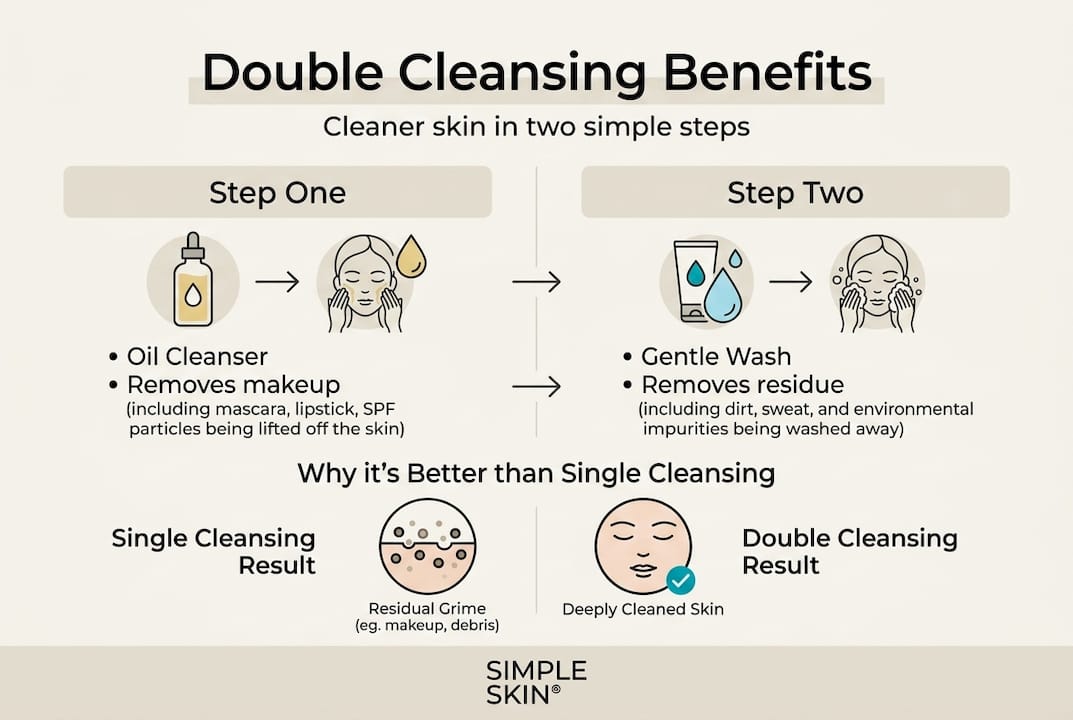
For those building a hydrating morning routine, it is worth noting that double cleansing is generally best reserved for evening use. In the morning, your skin does not have a day’s worth of SPF and makeup to contend with, so a single gentle cleanse is usually sufficient.
The evidence is clear. If you are wearing sunscreen every day (and you should be), a single water-based cleanse is not doing the full job.
Who actually needs double cleansing? Tailoring for skin types and routines
Now that you know double cleansing works, the real question is whether it is right for you. The honest answer is that it depends on your skin type, your daily product use, and how your skin responds.
Double cleansing frequency should be tailored carefully: for dry or sensitive skin, the method can be too stripping when used every day, while oily and acne-prone skin tends to benefit from thorough removal without relying on harsh single-step cleansers that can trigger more oil production.
| Skin type | Recommended frequency | Best first step | Best second step |
|---|---|---|---|
| Oily or acne-prone | Every evening | Lightweight cleansing oil | Gel-based cleanser |
| Combination | 4 to 5 evenings per week | Micellar oil | Mild foaming cleanser |
| Normal | When wearing SPF or makeup | Cleansing balm | Cream cleanser |
| Dry or sensitive | Only after heavy product days | Gentle cleansing balm | Hydrating cream cleanser |
Signs double cleansing might benefit your skin:
- You wear sunscreen daily (almost everyone should)
- Your skin feels congested or looks dull despite regular cleansing
- You wear foundation, tinted moisturiser, or powder products
- You live in a city or polluted environment
- You exercise and apply products before working out
Signs you may not need it every day:
- You wore no makeup or SPF that day
- Your skin already feels dry or tight after a single cleanse
- You are experiencing a flare-up of sensitivity or redness
Pro Tip: If you have sensitive skin concerns, opt for a calming cleansing balm with soothing ingredients like chamomile or cucumber extract as your oil-based first step. These help break down residue without triggering inflammation.
Using a skin type guide can help you identify exactly where your skin sits and how to adapt the double cleanse accordingly. Skincare should always be personal. What works brilliantly for oily skin may genuinely be too much for dry or reactive skin.
The goal is not to follow a trend. It is to give your skin what it actually needs on any given day.
Techniques, common mistakes, and best practices for double cleansing
Once you have decided that double cleansing fits your routine, getting the technique right matters. Done correctly, it is simple and gentle. Done incorrectly, it can cause the very problems you are trying to prevent.
Step-by-step method for effective double cleansing:
- Start with dry skin. Apply your oil-based cleanser (balm, cleansing oil, or micellar oil) to dry hands and massage gently onto a dry face for 30 to 60 seconds.
- Add a small amount of lukewarm water and continue massaging. This helps the oil cleanser emulsify and lift product off the skin.
- Rinse thoroughly with lukewarm water until all the oil cleanser is removed.
- Apply your water-based cleanser to slightly damp skin and massage gently for another 30 to 60 seconds.
- Rinse again with lukewarm water and pat skin dry with a clean towel.
- Follow immediately with your moisturiser to support the skin barrier.
Common mistakes people make:
- Using water that is too hot, which strips the barrier and causes redness
- Rushing the first step without giving the oil cleanser time to break down products
- Over-massaging with friction, which irritates skin rather than cleaning it
- Skipping moisturiser after cleansing, leaving skin vulnerable
Over-cleansing risks disrupting the skin barrier, increasing transepidermal water loss (TEWL), and causing irritation. The skin barrier is your protection against environmental stressors, and aggressive cleansing routines break it down faster than almost anything else.
This is why the gentle cleanser option matters so much. A gentle second-step cleanser keeps the method effective without tipping into over-stripping territory.
Double cleansing is not necessary on mornings or bare-faced days. A single, gentle cleanse is all your skin needs when it has not been exposed to heavy products. Using the same two-step process morning and night without adjusting for your actual skin needs is one of the most common over-cleansing mistakes.
Pro Tip: On days when you have worn minimal or no makeup, skip the oil-based step entirely. A single cleanse with a mild water-based formula is enough to prep your skin for the next round of products.
Signs you may have over-cleansed:
- Skin feels uncomfortably tight immediately after washing
- Surface looks shiny but feels rough or dry to the touch
- Redness or sensitivity that was not there before
- Increased breakouts, which can signal a disrupted barrier that your skin is trying to overcompensate for
The fix is always the same: scale back, use gentler products, and prioritise moisturising immediately after cleansing to restore what was lost.
Why double cleansing isn’t always necessary: A minimalist’s insight
We are big believers in evidence-based skincare here at SMPL SKIN. And the evidence does support double cleansing for specific situations. But we also believe in honest simplicity, and the honest truth is that not everyone needs to double cleanse every single day.
Double cleansing for minimalists can be overkill without heavy products, and risks unnecessary stripping when a single gentle cleanse would be more appropriate. If your daily routine involves a light moisturiser and SPF, you likely do not need the same approach as someone wearing full makeup and heavy-coverage products.
We encourage you to think about skin cycling for minimalists as a smarter framework. Rather than applying every step every day, you adapt your routine to what your skin genuinely needs. Double cleanse on heavier product days. Single cleanse when your skin has been bare or lightly covered. Listen to how your skin responds and adjust accordingly.
The real risk we see is people adopting double cleansing as a rigid daily rule without considering their own skin’s condition. That leads to over-cleansing, which leads to barrier disruption, which leads to exactly the kind of sensitive, reactive skin that makes skincare feel like a chore. Simple, consistent habits beat complicated daily rituals every time.
Explore gentle cleansers for a balanced skincare routine
If this guide has inspired you to try double cleansing or simply refine your current routine, we have got some practical options to help you do it gently and effectively.
At SMPL SKIN, we believe your cleanser should work hard without working against you. Our Gentle Cleanser & SPF 15 Moisturiser Duo gives you a clean-skin foundation paired with essential daily protection, making it easy to build a routine that actually fits your life. Whether you are double cleansing every evening or keeping things minimal most days, our formulas are designed to support your skin barrier, not strip it. Simple. Effective. Exactly what you need.
Frequently asked questions
Is double cleansing necessary if I don’t wear makeup?
If your skin is bare or you only use minimal products, a single gentle cleanse is usually enough and avoids unnecessary barrier disruption. Double cleansing is most valuable on days when sunscreen or heavier products have been worn.
Can double cleansing irritate sensitive or dry skin?
Yes, over-cleansing can strip and irritate dry or sensitive skin. The method can be too stripping when used daily on reactive skin types, so reserve it for heavier product days and always choose gentle formulas.
What’s the evidence that double cleansing works?
A 2019 study showed oil cleansers leave only 5.8% sunscreen residue compared to 36.8% with a water-based cleanser alone, making the case for oil-based first steps clear and compelling.
Should I double cleanse morning and night?
Double cleansing works best in the evening when products have accumulated throughout the day. In the morning, a single gentle cleanse is all you need to prep skin without risking over-stripping.
What types of cleansers should I use for double cleansing?
Dermatologists recommend tailoring your choice to your skin type: micellar water or gentle oil for sensitive skin, lightweight oils or gels for oily skin, and creamy balms for dry or mature skin as the first step.
Recommended
- Detoxify your skin at home: simple routines for results – SMPL SKIN South Africa
- Gentle Cleanser & SPF 15 Moisturiser Duo – SMPL SKIN South Africa
- Skin health explained: simple science for better results – SMPL SKIN South Africa
- How to achieve healthy skin with a simple routine – SMPL SKIN South Africa