

TL;DR:
- Simplified skincare focusing on gentle cleansing, hydration, and high SPF is ideal for South African summers.
- Use water-based gels and serums to prevent congestion and boost moisture retention in humid conditions.
- Daily application of SPF50+ and reapplication every two hours is crucial for skin protection.
South Africa’s summer is no gentle season. UV index readings routinely exceed 10 across most of the country, which means your skin faces intense radiation, heat, and humidity from October through March. Many people respond by layering on more products, but that approach often backfires. Heavy creams trap sweat, clog pores, and leave skin feeling worse than before. The good news? A streamlined routine built around the right essentials, hydration and SPF, is all you genuinely need. We put together this guide to help you cut through the noise and protect your skin smartly this summer.
Table of Contents
- How to build a minimalist summer skincare routine
- Top summer skincare essentials for South African skin
- How to adapt essentials for different skin types and situations
- Summer skincare essentials comparison and application guide
- Why less is more: The overlooked power of minimalist summer skincare
- Discover minimalist skincare with SMPL SKIN South Africa
- Frequently asked questions
Key Takeaways
| Point | Details |
|---|---|
| Start with gentle cleansing | A mild, non-stripping cleanser preps your skin without irritation for summer heat and humidity. |
| Hydration is essential | Use lightweight serums or gel-creams with hyaluronic acid or ceramides to prevent dehydration, even for oily skin. |
| SPF is non-negotiable | Apply a broad-spectrum SPF50+ sunscreen daily and reapply often to guard against UV and pigmentation. |
| Adapt for your skin type | Select formulas and application strategies tuned to your skin’s unique needs and South African summer conditions. |
| Keep your routine simple | Minimal steps with the right essentials offer better results and reduce irritation in South African summer. |
How to build a minimalist summer skincare routine
Simplifying your routine is not about cutting corners. It is about choosing the right steps and doing them consistently. In South Africa’s heat, fewer products mean less occlusion, less irritation, and a routine you will actually stick to.
A well-built morning skincare routine for summer follows a clear sequence. Here is how we recommend you structure it:
- Gentle cleanser — removes overnight oils and sweat without stripping your skin barrier.
- Lightweight hydrator — replaces moisture and keeps skin balanced throughout the day.
- Broad-spectrum SPF — always last, sealing in your routine while blocking UV damage.
The core principle when layering products for hydration is always to go from the lightest texture to the heaviest. A watery serum goes on before a gel moisturiser, and your sunscreen goes on last. This order matters because heavier formulas can block lighter ones from absorbing properly.
In high humidity, your skin’s ability to retain moisture changes. Sweat already sitting on the skin surface can make occlusive creams feel sticky and suffocating. Switching to water-based gels and serums keeps your barrier happy without the congestion. Summer skincare tips consistently recommend simplifying to core steps in hot and humid climates for exactly this reason.
“The goal in summer is to protect and hydrate without overwhelming the skin. Gentle cleansing and a reliable SPF are the two pillars everything else can build on.” — General dermatology consensus for hot-climate skin care
Pro Tip: Apply your SPF as the absolute last step every morning, after your moisturiser has had 60 seconds to settle. This ensures it sits correctly on top and can do its job without interference.
Beyond the steps themselves, pay attention to how much product you use. A pea-sized amount of moisturiser is often enough for the whole face in summer. More is rarely better, and excess product can pill under sunscreen or cause breakouts along the hairline.
Top summer skincare essentials for South African skin
Now that the structure is clear, let us look at what belongs in your minimalist kit and why each product type earns its place.
The non-negotiables:
- Gentle cleanser: Removes sunscreen, sweat, and pollution without disrupting your skin barrier. Look for sulphate-free formulas with calming ingredients like chamomile or cucumber extract.
- Hyaluronic acid (HA) serum or glycerin-based moisturiser: These humectants pull water into the skin without adding grease. HA can hold up to 1,000 times its weight in water, making it ideal for hot-weather hydration.
- Ceramide-rich moisturiser (for drier skin types): Ceramides repair and maintain the skin barrier, reducing water loss even when the air-conditioning is cranked up indoors.
- Broad-spectrum SPF50+ sunscreen: This is the most important product in your summer kit. Full stop.
South Africa’s UV index regularly exceeds 10 in summer, placing it in the extreme category. That means SPF50+ broad-spectrum protection is not a suggestion. It is a necessity for every skin tone, every day.
For deeper skin tones, tinted sunscreens offer an additional layer of defence against visible light, which can worsen hyperpigmentation even without direct UV exposure. Choosing a simple routine for healthy skin means picking a tinted SPF that works with your complexion, not against it.
| Product type | Key benefit | Best for |
|---|---|---|
| Gentle cleanser | Clears sweat and impurities | All skin types |
| HA or glycerin hydrator | Draws moisture into skin | Oily, combination, normal |
| Ceramide moisturiser | Repairs and seals skin barrier | Dry, sensitive skin |
| Broad-spectrum SPF50+ | UV and visible light protection | All skin types |
| Antioxidant serum (bonus) | Fights free radical damage from UV | All skin types |
If you want to know ways to boost hydration beyond a single product, antioxidants like vitamin C can amplify your SPF’s effectiveness by neutralising free radicals generated by UV exposure. That said, it remains a bonus step, not a core requirement for a minimalist routine.
How to adapt essentials for different skin types and situations
With the core products clear, you can fine-tune based on your skin’s actual needs. One routine does not fit everyone, but the minimalist approach still holds across skin types.
Oily and combination skin: Choose water-gels over creams. They hydrate without adding oil or creating a greasy finish. Adding niacinamide (vitamin B3) to your routine can help regulate sebum and visibly reduce pores over time. Keep actives simple; one targeted ingredient is enough.
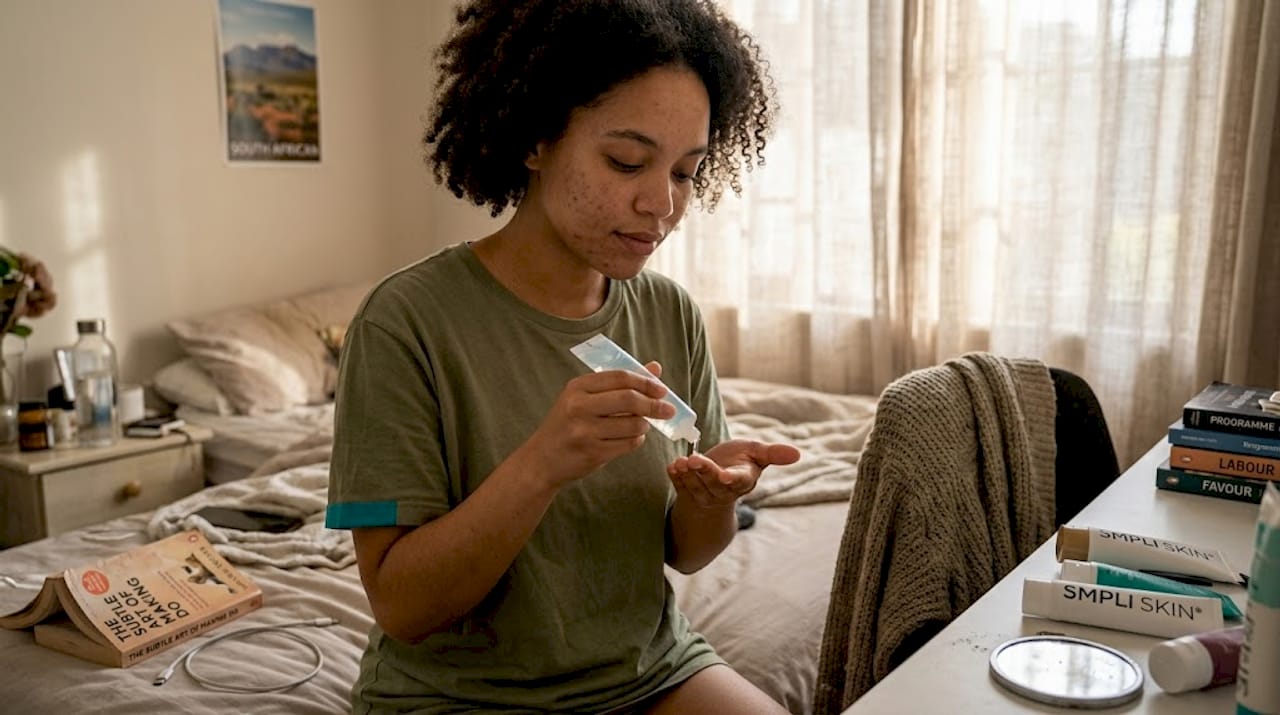
Dry and very dry skin: Layer a hydrating serum under a gel-cream moisturiser. The serum delivers immediate hydration, and the gel-cream locks it in. Do not skip moisturiser just because it feels heavy. Find a lighter formula instead.
Sensitive skin: Go fragrance-free. Centella asiatica (also known as cica) is a well-researched calming ingredient that reduces redness and supports barrier repair. Solutions for sensitive skin often start with eliminating unnecessary actives and switching to the gentlest versions of core products.
Melanin-rich skin: Hyperpigmentation is a real concern. CANSA recommends that all South Africans, regardless of skin tone, use protective SPF daily. Tinted SPF is especially useful here because it also shields against high-energy visible light, which triggers melanin overproduction.
Special cases: Children’s skin needs SPF designed specifically for them, as standard adult formulas can contain irritants. Individuals managing skin conditions like dermatoses or those with compromised immunity should always consult a healthcare professional before introducing new actives.
“No matter your skin tone or type, SPF is the single most evidence-backed anti-ageing and skin-health tool available. Use it every day, not just at the beach.” — Dermatology consensus on sun protection
Pro Tip: If your skin feels tight or irritated after simplifying, do not immediately add more products. Give your barrier 2 to 4 weeks to recalibrate before introducing anything new.
Summer skincare essentials comparison and application guide
Here is a practical reference table to help you choose the right formulas and understand how each fits your daily routine.
| Product | Texture | Skin type | Key ingredient | When to use |
|---|---|---|---|---|
| Gentle cleanser | Gel or foam | All | Chamomile, cucumber | Morning and evening |
| Hydrating serum | Watery | Oily, combination | Hyaluronic acid, glycerin | After cleansing |
| Gel-cream moisturiser | Lightweight cream | Dry, normal | Ceramides, peptides | After serum |
| Water-gel moisturiser | Ultra-light gel | Oily, combo | Niacinamide, aloe | After serum |
| Broad-spectrum SPF50+ | Fluid or gel | All | Filters, antioxidants | Last step AM |
For daily application, follow these steps to get the most from your routine:
- Cleanse with lukewarm water. Avoid hot water as it strips natural oils.
- Apply serum to damp skin for maximum absorption.
- Moisturise using upward strokes, covering the neck too.
- Apply SPF generously, at least a quarter teaspoon for the face and neck.
- Reapply SPF every two hours if you are outdoors, and immediately after swimming or sweating.
Research confirms that SPF reapplication is just as important as the initial application. Most people apply too little, which dramatically reduces real-world protection. For building a healthy regimen, consistency in these five steps beats any expensive add-on product.
Common mistakes to avoid:
- Skipping SPF on overcast days (UV still penetrates cloud cover)
- Using too many active ingredients at once in summer heat
- Applying sunscreen too thinly or not reapplying
- Mixing heavy occlusives with sweaty skin
Why less is more: The overlooked power of minimalist summer skincare
Here is something we find genuinely underappreciated. The skincare industry sells the idea that more steps equal better results. But in hot, humid conditions, the opposite is often true. Excess product application clogs follicles, creates congestion, and ironically leads to more breakouts and sensitivity in summer.
Minimalism is not about being lazy. It is about being strategic. When you strip your routine to the essentials, you also remove the variables that cause unpredictable skin reactions. That makes it far easier to identify what your skin actually needs.
This approach is especially powerful for men, teenagers, and anyone prone to heat-related skin irritation. These groups often abandon skincare entirely because it feels complicated. A three-step routine removes that barrier completely.
The biggest summer skin risk is not skipping a serum. It is skipping sunscreen. Skincare simplified for South Africa starts with that one non-negotiable truth. Protect first, hydrate second, and everything else is optional.
Discover minimalist skincare with SMPL SKIN South Africa
We built SMPL SKIN around exactly the philosophy this article covers: fewer, better products that actually deliver results in South Africa’s climate. If you are ready to put a proper summer routine together without the overwhelm, we have got you covered.
Start with our Gentle Cleanser & SPF 15 Moisturiser Duo, a simple two-step foundation for any minimalist routine. Pair it with our Hydro Gel for lightweight hydration if your skin needs that extra moisture hit without heaviness. Our Gentle Cleanser is formulated with German Chamomile and Cucumber Extract to soothe and cleanse without stripping. Simple, effective, and made for South African skin.
Frequently asked questions
How often should I reapply sunscreen during a South African summer?
SPF50+ sunscreen should be reapplied every two hours outdoors, and immediately after swimming or sweating, to maintain full UV protection in extreme South African conditions.
Can I skip moisturiser in a minimalist summer routine if my skin is oily?
No, but switch to a lightweight water-gel or serum which hydrates without adding grease. Oily skin benefits from these non-greasy, water-based formulas because even oily skin loses moisture quickly in summer heat.
Is a tinted sunscreen really necessary for darker skin tones?
Tinted sunscreen protects against visible light pigmentation changes that chemical and mineral SPF alone may not fully block, making it a recommended option for melanin-rich skin according to dermatologists.
What is the main difference between a gel-cream and a water-gel moisturiser in summer?
Water-gels are lighter and better suited to oily or humid climates, while gel-creams offer slightly more moisture and suit dry skin or air-conditioned indoor environments.
Recommended
- Morning skincare routine: 4 steps for maximum hydration – SMPL SKIN South Africa
- How to layer skincare products for effective hydration – SMPL SKIN South Africa
- Occlusive skincare: lock in hydration with 99% less loss – SMPL SKIN South Africa
- Build a healthy skin regimen: simple routines for hydration – SMPL SKIN South Africa