

TL;DR:
- Occlusives form a barrier that seals water in your skin, preventing moisture loss.
- They provide deep hydration, support barrier repair, and enhance skincare absorption.
- Always apply occlusives last after humectants to maximize effectiveness in any climate.
Most people assume that if a product says ‘moisturiser’ on the label, it works the same way as every other moisturiser on the shelf. That assumption is costing your skin serious hydration. Not all moisturisers are created equal, and one category stands out for its ability to physically seal water into your skin: occlusives. Whether you follow a five-step routine or a simple two-product approach, understanding what occlusives do, and how to use them correctly, can be the difference between skin that just feels okay and skin that genuinely thrives. This guide breaks it all down in plain language.
Table of Contents
- What is occlusive skincare and why does it matter?
- Science-backed benefits: How occlusives transform your skin
- How to use occlusives for optimal results
- Choosing the right occlusive: Ingredients and routine tips
- Why minimalist skincare needs occlusives: An expert’s take
- Upgrade your hydration routine with SMPL SKIN
- Frequently asked questions
Key Takeaways
| Point | Details |
|---|---|
| Occlusive definition | Occlusives form a barrier to lock in skin moisture, preventing water loss. |
| Hydration benefits | Using occlusives boosts skin hydration and repairs the skin barrier, crucial for dryness. |
| Layering strategy | Apply humectants first, then seal with an occlusive for maximum moisture retention. |
| Ingredient selection | Look for ingredients like petrolatum, dimethicone, or shea butter in product labels for true occlusive effects. |
What is occlusive skincare and why does it matter?
Now that we’ve piqued your interest, let’s break down what occlusive skincare really means, and how it stands apart from other products.
An occlusive is an ingredient that forms a physical barrier on the surface of your skin. Think of it like cling wrap for your face. It doesn’t add water to your skin directly. Instead, it prevents the water already in your skin from escaping into the air. That process of water escaping through your skin is called transepidermal water loss, or TEWL. Occlusives slow it right down.
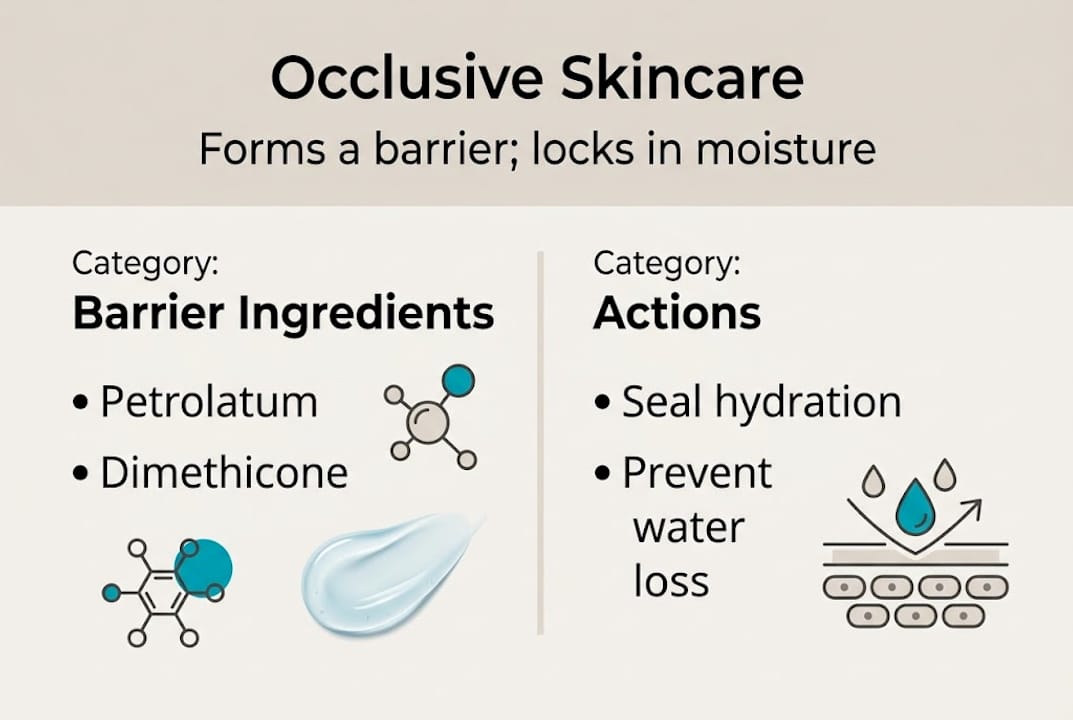
This is where occlusives differ from the other two main moisturiser types. Humectants (like hyaluronic acid and glycerin) attract water from the environment and deeper skin layers, pulling it toward the surface. Emollients (like squalane and ceramides) smooth and soften the skin by filling gaps in the skin barrier. Occlusives, on the other hand, sit on top and lock everything in. Understanding skincare layering basics helps you use all three types in the right order.
| Type | How it works | Examples |
|---|---|---|
| Occlusive | Forms a barrier to prevent water loss | Petrolatum, dimethicone, beeswax |
| Humectant | Draws water into the skin | Hyaluronic acid, glycerin, aloe |
| Emollient | Smooths and fills skin barrier gaps | Squalane, ceramides, shea butter |
Common occlusive ingredients include petrolatum (found in products like Vaseline and Aquaphor), dimethicone, mineral oil, lanolin, beeswax, and shea butter. Some of these, like shea butter, also act as emollients, which makes them particularly useful in minimalist routines where you want one ingredient doing double duty.
The key insight: Occlusives don’t hydrate your skin on their own. They protect the hydration you’ve already put in. That’s why layering order matters so much.
For minimalists, this is actually good news. You don’t need a cabinet full of products. You just need to understand the role each ingredient plays. Learning the skin barrier science behind occlusives makes it much easier to build a routine that genuinely works.
Science-backed benefits: How occlusives transform your skin
After understanding the basics, let’s look at what occlusives truly deliver for your skin.
The numbers here are hard to ignore. Petrolatum reduces TEWL by up to 99%, making it the most effective occlusive ingredient available. That’s not a marketing claim. That’s clinical data. No other moisturiser category comes close to that level of moisture retention.
But the benefits go further than just keeping skin moist. Research shows that occlusives improve hydration, support barrier repair, aid wound healing, and even enhance the penetration of active ingredients applied underneath them. They’re particularly effective for dry and eczema-prone skin, where the barrier is already compromised.
| Benefit | What it means for you |
|---|---|
| Reduces TEWL | Skin stays hydrated for longer |
| Barrier repair | Supports recovery from dryness or irritation |
| Wound healing | Speeds up minor skin recovery |
| Enhances actives | Boosts the effect of serums applied underneath |
| Eczema support | Soothes and protects reactive skin |
Here’s a quick look at the key benefits:
- Deep, lasting hydration that doesn’t fade within an hour
- Barrier repair for skin that feels tight, flaky, or reactive
- Enhanced serum performance when occlusives are applied last
- Comfort and softness even in harsh, dry conditions
- Support for sensitive or eczema-prone skin without irritation
For minimalists, this is where occlusives really shine. Instead of layering multiple products to achieve hydration, protection, and barrier support, one well-chosen occlusive applied over a humectant can deliver all three outcomes at once. That’s the kind of efficiency a simple routine is built on.
It’s worth noting that occlusives aren’t for everyone in every situation. If you have acne-prone or very oily skin, heavy occlusives like petrolatum can sometimes feel too rich. Lighter options like dimethicone or non-comedogenic formulas are better choices. For solutions for sensitive skin, fragrance-free occlusives are always the safer bet.
How to use occlusives for optimal results
Understanding their benefits is great, but applying occlusives properly is where the magic happens. Here’s how.
The single most important rule: always apply occlusives last. Because they form a physical seal, anything you apply on top of an occlusive won’t absorb properly. Your serums, actives, and humectants go on first. The occlusive goes on after, to lock everything in.
Here’s a simple, minimalist routine you can follow:
- Cleanse your skin thoroughly with a gentle cleanser.
- Apply your humectant (like a hyaluronic acid serum or hydrogel) to damp skin.
- Wait 30 to 60 seconds for the humectant to absorb.
- Apply your occlusive as the final step to seal in moisture.
- Use SPF in the morning on top if your occlusive isn’t already sun-protective.
Climate matters more than most people realise. In dry or cold environments, your skin loses water faster, so occlusives become even more critical. In low humidity, pairing occlusives with humectants delivers superior moisture retention compared to using non-occlusive moisturisers alone. In humid climates, you can use a lighter layer, but don’t skip it entirely.
Pro Tip: Never apply an occlusive over skin that hasn’t been properly cleansed. Occlusives seal in whatever is on your skin, including dirt, bacteria, and old product residue. Always start with a clean base.
Common mistakes to avoid:
- Applying occlusives to dry skin without a humectant underneath (there’s nothing to lock in)
- Using too much product, which can feel greasy and block pores
- Skipping occlusives in summer thinking your skin doesn’t need them
- Layering actives on top of an occlusive and wondering why they’re not working
For more practical ideas, explore simple ways to hydrate your skin effectively without overcomplicating your routine.
Choosing the right occlusive: Ingredients and routine tips
Having learned how to use occlusives, picking the right one for your routine is next.
Not all occlusives feel or perform the same way on skin. The right choice depends on your skin type, your climate, and what you want your routine to achieve. Here’s a quick guide to the most common options:
- Petrolatum: The most effective, reducing TEWL by up to 99%. Best for very dry or compromised skin. Can feel heavy.
- Dimethicone: Lightweight and non-comedogenic. Great for oily or acne-prone skin. Gives a smooth, silky finish.
- Mineral oil: Affordable and effective. Works well for most skin types when used in the right concentration.
- Lanolin: Rich and nourishing, but avoid it if you have a wool allergy.
- Beeswax: Natural option often found in lip balms and balm-style moisturisers.
- Shea butter: Doubles as an emollient. Nourishing and widely tolerated.
As confirmed by occlusive ingredient research, these are the ingredients to look for on product labels. On an ingredient list, they typically appear in the top half of the list if they’re the primary function of the product.
When reading labels, look for these names in the INCI (International Nomenclature of Cosmetic Ingredients) list. Petrolatum appears as ‘petrolatum,’ dimethicone as ‘dimethicone,’ and mineral oil as ‘paraffinum liquidum.’
Pro Tip: Patch-test any new occlusive on the inside of your wrist or behind your ear for 24 hours before applying it to your face. This is especially important if your skin is reactive or sensitive.
For sensitive skin types, always choose fragrance-free formulas. Fragrance is one of the most common causes of contact irritation, and the last thing you want is to seal an irritant into your skin barrier. When in doubt, keep it simple. Learning how to choose skincare products for a simple routine helps you cut through the noise and focus on what actually works.
Why minimalist skincare needs occlusives: An expert’s take
With the science and steps covered, here’s an insider view on why occlusives might be the most overlooked ingredient category in simple skincare.
We’ve noticed a pattern. People committed to minimalist routines often cut products aggressively, and occlusives are usually the first to go. The reasoning sounds logical: fewer products, fewer steps, less fuss. But here’s the uncomfortable truth. Skipping occlusives while relying only on humectants can actually make your skin drier over time, especially in low-humidity environments. Humectants pull moisture toward the skin surface, but without something to seal it in, that moisture evaporates right off.
The ‘moisturiser skipping’ trend has the same problem. It assumes your skin can regulate itself without any barrier support. For some skin types in ideal conditions, maybe. But for most people, that’s a gamble with real consequences: tightness, sensitivity, and a weakened barrier.
We believe that a truly simple routine isn’t about using fewer ingredients at the cost of results. It’s about choosing the right ingredients that do more with less. Occlusives belong in that category. Adding one well-chosen occlusive to your final step costs nothing in terms of routine complexity but pays back enormously in skin comfort and resilience. Explore holistic skincare routines that show how this balance works in practice.
Upgrade your hydration routine with SMPL SKIN
Ready to lock in hydration easily? Here’s how SMPL SKIN makes adding powerhouse occlusives effortless for your daily routine.
At SMPL SKIN, we build products around the principle that effective skincare doesn’t need to be complicated. Our formulations are designed to work together, layering hydration and protection in the fewest steps possible.
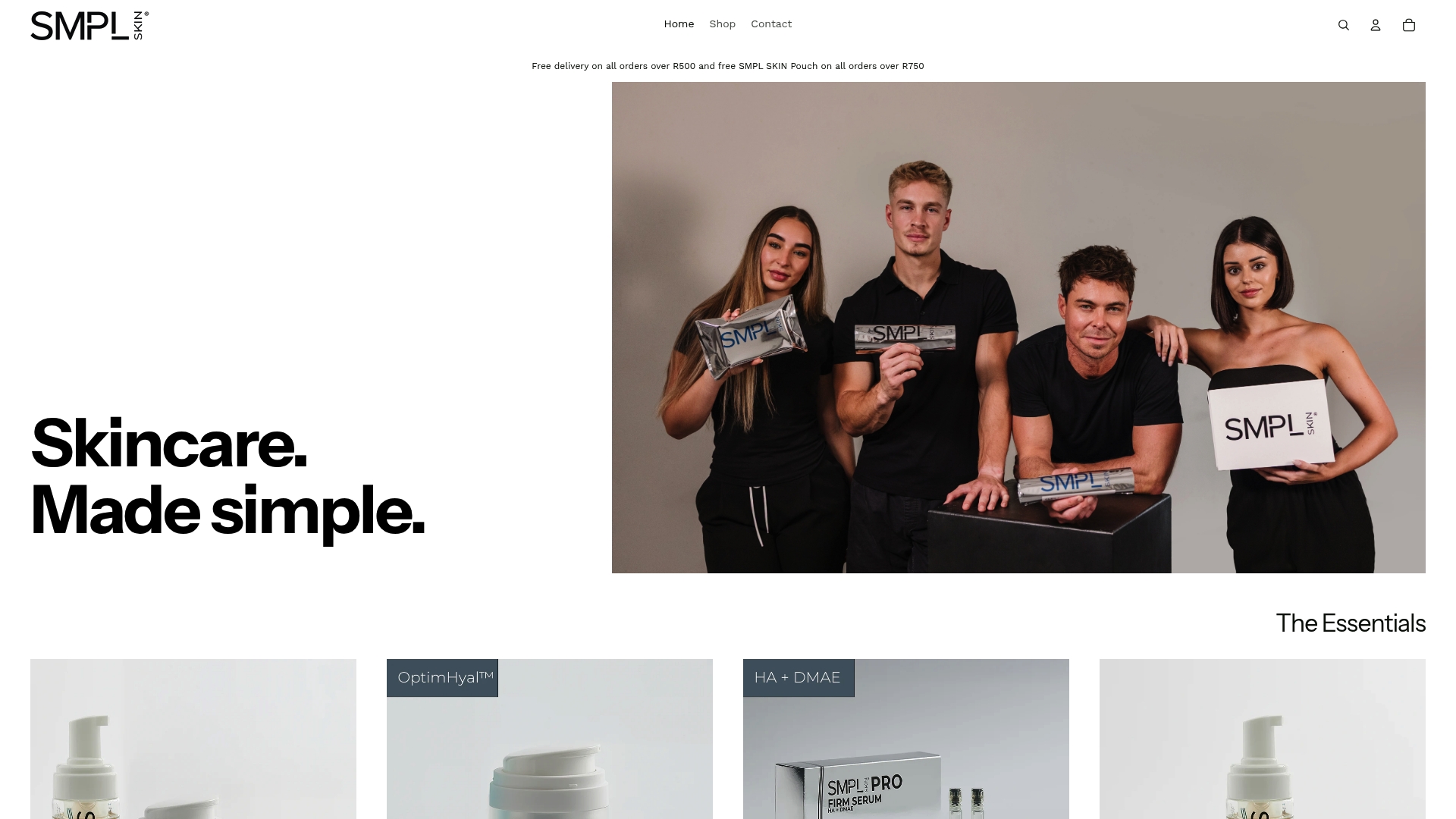
The PRO Firm Serum delivers active ingredients your skin can actually absorb, while the SPF 15 Daily Moisturiser provides daily occlusive protection with built-in sun care. For the ultimate minimalist setup, the Gentle Cleanser & Moisturiser Duo gives you a clean start and a sealed finish in one simple bundle. Simple steps. Real results.
Frequently asked questions
What are common occlusive ingredients in skincare?
Popular occlusive ingredients include petrolatum, dimethicone, mineral oil, lanolin, beeswax, and shea butter. These form a physical barrier on skin to prevent moisture loss.
How do occlusives help with dry or eczema-prone skin?
Occlusives create a protective seal that locks in moisture and supports barrier repair, making them highly effective for dry or irritated skin that struggles to retain hydration on its own.
Should I use occlusives in humid climates?
Yes, though lighter layers work better in high humidity. Superior moisture retention is confirmed across climates when occlusives are paired with humectants, regardless of how much moisture is in the air.
Recommended
- How to layer skincare products for effective hydration – SMPL SKIN South Africa
- 10 simple ways to boost skin hydration for glowing skin – SMPL SKIN South Africa
- Morning skincare routine: 4 steps for maximum hydration – SMPL SKIN South Africa
- Skin health explained: simple science for better results – SMPL SKIN South Africa