

TL;DR:
- Serums provide targeted, deep-absorbing active ingredients that improve skin barrier and hydration.
- Clinical evidence shows serums deliver measurable skin improvements within four weeks.
- Using one versatile serum daily is more effective than multiple layered products in minimal routines.
Serums are one of the most skipped steps in skincare, often dismissed as unnecessary extras for people who want a simple routine. That’s a common misconception we’d love to clear up. Far from being optional luxuries, serums are concentrated formulas that can do more targeted work in fewer steps than almost any other product. Serum formulations show measurable improvements in skin barrier health and hydration in clinical settings. This guide will explain exactly what serums are, why they earn a place in even the most minimalist routine, and how to use them without any guesswork.
Table of Contents
- What are serums and why do they matter?
- Evidence-based benefits of serums for simple routines
- How to use serums safely in a minimalist routine
- Choosing the right serum for your skin goals
- Why less really is more with serums: An expert’s take
- Take the next step with simple skincare solutions
- Frequently asked questions
Key Takeaways
| Point | Details |
|---|---|
| Serums boost skin outcomes | Clinical research shows serums provide measurable improvements in hydration and barrier function. |
| Less is often more | Focusing on one effective serum is safer and better than layering many actives for most people. |
| Safe integration is key | To avoid irritation, add serums gradually and prioritize compatibility with your minimalist routine. |
| Choose for your main need | Selecting a serum based on your top concern helps keep routines simple and effective. |
What are serums and why do they matter?
Now that you understand why this topic matters, let’s start with the basics of what serums are and their unique role in your skincare routine.
A serum is a lightweight, fast-absorbing formula packed with a high concentration of active ingredients. Unlike a moisturiser, which focuses on sealing hydration into the skin’s surface, a serum is designed to penetrate deeper and deliver targeted ingredients where they’re needed most. A toner, on the other hand, mainly preps and balances skin before other products. Each has its role, but the serum is the one doing the heavy lifting.
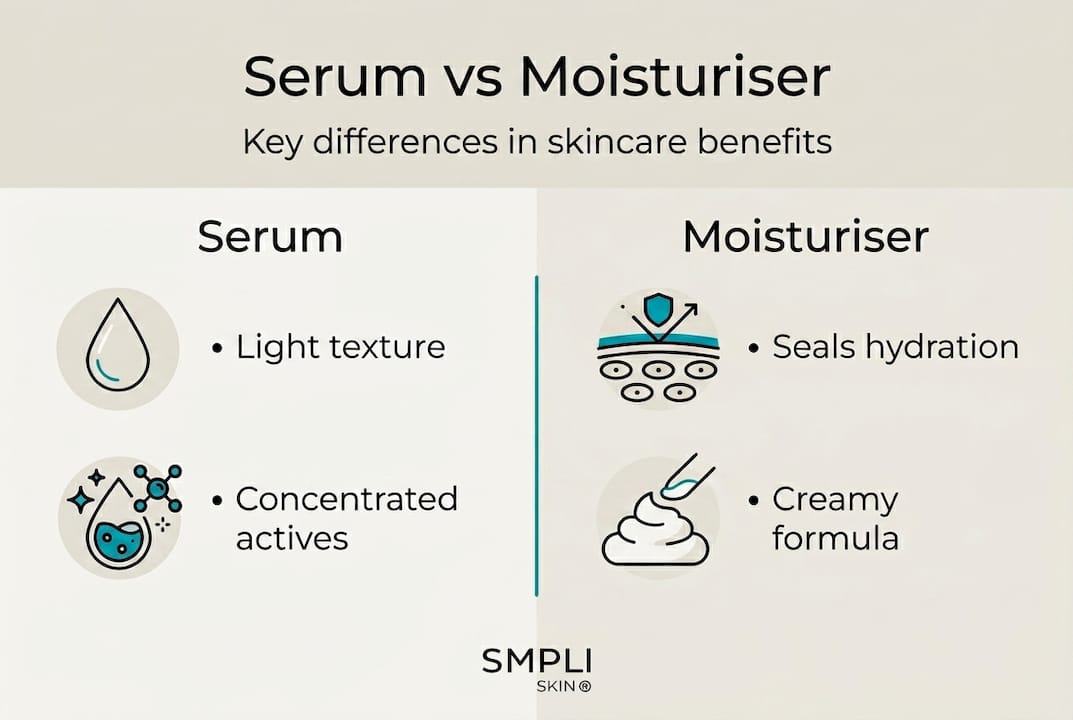
| Product | Primary function | Texture | Key benefit |
|---|---|---|---|
| Serum | Delivers concentrated actives | Lightweight, watery | Targets specific skin concerns |
| Moisturiser | Seals in hydration | Cream or lotion | Protects the skin barrier |
| Toner | Balances and preps skin | Thin, liquid | Refreshes and primes |
Serums target specific needs: hydration, brightness, calming redness, or improving skin texture. Because their molecules are smaller than those in a moisturiser, they can reach the deeper layers of your skin more effectively. This makes them genuinely functional, not just cosmetic.
When it comes to choosing skincare products that deliver real results, serums are worth considering even for simple routines. Many people assume that if your routine only has three or four steps, a serum is overkill. But that thinking misses the point entirely.
“Some serum formulations show measurable improvements in skin barrier metrics and hydration when evaluated in clinical research, supporting the idea that serums can have functional, not just cosmetic, effects.” — Clinical serum research
Here are the most common reasons people assume serums are unnecessary:
- “My moisturiser already does enough.”
- “Serums are too expensive for what they offer.”
- “I don’t have the time for extra steps.”
- “They’re only for people with serious skin concerns.”
- “I don’t know which one to pick, so I skip it.”
Every one of these is understandable, but none of them hold up when you see what serums actually do.
Evidence-based benefits of serums for simple routines
After understanding what sets serums apart, let’s dig into the real, evidence-based benefits you’ll see when adding one to a simple routine.
The strongest case for using a serum is the clinical evidence behind them. Serums formulated with the right actives can repair the skin barrier, boost hydration levels, and visibly improve texture over time. These are not vague marketing promises. They’re measurable outcomes seen in structured studies.
In one study, applying a facial serum before and after ablative fractional CO2 laser treatment improved transepidermal water loss (TEWL) and hydration faster than the control group. TEWL is a measure of how much water escapes through the skin. Lower TEWL means a stronger, healthier barrier. That’s a meaningful result.
Statistic callout: Studies report hydration improvements and reduced TEWL within as little as four weeks of consistent serum use.
| Skin outcome | Moisturiser alone | Moisturiser plus serum |
|---|---|---|
| Surface hydration | Moderate improvement | Significant improvement |
| TEWL reduction | Minimal | Measurable |
| Texture refinement | Slow | Faster with targeted actives |
| Barrier repair | General | Targeted and more efficient |
For a minimalist skincare routine, the top three evidence-backed serum benefits are:
- Barrier repair: Ingredients like niacinamide and ceramides strengthen the skin’s protective layer.
- Deep hydration: Hyaluronic acid draws moisture into the skin, not just onto the surface.
- Improved texture: Regular use visibly smooths and evens skin over time.
Building a strong morning hydration routine around a single quality serum can deliver results that outperform a cabinet full of average products. For those curious about what an expert-backed skincare routine actually looks like, serums consistently earn a spot in those recommendations.
Pro Tip: Look for serums that multi-task, combining hydration and barrier repair in one formula. This keeps your routine short without cutting corners on results.
How to use serums safely in a minimalist routine
Now that you’re familiar with what serums can do, it’s essential to know how to integrate them without risking irritation.
More is rarely better in skincare. Layering multiple actives in the hope of faster results often backfires. Skin needs time to adjust to new ingredients, and piling on too much at once is a fast route to redness, dryness, or sensitivity.
“Using too many actives at once can increase irritation risk; therefore, in a minimalist routine you should be cautious about stacking multiple potentially irritating ingredients.” — Northwestern Medicine dermatologists
Here’s a simple, step-by-step guide to safely adding a serum to your routine:
- Cleanse first. Start with a gentle cleanser to remove dirt and oil. Clean skin absorbs serum more effectively.
- Apply serum to damp skin. A few drops go a long way. Press it gently into your skin rather than rubbing.
- Wait 30 to 60 seconds. Let the serum absorb before moving on. This short wait makes a real difference.
- Follow with moisturiser. Seal the serum’s benefits in with your regular moisturiser.
- Add SPF in the morning. Sun protection is non-negotiable, especially when using active ingredients.
- Introduce gradually. Use the serum every other day for the first two weeks before making it a daily habit.
Knowing how to layer serums safely protects your skin and helps you get the most from each product you use.

Common signs you’re overdoing it include persistent redness, flaking, tightness, or a stinging sensation that doesn’t settle within a minute of application. If any of these appear, scale back and give your skin a few days to recover.
Pro Tip: When you’re starting with potent ingredients like AHAs, BHAs, or retinol, start with once or twice a week. Build up slowly only when your skin responds well.
Choosing the right serum for your skin goals
By now, you know how to use serums safely; let’s ensure you pick the right one to match your goals.
The most effective minimalist routine follows a clear order: cleanser, serum, moisturiser, and SPF. Four steps. That’s it. Within that structure, the serum is where you customise for your specific skin goals.
Different actives serve different purposes. Here’s a straightforward breakdown:
- Hyaluronic acid: Best for hydration. Draws water into the skin and plumps fine lines.
- Niacinamide (Vitamin B3): Repairs the barrier, reduces redness, and minimises pores.
- Vitamin C: Brightens skin tone and offers antioxidant protection against environmental damage.
- Peptides: Support collagen production and improve firmness over time.
- Chamomile or Cucumber Extract: Calms sensitive or reactive skin without harsh actives.
When reading a serum label, look for the active ingredient listed in the top half of the ingredient list. That tells you it’s present in a meaningful concentration. Fragrance-free formulas are a safer starting point, especially for sensitive skin.
For those exploring holistic skincare routines, choosing a versatile serum that addresses more than one concern is a smart move. A niacinamide serum, for example, handles barrier repair, oil balance, and tone improvement in one bottle.
Serum formulations with clinical evidence of functional benefits, not just cosmetic claims, are the ones worth investing in. Check for results data, not just marketing language, and your skincare product selection process becomes much simpler.
Why less really is more with serums: An expert’s take
With practical strategies covered, consider this perspective from our team on the true value of a simple serum routine.
We’ve seen it happen over and over. Someone discovers the world of active ingredients and suddenly they’re using a Vitamin C serum in the morning, a retinol at night, an AHA every few days, and a peptide formula on weekends. Their skin gets worse, not better, and they blame the products instead of the approach.
The ‘skinimalism’ movement exists for a reason. Fewer, well-chosen products consistently outperform crowded routines in terms of visible improvement and long-term skin resilience. When you use one targeted serum, you can actually track whether it’s working. With five layered products, you’ll never know which one made the difference or caused the breakout.
Even advanced skincare users benefit most from a single, versatile serum that does its job without competition. A good simple expert-backed routine will always prioritise consistency over complexity. One serum, used daily, builds more meaningful results than rotating a shelf full of them.
Take the next step with simple skincare solutions
Ready to put your new knowledge to work? Here’s how to keep things simple and effective.
A focused serum, paired with the right cleanser and moisturiser, is all most people need to see real, lasting improvements. You don’t need a complicated system or a bathroom shelf full of products. You need the right products, used consistently.
At SMPL SKIN, we’ve built our entire range around this philosophy. If you’re ready to start a simple but effective routine, our Gentle Cleanser & Moisturiser Duo is a great foundation. Pair it with our SPF 15 Daily Moisturiser to lock in your serum’s benefits and protect your skin every single day. Simple, effective, and built for real results.
Frequently asked questions
Are serums necessary in a basic skincare routine?
Serums are not essential for everyone, but they offer concentrated benefits that a moisturiser alone cannot replicate. Clinical research confirms that serums improve skin barrier function and hydration in measurable ways.
Can I use just a serum instead of a moisturiser?
Serums deliver targeted actives but are not designed to seal in hydration on their own. Most people still need a moisturiser to protect the skin barrier and prevent water loss.
Is it possible to use too many serums?
Absolutely. Stacking too many actives increases the risk of irritation and sensitivity, especially in a minimalist routine where your skin has fewer buffering products around the actives.
How long does it take to see results from a serum?
Most people notice visible improvements in hydration and texture within two to four weeks of consistent use. A cosmetic serum study reported measurable improvements after just four weeks of regular application.
Recommended
- How to layer skincare products for effective hydration – SMPL SKIN South Africa
- How to choose skincare products for a simple routine – SMPL SKIN South Africa
- Skincare routine tips: 4 steps to a daily glow – SMPL SKIN South Africa
- Holistic skincare: Simple routines, real results in 2026 – SMPL SKIN South Africa