

TL;DR:
- Daily sunscreen use can reduce melanoma risk by up to 50 percent and prevent long-term skin damage.
- UV rays penetrate clouds, glass, and are present year-round, affecting all skin tones.
- Choosing simple, broad-spectrum SPF 30+ products and consistent application optimizes skin health.
Most people reach for sunscreen when they’re heading to the beach or planning a full day outside. The rest of the time? It stays in the drawer. This is one of the most common and costly skincare oversights out there. Research shows that daily sunscreen use reduces melanoma risk by up to 50% and significantly lowers squamous cell carcinoma rates. That’s not a beach-day benefit. That’s an every-day benefit. This article breaks down the real science, addresses the hesitations, and shows you how to make SPF the easiest part of your morning.
Table of Contents
- The real risks of skipping sunscreen
- What daily sunscreen actually protects you from
- Choosing and applying the right sunscreen for your routine
- Addressing common concerns: vitamin D, ingredients, and reapplication
- Why daily sunscreen habits are simpler than you think
- Ready for simpler sun protection?
- Frequently asked questions
Key Takeaways
| Point | Details |
|---|---|
| Reduces skin cancer risk | Daily use cuts your risk of major skin cancers like melanoma by up to half. |
| Prevents visible aging | Sunscreen protects against wrinkles, pigment changes, and loss of skin elasticity from sun damage. |
| Works for all skin tones | Everyone benefits, including darker skin, by preventing hyperpigmentation and long-term damage. |
| Consistency beats perfection | Using sunscreen every day, even imperfectly, has major lifelong benefits. |
| Simple routines are effective | Making SPF part of your morning habit is the easiest way to protect your skin long-term. |
The real risks of skipping sunscreen
Many people think UV damage only happens on hot, sunny days or after a burn. That’s simply not how skin damage works. UV rays, specifically UVA and UVB radiation, are present year-round. They penetrate clouds, office windows, and car glass. Every unprotected minute of exposure adds up over time, contributing to what dermatologists call cumulative UV damage.
UVA rays are particularly sneaky. They don’t cause immediate redness, so you don’t feel them working. But they penetrate deep into the skin’s layers, breaking down collagen and triggering changes at a cellular level. UVB rays cause sunburn, but both types contribute to skin cancer risk when skin is left unprotected over years. This isn’t about one bad sunburn. It’s about every ordinary Tuesday.
There’s also a persistent myth that darker skin tones don’t need sunscreen. This isn’t true. While melanin does offer some natural protection against UV rays, it doesn’t eliminate the risk of skin cancer or other UV-related damage. Research confirms that sunscreen for darker skin is effective and necessary, particularly for preventing post-inflammatory hyperpigmentation (PIH), a condition where skin discolours after inflammation or injury. PIH is more common and more severe in deeper skin tones, making daily SPF a genuinely important tool across all complexions.
Good skin protection tips consistently point to one thing: the single biggest factor in long-term skin health is consistent daily protection, not reactive care.
“Daily sunscreen use reduces melanoma risk by 50% and squamous cell carcinoma significantly, as shown in randomised trials.”
Common myths vs. the real facts:
- Myth: “It’s cloudy, so I don’t need SPF.” Fact: Up to 80% of UV rays pass through clouds. Cloud cover is not sun protection.
- Myth: “I work indoors all day.” Fact: UVA rays penetrate glass windows, meaning your skin is still being exposed at your desk.
- Myth: “Darker skin doesn’t need sunscreen.” Fact: All skin tones are vulnerable to UV-induced skin cancer and hyperpigmentation.
- Myth: “I only need SPF in summer.” Fact: UV radiation is present throughout the year, even in winter.
- Myth: “A base tan protects me.” Fact: A tan is a sign of skin damage, not protection. It offers the equivalent of roughly SPF 4.
Understanding skin health science makes one thing very clear: there is no safe amount of unprotected UV exposure when you’re thinking long-term.
What daily sunscreen actually protects you from
Sunscreen is often sold as an anti-ageing tool, and that’s not marketing spin. It’s science. UV radiation is the single largest external cause of premature skin ageing, a process called photoageing. This includes wrinkles, uneven pigmentation, loss of elasticity, and a rough skin texture. Studies consistently show that people who use sunscreen daily look visibly younger than those who don’t, even when matched for other lifestyle factors.
But the protection goes deeper than what you see in the mirror. At a molecular level, UV exposure triggers DNA damage and epigenetic changes in skin cells. This means UV radiation doesn’t just affect how your skin looks today. It alters gene expression over time, accelerating the biological ageing of your skin at a cellular level. Sunscreen significantly reduces these invisible changes.
“The benefits of sunscreen extend far beyond preventing sunburn. It protects the skin’s DNA, slows epigenetic ageing, and preserves the gene expression patterns associated with younger, healthier skin.”
Here’s a simple comparison of outcomes for skin with and without daily sunscreen use over a ten-year period:
| Outcome | With daily SPF 30+ | Without daily sunscreen |
|---|---|---|
| Wrinkle depth | Minimal increase | Significant deepening |
| Skin pigmentation | Even tone maintained | Uneven, age spots common |
| Elasticity loss | Slowed considerably | Accelerated deterioration |
| DNA mutation risk | Substantially reduced | Cumulative increase |
| Risk of skin cancer | Reduced by up to 50% | Elevated, especially with age |
| Collagen breakdown | Largely preserved | Progressive collagen loss |
The difference isn’t subtle. It’s the gap between skin that looks and functions like it belongs to someone a decade younger, and skin that carries every year of UV exposure without protection.
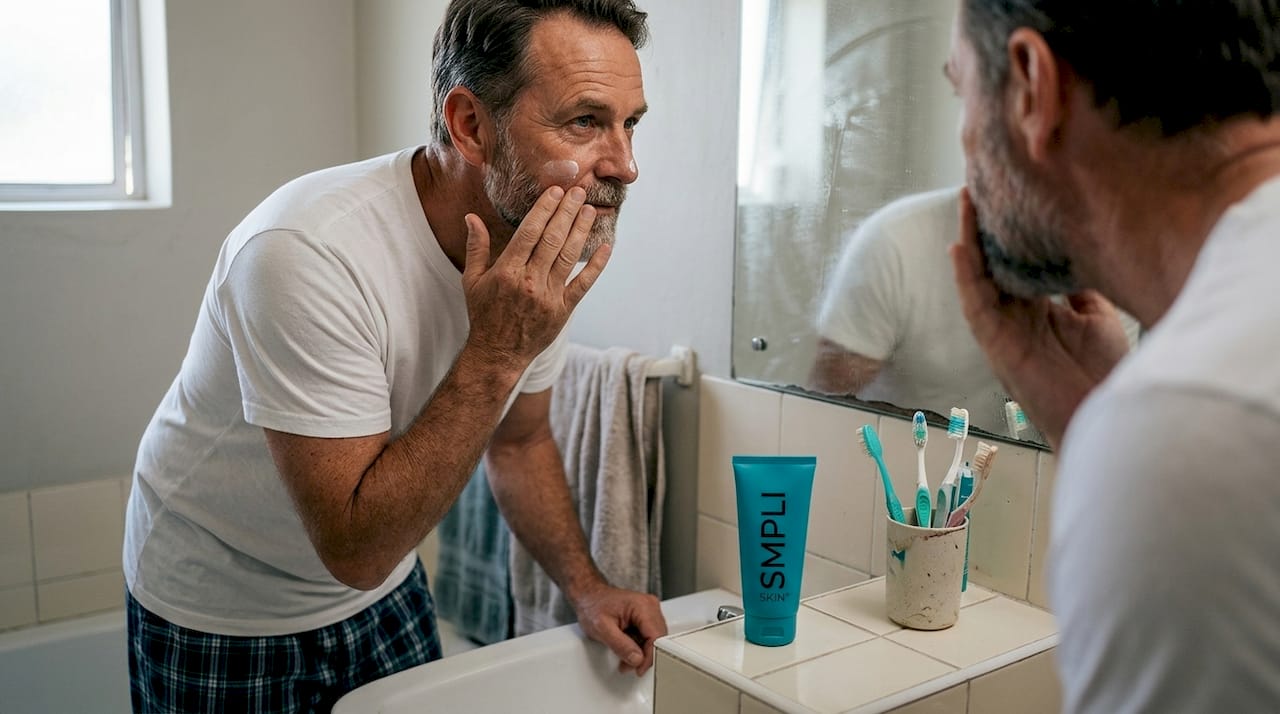
Understanding this is important for skin health science at the most practical level. Sunscreen is not an optional extra. It is the most impactful single step you can take for your skin’s long-term health.
Choosing and applying the right sunscreen for your routine
Here’s where a lot of people get stuck. The market is flooded with sunscreens, and choosing one can feel overwhelming. But the good news is that the science is straightforward. You don’t need a complicated formula. You need a broad-spectrum SPF 30 or higher, applied consistently.
Chemical vs mineral sunscreens: what’s the difference?
| Feature | Chemical sunscreen | Mineral sunscreen |
|---|---|---|
| How it works | Absorbs UV and converts to heat | Reflects and scatters UV rays |
| Texture | Lightweight, blends easily | Can leave a white cast |
| Best for | Daily wear under makeup, all skin types | Sensitive skin, reactive skin |
| SPF effectiveness | Highly effective | Highly effective |
| Onset of protection | Needs 20 min to activate | Works immediately upon application |
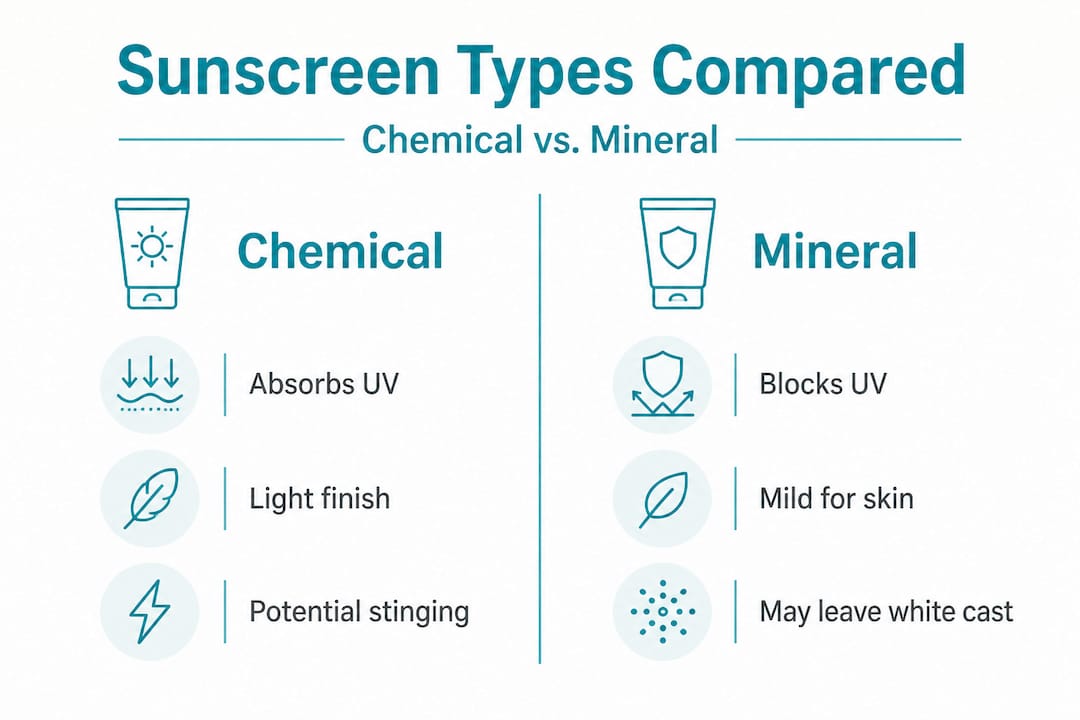
Chemical and mineral sunscreens both offer excellent protection. The right choice comes down to your skin type and personal preference. If you have sensitive or reactive skin, mineral formulas with zinc oxide or titanium dioxide tend to cause less irritation. If you want something that disappears into your skin quickly, chemical sunscreens are your friend. Either way, the protection is real and the commitment to daily use matters far more than which formula you pick.
Broad-spectrum SPF 30+ is the daily minimum recommended by dermatologists globally. SPF 50 offers marginally more coverage, but only if applied in the correct amount. Most people under-apply, which is why consistency and quantity matter as much as the number on the bottle.
How to build SPF into your morning routine without thinking about it:
- Cleanse first. A gentle cleanser removes overnight oils and preps your skin to absorb what comes next.
- Apply any serums or treatment products. These go on before SPF to maximise absorption.
- Moisturise if needed. If your SPF already has moisturising properties, you can skip a separate moisturiser.
- Apply sunscreen as your final skincare step. Use about a teaspoon for your face and neck. Don’t skimp.
- Reapply every two hours if you’re spending time outdoors. Indoors, one morning application is usually sufficient.
- Keep a small SPF product at your desk or in your bag. Out of sight often means out of mind.
Pro Tip: The best sunscreen is the one you’ll use every day. A simple SPF 30 moisturiser you actually reach for beats an SPF 50 sitting unused in your cabinet.
A minimalist SPF routine doesn’t need to be complicated. Pair your SPF with a cleanser, and you’ve covered the two most important steps for healthy skin. Everything else is optional.
You’ll find that daily skincare tips from most trusted sources agree: fewer steps done consistently beats an elaborate routine done occasionally.
Addressing common concerns: vitamin D, ingredients, and reapplication
Even people who understand the benefits of sunscreen sometimes hold back. The hesitations are real, and we think they deserve honest answers.
“Won’t daily sunscreen give me a vitamin D deficiency?”
This is probably the most common concern we hear. The short answer is no. Studies confirm that daily sunscreen use does not cause vitamin D deficiency. In practice, no one applies sunscreen perfectly enough to block all UV synthesis. And even if you did, vitamin D is available through diet and supplementation. Fatty fish, egg yolks, fortified foods, and widely available supplements all provide adequate vitamin D without requiring UV exposure.
“Are chemical sunscreen ingredients actually safe?”
This concern grew from early studies showing some chemical sunscreen ingredients are absorbed into the bloodstream. While that sounds alarming, absorption alone doesn’t mean harm. Current research finds no confirmed hormone disruption in humans from sunscreen ingredients. The harm from UV exposure, including cancer, accelerated ageing, and cellular damage, is well documented and significant. The theoretical risk from sunscreen ingredients does not compare.
“It’s too complicated to reapply during the day.”
Reapplication matters most when you’re spending time outdoors. If you’re primarily indoors, one good morning application goes a long way. Keep SPF powder or a small sunscreen stick at your desk for quick top-ups if you head outside for lunch. It doesn’t have to disrupt your day.
Here’s a quick breakdown of the most common objections and the honest answers:
- “I don’t burn easily, so I don’t need it.” UV damage happens without burning. Burning is just one symptom.
- “My foundation has SPF in it.” Foundation isn’t applied thickly enough to deliver the labelled SPF. Use a dedicated sunscreen underneath.
- “Sunscreen causes breakouts.” Some formulas can clog pores. Look for non-comedogenic labels or try mineral options designed for oily skin.
- “It’s too greasy.” Modern formulas are incredibly lightweight. If you haven’t tried one lately, the options have improved significantly.
Pro Tip: If you’re concerned about vitamin D, add a small supplement to your routine instead of skipping SPF. Your skin’s long-term health is worth that simple swap.
Everyday skincare routines work best when they remove excuses rather than add steps. Addressing these concerns head-on is exactly how you remove the last barrier to daily SPF use.
Why daily sunscreen habits are simpler than you think
Here’s something most skincare content won’t tell you: almost nobody applies sunscreen perfectly. The recommended amount is about a teaspoon for the face alone, and most people use a fraction of that. Reapplication every two hours is ideal outdoors, but most people forget. And you know what? Consistent, imperfect use still delivers meaningful protection. The biggest mistake isn’t under-applying. It’s not applying at all.
We’ve seen this pattern clearly. People read about the “correct” way to apply sunscreen, feel like they’re doing it wrong, and give up entirely. That all-or-nothing thinking works against good skin health more than any formula ever could.
The single biggest shift you can make is to attach sunscreen to something you already do every morning. Put it right next to your toothbrush. Make it the last thing you do before leaving the bathroom. When it becomes part of an existing habit, it stops being a chore and starts being automatic.
“Every imperfect application is still layers better than none at all.”
We believe skincare should feel realistic and repeatable, not like a performance you have to get exactly right. Explore holistic skincare routines that are built around your real life, not an idealised version of it. That’s where lasting change actually happens.
Ready for simpler sun protection?
If this article has convinced you of one thing, we hope it’s this: the bar for starting isn’t as high as you think. One product. One step. Every morning.
At SMPL SKIN, we’ve built our range around exactly this philosophy. Simple formulations, real results, no unnecessary complexity. Our Gentle Cleanser & SPF 15 Moisturiser Duo is a practical starting point that covers your two most important morning steps in one. It cleanses, it protects, and it keeps your routine lean and effective. If daily SPF has felt complicated before, we’d love to help you make it feel effortless. Your skin will thank you in ten years.
Frequently asked questions
Is daily sunscreen really necessary if I mostly stay indoors?
Yes. UV rays penetrate windows, meaning your skin accumulates damage even when you’re sitting at a desk or driving. Daily SPF protects against this invisible but ongoing exposure.
Can people with dark skin skip sunscreen?
No. Research confirms that sunscreen for darker skin prevents both skin cancers and post-inflammatory hyperpigmentation, conditions that affect all skin tones and can be more pronounced in deeper complexions.
Does sunscreen pose a risk for vitamin D deficiency?
No. Studies show daily sunscreen use does not cause vitamin D deficiency. Healthy levels are easily maintained through diet and supplementation without relying on UV exposure.
How much sunscreen should I use and how often?
Use about a teaspoon of broad-spectrum SPF 30+ for your face and neck every morning, and reapply every two hours when you’re spending extended time outdoors.
Are chemical sunscreens actually safe to use every day?
Yes. Current research finds no confirmed hormone disruption in humans from sunscreen ingredients. The well-documented risks of UV damage far outweigh any theoretical concerns about sunscreen formulas.
Recommended
- Essential skin protection tips for healthy, resilient skin – SMPL SKIN South Africa
- Morning skincare routine: 4 steps for maximum hydration – SMPL SKIN South Africa
- Everyday skincare essentials list for simple, healthy routines – SMPL SKIN South Africa
- Summer skincare essentials: minimalist hydration and SPF – SMPL SKIN South Africa
- Comment protéger efficacement la peau pendant l’hiver : conseils essen – Vitalcup