

TL;DR:
- Serums are concentrated products that deliver active ingredients deep into the skin, unlike moisturizers or toners.
- Hyaluronic acid in serums effectively enhances hydration by drawing water into the skin, resulting in plumper, smoother skin.
- Using a serum correctly involves applying to damp skin after cleansing and before moisturizer for best results.
You’ve probably stood in a store staring at rows of serums wondering if they actually do anything. It’s a fair question. Serums are often surrounded by bold claims and premium price tags, which makes it hard to tell what’s real and what’s just clever marketing. We’re here to cut through the noise. This guide explains exactly what a serum is, how it works, and whether it belongs in your routine. If you’ve ever wanted clear, honest answers about serums and hydration, without the jargon, you’re in the right place.
Table of Contents
- What is a serum and how is it different from other skincare products?
- How serums boost hydration: The science behind plumper skin
- Do you need a serum? Who benefits most, and are they essential?
- How to add a serum to your routine for simple, effective results
- Why less is often more with serums: A simple skincare truth
- Discover hydration-boosting skincare essentials from SMPL SKIN
- Frequently asked questions
Key Takeaways
| Point | Details |
|---|---|
| Serum is lightweight and targeted | Serums deliver powerful hydration and nutrients, making them ideal for boosting skin health as part of a simple routine. |
| Hydration is proven | Clinical studies show hyaluronic acid serums can improve skin hydration by 8-12% in 12 weeks. |
| Not essential for everyone | Experts agree serums are helpful, especially for dry or dull skin, but not mandatory for all routines. |
| Layer for best results | Use serum after cleansing and before moisturizing to maximize hydration and minimize irritation. |
What is a serum and how is it different from other skincare products?
A serum is a lightweight, concentrated product designed to deliver active ingredients deep into your skin. It’s not a moisturizer. It’s not a toner. It sits in its own category because of how it’s made and what it does.
Serums have a smaller molecular structure than most other skincare products. This allows the active ingredients to absorb more effectively and work where your skin needs them most. Think of it as a targeted treatment rather than a general product. According to the expert serum guide, serums and moisturizers serve very different roles, and understanding that distinction helps you use both correctly.
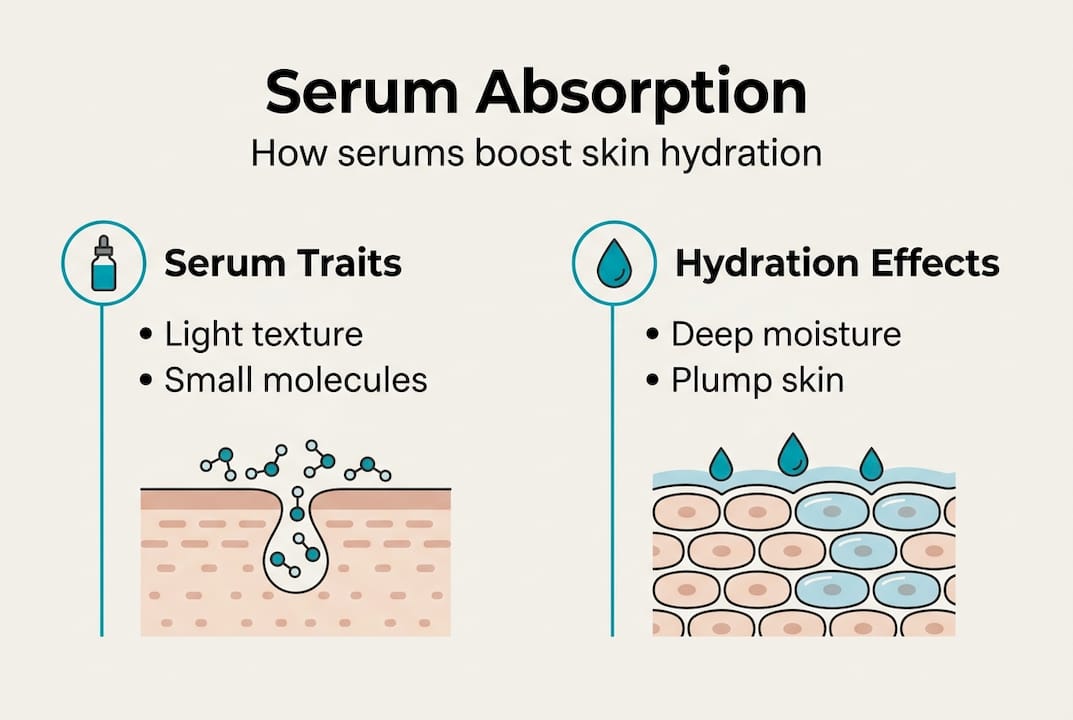
Here’s a quick comparison to clear things up:
| Product | Texture | Main job | When to use |
|---|---|---|---|
| Serum | Lightweight, watery or gel | Deliver actives deep into skin | After cleansing, before moisturizer |
| Moisturizer | Creamy or lotion | Lock in moisture and protect barrier | After serum |
| Face oil | Rich, oil-based | Seal in hydration and nourish | Last step, after moisturizer |
Serums target specific concerns. Common ingredients include:
- Hyaluronic acid for deep hydration
- Vitamin C for brightening and even skin tone
- Niacinamide for pore refinement and oil control
- Peptides for firmness and elasticity
- German Chamomile for soothing sensitive skin
The reason serums are particularly popular for hydration is their ability to carry water-binding ingredients directly into the skin layers. A moisturizer mainly works on the surface. A serum goes deeper. When choosing skincare products, knowing the difference between these two means you’re building a smarter, more effective routine from the start.
Serums are not essential for everyone, but they are one of the most efficient tools available when you want targeted results. They work best alongside a moisturizer, not as a replacement for one.
How serums boost hydration: The science behind plumper skin
With a clear sense of what a serum is, next comes why they’re so effective at solving one of skincare’s biggest needs: hydration.
Hyaluronic acid (HA) is the star ingredient in most hydrating serums. It’s a naturally occurring substance in the body that can hold up to 1,000 times its weight in water. When applied to skin, it draws moisture from the environment and deeper skin layers and binds it right where your skin needs it. The result is visibly plumper, smoother skin.
The science backs this up clearly. A clinical HA study confirmed that topical hyaluronic acid increases skin hydration by 8 to 12% after 12 weeks of consistent use. That’s a measurable, real-world difference in how your skin looks and feels.
“Empirical data confirms hyaluronic acid’s efficacy, but it must be used properly to see results. Applying it to damp skin and following up with a moisturizer makes the biggest difference.”
Here’s how common serum ingredients compare when it comes to hydration:
| Ingredient | Hydration effect | Works best with |
|---|---|---|
| Hyaluronic acid | Draws water into skin, 8 to 12% boost | Moisturizer applied immediately after |
| Glycerin | Softens and attracts moisture | Any routine step |
| Cucumber extract | Soothes and lightly hydrates | Sensitive skin types |
| Aloe vera | Calms and provides surface hydration | Oily or combination skin |
Understanding why hydration matters is the foundation of any good skincare routine. Dehydrated skin looks dull, feels tight, and is more prone to irritation. A well-formulated hydrating serum addresses all of this without adding unnecessary complexity to your routine. If you’re looking for practical advice, there are simple ways to boost hydration that pair well with a serum for even better results.

Do you need a serum? Who benefits most, and are they essential?
Now that we know how serums hydrate skin, it’s important to clarify who truly benefits from adding this step and who can skip it.
Serums are not mandatory. That’s the honest truth. A simple healthy skin routine can work well with just a cleanser and moisturizer. But for some people, a serum makes a noticeable difference.
Who benefits most from adding a serum:
- People with dry or dehydrated skin who need an extra hydration boost
- Those dealing with dull or uneven skin tone who want brightening actives
- Anyone targeting specific concerns like fine lines, redness, or enlarged pores
- People exposed to environmental stressors like pollution or harsh weather
“Serums are effective when paired with a moisturizer, but not everyone needs them. If your skin feels balanced and healthy without one, there’s no pressure to add it.”
Here’s a straightforward way to decide if a serum is right for you:
- Assess your skin type. Do you feel tight, dry, or dull? A hydrating serum may help.
- Identify your concern. Serums target specific issues. Choose one ingredient for one concern.
- Check your current results. If your cleanser and moisturizer are doing the job well, you might not need to add anything.
- Think about your lifestyle. A simple two-step routine is better maintained than a complex five-step one.
- Start small. Introduce one serum and give it four to six weeks before judging results.
Pro Tip: If you’re new to serums, start with a single-ingredient hydrating serum like hyaluronic acid. It’s gentle, widely researched, and works for most skin types. Check out simple routine tips for more guidance on keeping things effective without overloading your skin.
Dermatologists and NYT Wirecutter serum advice both confirm that serums address specific concerns like hydration well, but they are not essential for everyone. Your routine should match your skin, not the other way around.
How to add a serum to your routine for simple, effective results
You’ve figured out if a serum suits your needs. Now let’s detail exactly how to fit one into your routine without fuss.
The order you apply skincare products matters. Active ingredients need a clear pathway to absorb properly. Getting the sequence right ensures you’re actually getting the benefits you’re paying for. Using a serum incorrectly, like applying it over a heavy cream, blocks absorption entirely.
Here’s the simple step-by-step for adding a hydrating serum:
- Cleanse your skin to remove dirt, oil, and any product buildup.
- Pat skin until slightly damp rather than completely dry. This helps HA and other humectants pull moisture effectively.
- Apply your serum using two to three drops. Warm it between your fingers and press gently into skin.
- Wait 30 to 60 seconds to let the serum absorb before the next step.
- Apply your moisturizer immediately after to seal in the hydration the serum has drawn in.
- Finish with SPF in the morning to protect everything underneath.
Pro Tip: Always apply serum to slightly damp skin, especially if it contains hyaluronic acid. Dry skin can actually pull moisture from the environment in the wrong direction, leaving skin feeling tighter instead of plumper.
For more on layering products for hydration, the right order makes a measurable difference. Rushing this step or skipping moisturizer after serum is a common mistake. As proper serum use guidance confirms, incorrect layering can cause irritation and reduce results. If you’re looking to structure your full routine from scratch, building a hydration routine walks you through exactly that.
Why less is often more with serums: A simple skincare truth
Before you build a shelf full of serums, we want to share something we’ve learned: more products do not mean better skin. This is a hard truth in an industry that profits from convincing you otherwise.
We see it constantly. People stack three, four, five different active serums and wonder why their skin is irritated, reactive, or just not improving. The reality is that combining too many actives, like vitamin C, retinol, and exfoliating acids all at once, creates conflict rather than results. Your skin can only absorb and process so much.
The most effective routine is usually the simplest one. One targeted serum, a good moisturizer, and SPF. That’s often all your skin needs to thrive. As we explore in our guide to holistic skincare routines, real results come from consistency and the right ingredients, not from volume.
“The most effective routine is the one you’ll actually stick to.”
At SMPL SKIN, this philosophy drives everything we formulate. We believe in fewer products, better ingredients, and real results. Your skin doesn’t need complexity. It needs care.
Discover hydration-boosting skincare essentials from SMPL SKIN
If you’re inspired to upgrade your own routine, here’s how SMPL SKIN can help you get started.
We’ve made it simple to build a routine that actually works. Our SPF 15 Daily Moisturiser pairs beautifully with any hydrating serum, locking in moisture while offering daily sun protection. If you’re starting fresh, the Cleanser & Moisturiser Duo gives you a complete foundation in one convenient set. No guesswork. No overloading your skin. Just effective, minimalist skincare designed for real life. Browse all our products at SMPL SKIN and find your perfect routine today.
Frequently asked questions
Can I use a serum every day?
Yes, most hydrating serums are designed for daily use, but always monitor for irritation and follow the specific product instructions that come with your chosen formula.
Should I still use moisturizer with a serum?
Absolutely. Serums do not replace moisturizers, and both are needed to fully hydrate, protect your skin barrier, and lock in the benefits of your serum.
Do all serums work for every skin type?
No. Different serums are formulated for different concerns, so it’s important to choose one that suits your skin type and specific goals rather than picking one at random.
What’s the best step to apply serum in my routine?
Apply serum after cleansing and before your moisturizer. This application order ensures optimal absorption and maximises the active ingredients in the formula.
Recommended
- 10 simple ways to boost skin hydration for glowing skin – SMPL SKIN South Africa
- Why skin hydration matters: glow and barrier health – SMPL SKIN South Africa
- How to layer skincare products for effective hydration – SMPL SKIN South Africa
- Build a healthy skin regimen: simple routines for hydration – SMPL SKIN South Africa