

TL;DR:
- Many people choose skincare products based on guesswork, often misidentifying their skin type and condition.
- Modern diagnostic tools, like AI analysis and TEWL measurement, provide accurate, objective assessments of skin health.
Most people pick skincare products based on a guess. They call themselves “oily” or “dry” and shop accordingly, only to wonder why their skin never quite improves. The reality is that proper analysis skin methods go far deeper than a quick glance in the mirror. Understanding your skin type, your barrier health, and your specific conditions is the foundation of any routine that actually works. This guide walks you through everything from the basics of skin condition analysis to modern diagnostic tools and practical self-exams that give you real, usable answers.
Table of Contents
- Key takeaways
- The basics of analysis skin: types and conditions
- Modern tools for how to analyze skin accurately
- The skin barrier’s role in skin health assessment
- How to perform a skin self-exam
- Applying skin analysis to your skincare routine
- My take on skin analysis in 2026
- Start with the right products for your skin
- FAQ
Key takeaways
| Point | Details |
|---|---|
| Skin type vs. skin condition | These are two different things; confusing them leads to mismatched products and poor results. |
| Objective tools beat guesswork | AI skin analysis tools can assess 10+ skin markers with over 92% accuracy from a single photo. |
| Barrier health is measurable | Transepidermal water loss (TEWL) is a reliable metric for assessing how well your skin barrier functions. |
| Self-exams save lives | Monthly skin checks using the ABCDE rule help catch early melanoma signs before they become serious. |
| Analysis drives better routines | Knowing your skin’s actual condition lets you choose products that repair, protect, and hydrate where it counts. |
The basics of analysis skin: types and conditions
Before you can improve your skin, you need to speak its language. Skin type and skin condition are not the same thing, and mixing them up is one of the most common mistakes people make.
Skin types are largely determined by genetics and sebum production. They fall into five broad categories:
- Normal skin: balanced oil production, minimal sensitivity, small pores
- Oily skin: excess sebum, enlarged pores, prone to shine and breakouts
- Dry skin: low sebum, flaking, tightness, and a dull appearance
- Combination skin: oily in the T-zone (forehead, nose, chin), dry or normal on the cheeks
- Sensitive skin: reactive to products, temperature, or environmental triggers
Skin conditions, on the other hand, are not fixed. They change with seasons, stress, diet, age, and the products you use. Common conditions that appear in skin condition analysis include acne, redness, dehydration (different from dryness), hyperpigmentation, and barrier damage.
Here is where traditional self-assessment gets tricky. Oily skin can also be dehydrated. Dry skin can be inflamed. A person with combination skin might have a compromised barrier at the same time. When you only focus on your skin type, you miss the layered reality of what is actually happening at a cellular level. Skin health explained gets into the science behind this beautifully if you want to go deeper.
The most effective skin care analysis starts by separating these two concepts and addressing both independently.
Modern tools for how to analyze skin accurately
The best skin analysis methods available today go well beyond what you can see with the naked eye. Technology has made objective skin assessment accessible to almost everyone.
| Method | Who it’s for | What it measures | Accuracy level |
|---|---|---|---|
| AI-powered photo analysis | Consumers at home | Acne, pigmentation, hydration, wrinkles | Over 92% accuracy in 7 seconds |
| TEWL measurement | Clinics and dermatologists | Skin barrier integrity | Highly objective, lab-grade |
| Face mapping | Skincare professionals | Zone-specific skin conditions | Moderate, depends on skill |
| Professional skin diagnostic tools | Dermatology clinics | UV damage, pore size, redness depth | High, multi-spectrum imaging |
AI-powered skin analysis platforms can classify diverse skin conditions like pigmentation subtypes, acne types, and hydration levels in seconds. This is a significant shift from relying purely on how your skin feels on a given morning.

Clinical skin diagnostic techniques like TEWL measurement give an even deeper picture. TEWL stands for transepidermal water loss, which is the rate at which water evaporates through your skin. A healthy skin barrier keeps TEWL within 300 to 400 mL per day. When that barrier is compromised, water escapes faster, triggering dryness, inflammation, and sensitivity.
Pro Tip: If you are using a consumer AI skin analysis app, take your photo in natural daylight with a clean, bare face. Flash photography and makeup both distort the results significantly.
For home users, apps that use your smartphone camera to perform image-based diagnostics are increasingly reliable. For a deeper skin health assessment, a session with a dermatologist or trained aesthetician using professional devices gives you far more granular data to work with.
The skin barrier’s role in skin health assessment
Your skin barrier is the outermost layer of skin, called the stratum corneum. Think of it as a brick wall where skin cells are the bricks and natural lipids are the mortar holding them together. When this structure is intact, it keeps moisture in and irritants out. When it breaks down, everything goes sideways.
Barrier impairment shows up in measurable ways. TEWL values below 10 g/m²/h on the forearm are considered normal. Values above 40 g/m²/h indicate severe disruption, the kind seen in active eczema or post-procedure skin. These numbers matter because they shift the conversation from “my skin feels dry” to “my barrier is objectively compromised and needs targeted repair.”
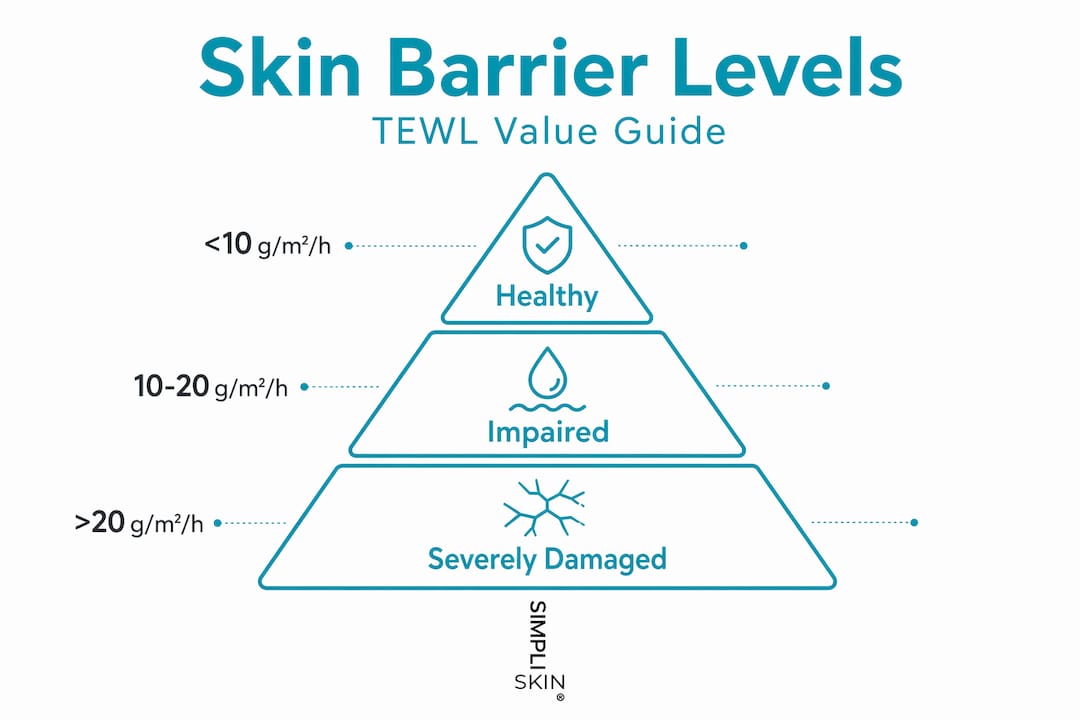
| TEWL value | Barrier status | Skin presentation |
|---|---|---|
| Below 10 g/m²/h | Healthy and intact | Calm, hydrated, resilient |
| 10 to 25 g/m²/h | Mild impairment | Some dryness, minor sensitivity |
| 25 to 40 g/m²/h | Moderate impairment | Visible redness, flaking, reactivity |
| Above 40 g/m²/h | Severe disruption | Active eczema, post-procedure skin |
Understanding barrier health transforms how you approach your routine. Reaching for a stronger exfoliant when your barrier is already damaged will make things worse. Understanding the skin barrier’s role in keeping skin calm and protected is one of the most practical things you can do before changing your product lineup.
Modern skincare science has shifted its focus from simple hydration to actively repairing the barrier and modulating inflammation for lasting skin health. That means moisturizers are no longer just comfort products. They are therapeutic tools.
How to perform a skin self-exam
You do not need a clinic to start analyzing skin changes that matter. A monthly self-exam is one of the most powerful things you can do for your long-term skin health. Here is how to do it properly.
- Choose good lighting. Use a bright room with natural or white light. A full-length mirror and a hand mirror give you access to hard-to-see areas.
- Examine your face, neck, and scalp. Part your hair section by section and use a comb to check the scalp. Do not skip the ears and behind the ears.
- Check your torso, front and back. Ask someone to help with your back if you cannot see it clearly in a mirror.
- Examine your arms, hands, and fingernails. Include the spaces between your fingers.
- Check your legs and feet. Look between your toes and at the soles of your feet. Melanoma can develop on the palms, soles, and scalp, not just sun-exposed areas.
- Apply the ABCDE rule to any moles. Look for Asymmetry, irregular Borders, Color variation, Diameter over 6mm, and Evolution over time.
The ABCDE rule is the most widely taught melanoma detection tool, and for good reason. One person dies every hour from melanoma in the USA alone. Early detection changes outcomes dramatically.
“Take care of your skin is not a luxury; it’s a necessity. Catching something early gives you choices.”
Pro Tip: Beyond ABCDE, watch for the “ugly duckling” sign. This is any mole that looks noticeably different from the others on your body, even if it does not technically meet the ABCDE criteria. That outlier mole deserves professional attention.
If anything looks unfamiliar, has changed, or simply feels wrong, see a dermatologist. Annual professional skin checks are a smart complement to your monthly self-exams.
Applying skin analysis to your skincare routine
Once you understand your skin type and conditions through proper analysis, the next step is matching that knowledge to what you actually put on your face. This is where skin care analysis pays off in real, visible ways.
Practical ways to apply your skin analysis findings:
- Oily and acne-prone skin benefits from lightweight, non-comedogenic cleansers and niacinamide serums that regulate sebum without stripping moisture.
- Dry or barrier-impaired skin needs ceramide-rich moisturizers that actively participate in barrier repair and lipid organisation, not just surface hydration.
- Dehydrated skin (regardless of type) responds well to humectants like hyaluronic acid applied to damp skin to pull moisture into the layers.
- Sensitive or reactive skin calls for fragrance-free formulas with calming ingredients like German Chamomile or Cucumber Extract.
- Hyperpigmented skin benefits from consistent SPF use alongside targeted actives, since UV exposure worsens pigmentation regardless of skin tone.
Your skin also reflects what is happening internally. Redness, dryness, and hyperpigmentation often signal internal inflammation connected to the immune and gastrointestinal systems. A holistic skincare approach that considers sleep, diet, and stress alongside your topical routine will always outperform products alone. Skin analysis is not just a shopping tool. It is a whole-health diagnostic.
My take on skin analysis in 2026
I’ve spent years watching people chase the wrong products because they had the wrong information about their own skin. The frustration is real, and it’s not their fault. Most skincare marketing pushes skin type labels because they make shopping easy. Oily? Here’s a mattifying toner. Dry? Here’s a rich cream. What that marketing never tells you is that your skin type is just the starting point.
What I’ve learned from exploring both AI skin tools and clinical diagnostics is that the barrier is the variable most people are missing. Someone might have oily skin with a compromised barrier. The instinct is to dry it out. The correct move is to repair it. I’ve seen this confusion cause months of unnecessary skin problems.
The ugly duckling mole concept is another thing that doesn’t get enough attention. People memorise ABCDE and then assume they’re covered. But a mole that just looks different from the rest is worth flagging, even if it checks none of the boxes. That nuance saves lives, and most people simply don’t know it.
My honest take: objective analysis is the gap between a skincare routine that sort of works and one that genuinely transforms your skin. Get the data first. Then build your routine.
— Werner
Start with the right products for your skin
Once your skin analysis points you toward what your skin actually needs, the next step is choosing products built around those needs. At Smplskin, we designed the Gentle Cleanser and SPF 15 Moisturiser Duo as a no-fuss starting point for almost any skin type. The cleanser removes impurities without disrupting your barrier, and the SPF 15 moisturiser hydrates while protecting against UV-driven pigmentation and sensitivity. It is a simple, effective duo that works with your analysis, not against it.
FAQ
What is skin analysis and why does it matter?
Skin analysis is the process of objectively assessing your skin type, barrier health, and specific conditions to inform better skincare decisions. It goes beyond guesswork and helps you choose products that actually match what your skin needs.
What is the difference between skin type and skin condition?
Skin type is genetic and reflects your sebum production level, while skin condition describes temporary states like dehydration, acne, or barrier damage that change with lifestyle, season, and products.
How accurate are AI skin analysis tools?
AI skin analysis platforms can assess over 10 skin markers with more than 92% accuracy from a single photo, making them a reliable first step for home skin health assessment.
How do I know if my skin barrier is damaged?
Signs include persistent redness, tightness, flaking, and reactivity to products that previously felt fine. Clinically, TEWL values above 25 g/m²/h indicate measurable barrier impairment.
When should I see a dermatologist about a mole?
See a dermatologist if a mole meets any of the ABCDE criteria, changes over time, or simply looks different from the other moles on your body. Early detection of melanoma significantly improves treatment outcomes.
Recommended
- How to achieve healthy skin with a simple routine – SMPL SKIN South Africa
- Skincare routine tips: 4 steps to a daily glow – SMPL SKIN South Africa
- Detoxify your skin at home: simple routines for results – SMPL SKIN South Africa
- Simple skin health: skin cycling for minimalists – SMPL SKIN South Africa