

TL;DR:
- Reducing consumption is the most effective initial step before making any product swaps to lower your environmental footprint.
- Choosing refillable, reusable systems and solid formats significantly decreases plastic waste and shipping emissions over time.
- Building a sustainable beauty routine requires patience, prioritizing less, better packaging, and verified certifications over temporary trends.
Making sustainable beauty swaps sounds simple until you’re standing in a shop aisle staring at twelve different “eco-friendly” shampoos, none of which tell you anything useful about their actual environmental impact. The options are endless, the greenwashing is real, and the overwhelm is genuine. We put this guide together to cut through the noise. You’ll find a clear framework for choosing swaps that actually reduce your footprint, plus specific, habit-friendly alternatives for packaging, product formats, and ingredients. Start here, start small, and build from there.
Table of Contents
- Key takeaways
- 1. How to choose sustainable beauty swaps that actually stick
- 2. Swap disposable packaging for refillable and reusable systems
- 3. Choose solid and concentrated product formats
- 4. Replace disposable cotton rounds and wipes with reusable alternatives
- 5. Comparing your sustainable beauty swap options
- 6. Building a sustainable beauty habit plan that lasts
- My honest take on making sustainable swaps work
- A simpler routine that’s kinder to your skin and the planet
- FAQ
Key takeaways
| Point | Details |
|---|---|
| Buy less first | Reducing consumption is the most impactful first step before any product swap. |
| Refill systems cut waste | Durable containers with refill pouches reduce single-use plastic waste by 70% or more. |
| Solid formats simplify routines | Shampoo bars and concentrated products reduce plastic, water use, and shipping impact. |
| Reusable tools matter | Washable plant-based rounds replace disposable wipes without sacrificing hygiene or ease. |
| Avoid greenwashing | Trust verified certifications over marketing claims when evaluating eco-friendly beauty products. |
1. How to choose sustainable beauty swaps that actually stick
Before you buy anything new, you need a framework. Without one, you end up with a bathroom full of “sustainable” products that are no better than what you replaced and cost twice as much.
The single best starting point is buying less and avoiding single-use items first. That means swapping makeup remover wipes for a reusable cloth before you consider upgrading to a glass serum bottle. Consumption reduction beats packaging upgrades every time.
Once you’re ready to evaluate products, use these criteria:
- Packaging material. Glass, aluminum, and refillable pouches are far better than single-use plastic. Post-consumer recycled (PCR) plastic is a middle-ground option when refillable systems aren’t available.
- Product format. Bars, concentrates, and solid formats reduce water content, packaging bulk, and shipping emissions. They also simplify your routine.
- Ingredient transparency. Watch for microplastics and unsustainable palm oil in ingredient lists. For sunscreens, avoid oxybenzone and octinoxate, which harm marine ecosystems.
- Refill availability. A refillable container only works if you can actually get refills. Check local stockists or online options before committing.
- Certifications. Leaping Bunny, Fair Trade, FSC, and EWG Verified are trustworthy. “Natural,” “green,” and “eco” on their own are not.
Pro Tip: Before your next product runs out, research its sustainable alternative. Swapping at the natural end of a product’s life is the easiest way to build a conscious beauty routine without wasting what you already have.
Building a simple, eco-conscious routine doesn’t require perfection. It requires a plan and a little patience.
2. Swap disposable packaging for refillable and reusable systems
This is one of the highest-impact sustainable beauty swaps you can make. Single-use plastic packaging is the beauty industry’s biggest waste problem, and refill systems address it directly.
Refill pouches and durable containers can reduce single-use waste by 70% or more. The concept is simple: you keep a well-made container permanently and replace only the product inside, using a lightweight refill pouch or a brand take-back program.
Here’s what this looks like in practice:
- Skincare refill pouches. Several skincare brands now ship refill pouches for cleansers, toners, and moisturisers that you decant into your original glass or aluminum bottle at home.
- Aluminum deodorant sticks. Aluminum refillable deodorants paired with zero-plastic refills made from bamboo pulp are one of the most practical refill swaps available right now.
- Take-back programs. Some brands accept returns of hard-to-recycle containers, like pump heads and mascara tubes, and handle specialist recycling on your behalf.
- Refill stations. Larger health shops and zero-waste stores increasingly stock shampoo, conditioner, and body wash in bulk, letting you refill any clean container.
“The most sustainable container is the one you already own.” Keeping your original packaging and scheduling refills as a regular part of your grocery routine is the simplest way to make refill systems work long-term.
The SmileFam refiller pack is a good example of a system built around aluminum and glass packaging that removes single-use plastic from the equation entirely.
3. Choose solid and concentrated product formats
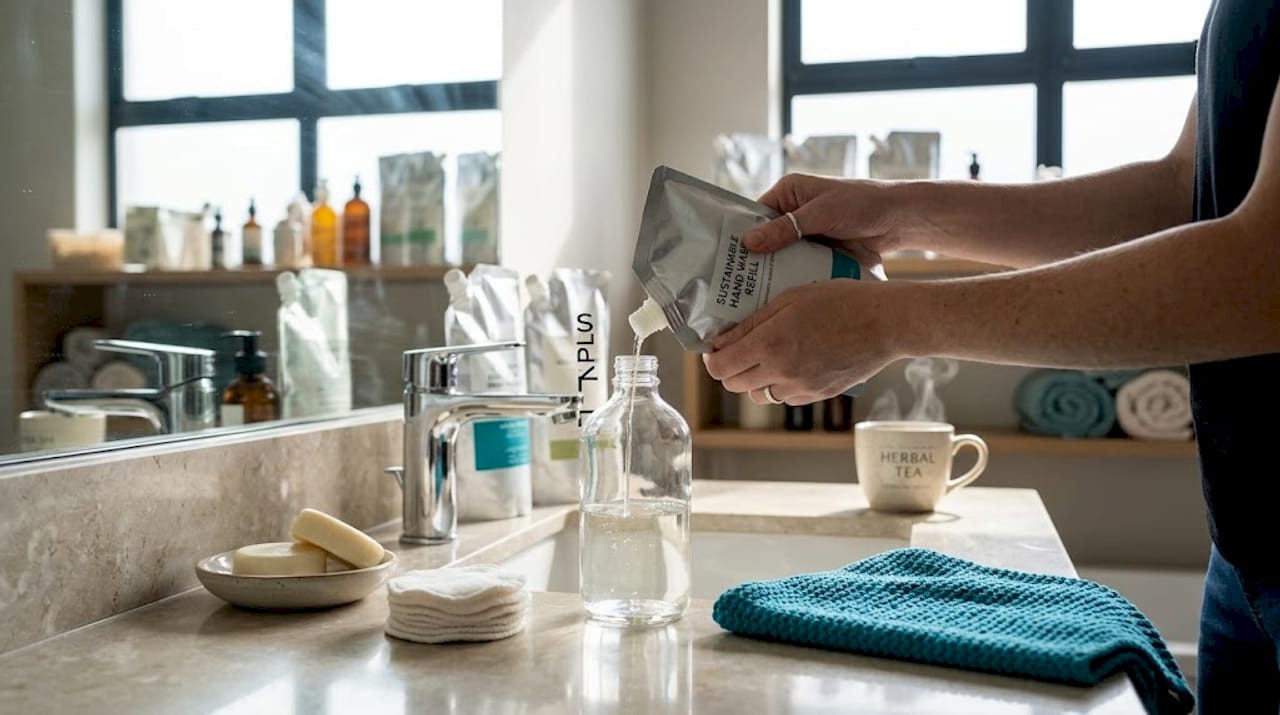
Solid beauty products might look like a step backwards. They’re not. They are one of the smartest zero waste beauty moves you can make, and they work with your routine rather than against it.
Solid shampoo bars can last as long as two to three plastic-bottled shampoo equivalents and weigh a fraction of a liquid product, which reduces shipping emissions significantly. They also contain no water, which means the active ingredients are more concentrated.
Here are the formats worth trying:
- Shampoo and conditioner bars. These have come a long way. Modern bars lather well, rinse cleanly, and suit most hair types. Look for ones with a short, recognisable ingredient list.
- Solid moisturisers and cleansing balms. A small tin of solid moisturiser can replace a large plastic pump bottle and often performs better in dry climates.
- Concentrated serums. A few drops of a high-quality concentrated serum does more than a full squirt of a diluted product. Less packaging, less waste, better results.
- Multi-use makeup. A single cream product used as blush, lip colour, and eyeshadow cuts your product count and reduces packaging across the board.
- Reusable silicone containers are TSA-friendly and perfect for decanting solid or semi-solid products when you travel.
Pro Tip: Give solid formats a two-week adjustment period. Your hair and skin may need time to recalibrate from years of silicone- and water-heavy products. Most people who stick through the adjustment never go back.
4. Replace disposable cotton rounds and wipes with reusable alternatives
Disposable cotton pads and facial wipes are small individually but add up to enormous amounts of landfill waste over a lifetime of use. Many also contain synthetic microplastics in their fibres or packaging.
The good news is the reusable alternatives are genuinely better for your skin too. Reusable rounds made from 70% sustainable wood cellulose and 30% recycled cotton are biodegradable, antibacterial when maintained correctly, and soft enough for daily use on sensitive skin.
What to look for and how to use them:
- Plant-based materials. Look for rounds made from bamboo, organic cotton, or wood cellulose. Avoid synthetic microfibre unless you have a microplastic-catching laundry bag.
- Fast-drying designs. Thin, textured rounds dry between uses more quickly, which reduces bacteria buildup.
- Washing routine. Rinse your rounds after each use and machine-wash them in a mesh bag weekly. This keeps them hygienic and extends their life significantly.
- Biodegradability at end of life. Natural-fibre rounds can be composted when they wear out. Synthetic ones cannot.
Switching to reusable rounds was one of the easiest swaps I made. A set of twelve rounds costs roughly the same as two months of disposable pads and lasts two years or more with proper care.
South African startup culture is already disrupting beauty waste with local reusable alternatives worth exploring.
5. Comparing your sustainable beauty swap options
Choosing between packaging materials and product formats is easier with a direct comparison. Use this table to weigh your options based on what matters most to you.
| Option | Environmental impact | Durability | Convenience | Best for |
|---|---|---|---|---|
| Glass containers | High recyclability, heavy transport weight | Very durable | Low portability | Skincare serums, toners |
| Aluminum refillable | Low waste, fully recyclable | Durable | Travel-friendly | Deodorant, balms |
| PCR plastic | Reduced virgin plastic use | Moderate | High | Budget-conscious swaps |
| Refill pouches | Very low packaging waste | Single use | Moderate | Shampoo, cleanser refills |
| Solid bars | No packaging needed | Lasts 2 to 3x longer | Moderate | Shampoo, conditioner |
| Reusable cloth rounds | Near-zero ongoing waste | 2+ years | Easy | Toner, makeup removal |
| Disposable wipes | High landfill and chemical waste | Single use | Very easy | Not recommended |
The pattern here is clear: the eco-friendly beauty products with the lowest ongoing environmental cost tend to require a small upfront investment in a durable container or reusable tool. Over time, they cost less money and generate far less waste than their disposable equivalents.
For your skincare routine specifically, pairing a refillable glass bottle with a simplified, effective product selection removes both environmental waste and routine complexity at the same time.
6. Building a sustainable beauty habit plan that lasts
Knowing what to swap is half the job. The other half is making those swaps stick without overwhelming yourself or falling into the trap of buying new “sustainable” products you don’t actually need.
Sequencing your swaps matters more than people realise. Start with buying less and adopting reusable tools. Then move to better packaging formats. Only then should you consider upgrading product ingredients or formulations.
Practical steps to build your swap plan:
- Audit your current products. List everything you use regularly and identify the three highest-waste items. Start there.
- Swap one product per month. This keeps costs manageable and lets each swap become a habit before you add another.
- Make refills convenient. Friction is the biggest enemy of refill success. If a refill station is on your way to the shops, you’ll use it. If it requires a 30-minute detour, you won’t.
- Budget for transitions. Some eco-friendly beauty swaps cost more upfront. Factor this in and treat it as a long-term investment rather than a monthly expense.
- Verify certifications. Trust Leaping Bunny, EWG Verified, and Fair Trade over marketing copy. If a brand doesn’t list certifications or ingredient sourcing transparently, treat that as a red flag.
Pro Tip: The most common pitfall in green beauty is buying new sustainable products while you still have half-full versions of the old ones. Use what you have first. Sustainability starts with finishing what’s already in your bathroom cabinet.
You can also explore vegan skincare options as a natural extension of building a cruelty-free, conscious beauty routine.
My honest take on making sustainable swaps work
I’ve found that the people who struggle most with sustainable beauty swaps are the ones who try to overhaul everything at once. They buy a zero waste beauty kit, feel great for a week, and then quietly go back to their old routine because the new one is inconvenient or unfamiliar.
In my experience, the single most impactful thing you can do has nothing to do with packaging. It’s buying less. Fewer products used consistently will always beat a bathroom full of beautifully packaged eco alternatives that you rotate through without ever finishing.
Refill systems tripped me up at first too. I loved the idea but kept forgetting to reorder before I ran out, which meant reverting to a plastic bottle in a pinch. The fix was simple: treat refills like a subscription. Set a calendar reminder two weeks before you estimate running out, and the habit forms naturally.
Reusable rounds genuinely changed my daily routine. Not because they’re virtuous, but because they work better. The texture is more effective for applying toner, they don’t leave fibres on your skin, and they cost nothing after the initial buy. That’s the sweet spot for any swap: better performance and lower waste. When a swap improves your experience, it sticks.
The counterintuitive lesson from all of this is that the best sustainable beauty routine is a simpler one. Fewer products, better ingredients, less packaging. That’s it.
— Werner
A simpler routine that’s kinder to your skin and the planet
If you’re building out a more conscious beauty routine and want a skincare duo that does exactly what it promises without unnecessary complexity, the Gentle Cleanser & SPF 15 Moisturiser Duo from Smplskin is worth your attention.
Smplskin formulates with purpose. The duo features a gentle, effective cleanser and a daily SPF 15 moisturiser that covers hydration and sun protection in two products. No ten-step routine, no unnecessary fillers. The approach aligns directly with what we’ve covered here: reduce what you use, make it effective, and keep it simple. Smplskin’s commitment to transparency in ingredients and formulation makes it a natural fit for anyone serious about their eco-friendly beauty journey. Explore the full range at Smplskin to find what works for your skin.
FAQ
What are the easiest sustainable beauty swaps to start with?
The easiest swaps are replacing disposable cotton pads with reusable rounds and switching from body wash in plastic bottles to bar soap. These changes are low-cost, require no habit overhaul, and make an immediate impact on plastic waste.
Do solid shampoo bars actually work as well as bottled shampoo?
Yes, and solid shampoo bars often last two to three times longer than a standard plastic bottle while also reducing shipping emissions due to their lighter weight. Most users need a short adjustment period as their scalp recalibrates.
How do I spot greenwashing in eco-friendly beauty products?
Look past marketing words like “natural” or “green” and check for verified certifications such as Leaping Bunny, EWG Verified, or Fair Trade. Transparent ingredient sourcing and clear sustainability data are reliable signals of genuine eco-friendly beauty products.
Are refillable beauty systems worth the upfront cost?
Refillable systems reduce single-use waste significantly and save money over time since you’re paying for product without the packaging cost each time. The key is choosing a system where refills are conveniently available so the habit is easy to maintain.
What ingredients should I avoid for a more sustainable skincare routine?
Avoid microplastics (listed as polyethylene or nylon in ingredient lists), unsustainable palm oil (look for RSPO Certified alternatives), and sunscreen chemicals like oxybenzone and octinoxate, which are harmful to marine ecosystems.
Recommended
- Sustainable skincare: A simple guide to eco-friendly routines – SMPL SKIN South Africa
- What is clean beauty? A guide to simpler, safer skin – SMPL SKIN South Africa
- Why choose vegan skincare: real benefits, simple results – SMPL SKIN South Africa
- Holistic skincare: Simple routines, real results in 2026 – SMPL SKIN South Africa