

TL;DR:
- Your skin reveals signs of exhaustion before you notice them, especially from sleep loss and stress. Skin fatigue results from disruptions to repair processes caused by lifestyle and environmental factors, leading to dullness, wrinkles, and sensitivity. Addressing habits like sleep, hydration, and stress management is essential for effective skin recovery, as topical products alone are insufficient.
Your skin can show signs of exhaustion long before you feel it yourself. Chronic sleep loss and stress can visibly age your skin in as little as five days, making wrinkles more pronounced, elasticity weaker, and your natural glow disappear almost overnight. Most people assume tired skin is just a cosmetic inconvenience solved by the right serum or moisturiser. The truth is more complex, and once you understand it, reviving your skin becomes much simpler. This guide breaks down what skin fatigue really is, what drives it, and the practical steps that actually work.
Table of Contents
- What is skin fatigue and how does it show up?
- What causes skin fatigue? Major triggers and why they matter
- Why skincare alone isn’t enough: The role of lifestyle in skin recovery
- Practical steps to revive tired skin—what actually works
- What most skincare guides miss about skin fatigue
- Simple skincare solutions for lasting energy and radiance
- Frequently asked questions
Key Takeaways
| Point | Details |
|---|---|
| Skin fatigue is real | It’s a scientifically recognized process caused by stress, poor sleep, dehydration, and environmental damage. |
| Lifestyle changes are crucial | No skincare routine can fix fatigue without also improving sleep, nutrition, and stress management. |
| Visible changes occur rapidly | Wrinkles, dullness, and elasticity loss can escalate in under a week of high fatigue. |
| SPF and hydration help daily | Layering SPF and staying hydrated minimize new fatigue and support barrier repair. |
| Simple habits work best | Regular sleep, balanced routines, and gentle products give lasting glow and resilience. |
What is skin fatigue and how does it show up?
Now that we’ve touched on how easily fatigue can show on your skin, let’s get clear about what skin fatigue truly is and what it looks like.
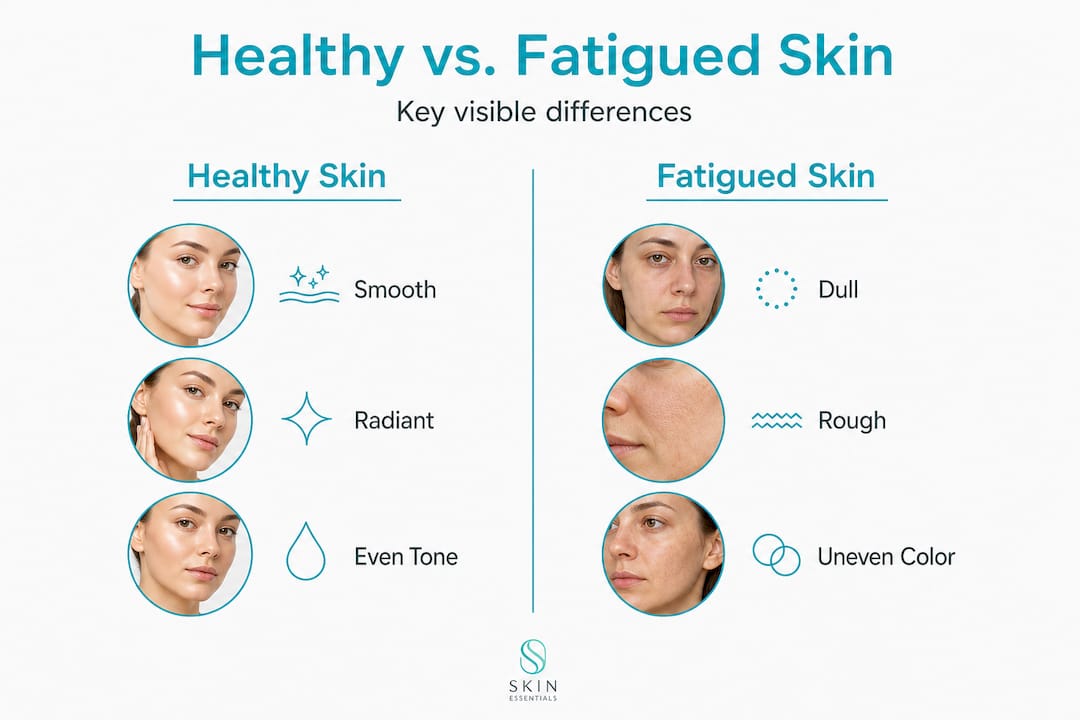
Skin fatigue is not just a buzzword. It is a measurable condition where your skin’s natural renewal process and protective barrier are disrupted by modern stressors. Think of your skin like a self-repairing shield. When it gets adequate rest, the right nutrients, and low stress, it repairs itself overnight and shows up glowing in the morning. When those conditions fail repeatedly, the shield starts to crack.
The root causes of skin fatigue span lifestyle, environment, and biology. On the biological side, primary causes31411-7/fulltext) include lack of sleep, chronic stress, dehydration, pollution, inconsistent skincare, and environmental stressors that slow skin renewal, weaken the barrier, and increase cortisol. These are not isolated issues. They compound each other rapidly.
The mechanics behind the damage involve a disrupted skin circadian rhythm, reduced growth hormone and melatonin that affect repair and collagen production, elevated cortisol that breaks down the barrier, reduced blood flow and lymphatic drainage, increased trans-epidermal water loss (TEWL), and slowed cell turnover. TEWL simply means your skin loses moisture through its surface faster than it can replenish it.
Common symptoms to watch for
Recognising skin fatigue early gives you the best chance to reverse it. Look out for:
- Dullness and greyness: Skin looks flat and lifeless, lacking the natural luminosity of healthy skin.
- Rough or uneven texture: Slowed cell turnover means dead skin cells accumulate on the surface.
- Fine lines and deeper wrinkles: Loss of collagen production and reduced elasticity make lines more visible.
- Puffiness and under-eye bags: Poor lymphatic drainage causes fluid to pool, particularly around the eyes.
- Increased sensitivity and redness: A weakened barrier lets irritants in more easily, triggering inflammation.
- Uneven skin tone: Reduced blood flow and increased yellowness alter your natural complexion.
“Skin fatigue is not an aesthetic problem. It is a physiological signal that your body’s repair systems are under strain.”
The importance of hydration in preventing and reversing these symptoms cannot be overstated. When TEWL increases, moisture escapes faster than usual, leaving skin tight, dull, and more prone to every symptom listed above.
| Healthy skin | Fatigued skin |
|---|---|
| Smooth texture | Rough, uneven surface |
| Even, bright tone | Dull, grey, or yellowish tone |
| Firm and elastic | Sagging, reduced bounce |
| Calm and balanced | Sensitive and reactive |
| Plump and hydrated | Tight and dehydrated |
| Minimal fine lines | More pronounced wrinkles |
What causes skin fatigue? Major triggers and why they matter
Understanding what skin fatigue is, the next step is to examine what sparks it in the first place and why these causes demand attention.
The triggers fall into three main categories: lifestyle habits, environmental exposures, and hormonal changes. Each one is powerful on its own. Together, they accelerate skin fatigue dramatically.
Lifestyle triggers
Sleep deprivation is the most impactful. A work-related fatigue study involving 31 women found that over just five days, increased fatigue led to worsened wrinkles, reduced elasticity, visible skin colour changes including increased yellowness, and significant barrier stress. Five days. That is a short weekend trip followed by a stressful work week.
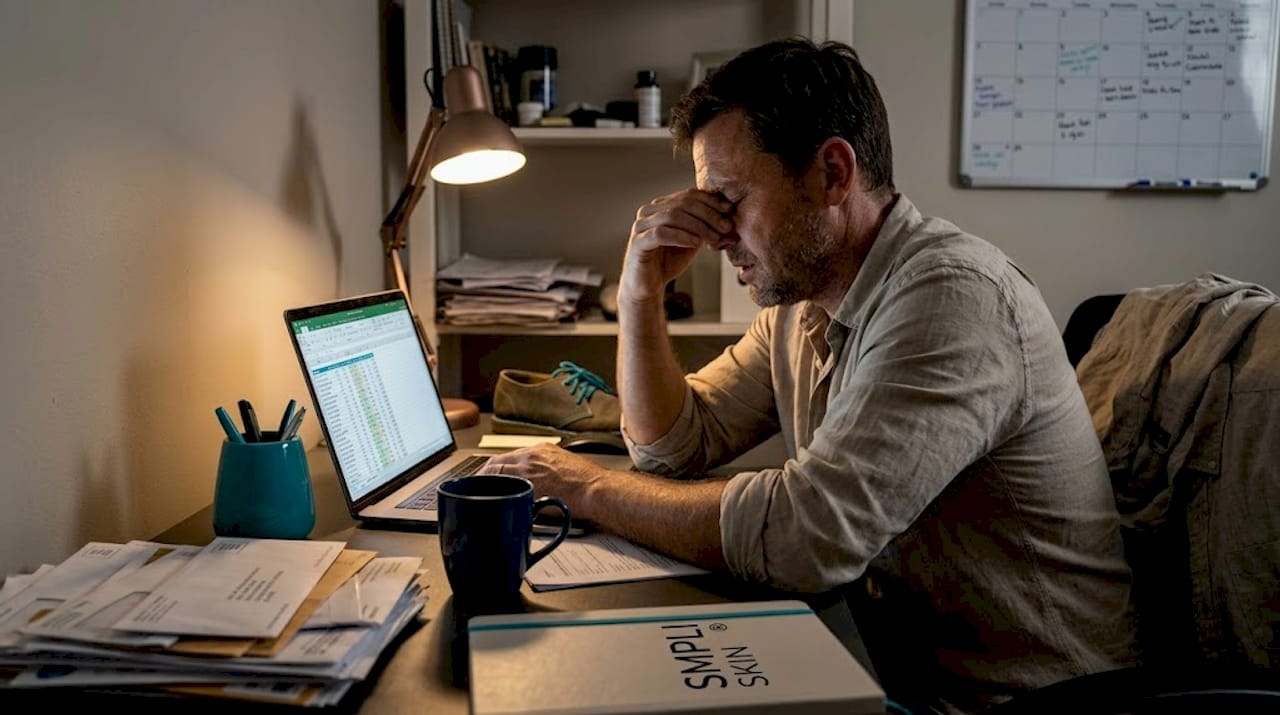
Getting fewer than six hours of sleep per night consistently leads to higher skin ageing scores and slower barrier recovery. Your skin does most of its cellular repair during deep sleep. When you cut that short, repairs go unfinished, and the backlog builds up.
Work stress, rushed routines, and skipping your skincare entirely compound the problem. When you’re under pressure, you default to convenience, often the habits least helpful for your skin.
Environmental triggers
| Trigger | Effect on skin |
|---|---|
| UV exposure | Breaks down collagen, increases oxidative stress |
| Air pollution | Clogs pores, accelerates free radical damage |
| Blue light from screens | Disrupts melatonin production, increases skin inflammation |
| Low humidity environments | Increases TEWL and dehydration |
| Temperature extremes | Weakens barrier, causes reactivity |
The impact of lifestyle on skin highlights how modern life combines nearly all of these triggers daily, making skin fatigue less of an exception and more of a default for many people.
Hormonal impact
Cortisol, often called the stress hormone, is one of your skin’s biggest enemies when it stays elevated. It breaks down collagen, disrupts your skin barrier, and increases oil production. Meanwhile, lower melatonin means less antioxidant protection overnight. Reduced growth hormone output slows cellular repair. The hormonal cascade from one bad week of sleep and stress creates a measurable negative change in your skin.
Pro Tip: Building a simple expert-backed routine and following proven ways to boost skin hydration consistently does more for fatigue recovery than any single hero product.
Three key facts worth remembering:
- Sleep deprivation shows on your face within days, not weeks.
- Pollution and blue light stress your skin even when you are indoors.
- Cortisol spikes from stress can directly impair your skin barrier in under 48 hours.
Why skincare alone isn’t enough: The role of lifestyle in skin recovery
Even knowing the main triggers isn’t enough. Most people overlook a crucial reality: topicals alone won’t fix true skin fatigue.
This is the part most skincare content skips. You can apply the most advanced serum on the market, but if you’re sleeping five hours a night and running on stress, your skin simply cannot absorb and use those ingredients effectively. The repair pathways are blocked at a hormonal and cellular level.
Research is clear on this point. Skincare products are insufficient without lifestyle support. Sleep, stress management, and diet are essential because hormones and nutrients affect skin at a cellular level, not just cosmetically. Products support and enhance recovery. They cannot create it from scratch when the fundamentals are missing.
“Your skincare products are only as effective as the environment your lifestyle creates for your skin to repair itself.”
Think of it this way. Watering a plant helps it thrive. But if the soil is depleted and there is no sunlight, watering alone keeps it barely alive. Lifestyle is the soil and sunlight. Skincare is the water. You need all three.
Practical lifestyle steps that actually move the needle
-
Set a consistent sleep schedule. Going to bed and waking at the same time daily regulates your skin’s circadian rhythm. Consistency matters more than the total hours on some nights.
-
Eat for your skin, not just your health. Foods high in water content, like cucumber, watermelon, and leafy greens, support skin hydration from within. Omega-3-rich foods such as salmon and flaxseed support your barrier function directly.
-
Manage stress before it manages you. Even ten minutes of breathing exercises or a walk outside lowers cortisol measurably. Consistent stress management protects your skin daily.
-
Hydrate strategically. Water intake alone is not enough. Pair hydration with barrier-supporting ingredients topically to lock moisture in. Read more about building simple hydration routines and minimalist hydration advice that works with a busy schedule.
-
Move your body daily. Exercise improves blood flow to the skin, supports lymphatic drainage, and reduces cortisol. Even a twenty-minute walk creates a visible difference over time.
Pro Tip: Try journalling for five minutes before bed. Writing down your worries clears mental clutter, reduces the stress hormones that spike before sleep, and helps you wind down faster into restorative sleep your skin desperately needs.
Practical steps to revive tired skin—what actually works
Recognising that lifestyle overhaul is the real answer, let’s break down the most effective and realistic steps to restore your skin’s vibrancy.
These are not generic tips. They are backed by evidence and designed for people with real, busy lives.
-
Prioritise sleep quality over quantity. A consistent bedtime matters more than trying to sleep an extra hour irregularly. Your skin’s peak repair window is between 10pm and 2am when growth hormone output is highest. Missing that window repeatedly accelerates ageing faster than most people realise.
-
Use an overnight mask on tired skin nights. According to research on overnight repair methods, overnight masks create an occlusive layer that traps moisture and active ingredients against your skin during peak repair time. Use one two to three times a week when your skin feels particularly dull or stressed.
-
Apply SPF every single day. Yes, even indoors. Incidental UVA exposure through windows causes collagen breakdown and oxidative stress that worsens fatigue symptoms. SPF is not optional. It is your first line of defence. Check our guide to a daily glow skincare routine for how to build this in without adding complexity.
-
Use cool compresses for puffiness. A cold, damp cloth held against puffy eyes and cheeks for five minutes constricts blood vessels, reduces inflammation, and instantly improves skin’s appearance. It is fast, free, and effective.
-
Add water-rich foods to every meal. Cucumber, tomatoes, oranges, and strawberries all have high water content and antioxidants that support skin repair from the inside. Try our at-home skin detox routines for a fuller approach.
-
Keep your routine simple and consistent. A three-step routine done daily outperforms a twelve-step routine done occasionally. Cleanser, treatment, and SPF is enough to create real, visible change over time.
Pro Tip: For stressed skin recovery, reduce the number of active ingredients you use during high-stress periods. Your barrier is already compromised. Adding too many actives can increase irritation. Stick to gentle, hydrating basics until the stress passes.
Statistic worth knowing: Consistently getting under six hours of sleep leads to measurably higher skin ageing scores within weeks, not months. Recovery from just five days of sleep deprivation can take twice as long as the deprivation period itself.
What most skincare guides miss about skin fatigue
Here is the perspective most guides won’t share with you directly.
We see a lot of content telling you to buy an overnight mask or add a vitamin C serum. That advice is not wrong. But it misses the most important point entirely. Skin fatigue is a warning system. It is your body telling you something deeper is off, long before other health symptoms appear.
Most people underestimate how fast sleep loss and stress affect skin appearance. The visible changes happen before you feel tired in other ways. Your skin is the first responder. When it looks exhausted, something in your lifestyle or environment is already out of balance.
The “quick fix” product mentality keeps you in a cycle. You buy a new product, see a brief improvement, then the fatigue returns because the root cause never changed. We’ve seen this play out again and again. The people who genuinely transform their skin are the ones who address the habits, not just the surface.
That said, we are not dismissing the role of good skincare. The right products remove friction. A skin cycling approach for minimalists paired with consistent lifestyle habits is genuinely powerful. But the key word is paired. Not replaced by.
Skin fatigue is also not a vanity issue. It reflects your nervous system’s stress load, your body’s nutritional state, and your sleep architecture. When you treat it as a lifestyle signal rather than a cosmetic problem, your approach becomes much more effective and a lot more sustainable.
The most honest skincare advice we can give you is this: take your skin seriously as a health indicator. When it looks tired, rest. When it looks dull, hydrate and sleep. When it looks inflamed, reduce stress and simplify your routine. Your skin is talking. Learning to listen is the skill that changes everything.
Simple skincare solutions for lasting energy and radiance
Ready to take practical action? Pairing smart routines with the right basics is the simplest way to reduce and prevent skin fatigue.
Consistent, gentle routines do more than any single product. Start with the fundamentals: cleanse, protect, and hydrate, every day, without fail. That simplicity is exactly what we built our range around.

If you are looking for a straightforward starting point, our gentle cleanser and SPF duo takes two steps off your plate immediately. Pair that with our SPF 15 Daily Moisturiser for daily protection that supports barrier health without overcomplicating your morning. For those dealing with more visible signs of fatigue like loss of firmness, our PRO Firm Serum is formulated for targeted recovery at home. Simple ingredients, real results, and a routine that actually fits your life.
Frequently asked questions
How quickly can skin fatigue appear?
Visible signs like dullness and fine lines can show in as little as 3 to 5 days of poor sleep or increased stress, as shown in a work-related fatigue study tracking 31 women over five days.
Does drinking more water reverse skin fatigue?
Hydration helps support skin recovery, but it must be combined with sleep and stress management for meaningful results, as explained in our guide on why skin hydration matters for glow and barrier health.
Is SPF necessary if I mostly stay indoors?
Yes, SPF is vital daily to protect skin from incidental UVA exposure through windows and indoor light sources that contribute to skin fatigue and barrier stress.
What’s more effective for skin fatigue: extra sleep or serums?
Consistent quality sleep has a more profound repair effect than serums alone. Research shows that fewer than six hours of sleep per night leads to measurably higher ageing scores and slower barrier recovery, something no serum fully compensates for.
Can stress really affect skin instantly?
Yes. Elevated stress hormones can worsen skin barrier function and increase visible fatigue within days. The mechanics of stress on skin include disrupted cell turnover, increased cortisol, and reduced blood flow, all of which show up quickly on your face.
Recommended
- Skincare routine tips: 4 steps to a daily glow – SMPL SKIN South Africa
- Achieve glowing skin with a simple minimalist routine – SMPL SKIN South Africa
- Detoxify your skin at home: simple routines for results – SMPL SKIN South Africa
- 10 simple ways to boost skin hydration for glowing skin – SMPL SKIN South Africa