

TL;DR:
- Applying serum after cleansing and before moisturizer in a thin-to-thick layer order ensures better absorption and results. Proper technique involves gentle pressing, waiting 30 to 60 seconds between layers, and using the right products for your skin type. Consistent, simplified routines lead to healthier, more hydrated skin and visible improvements over time.
You invest in a quality serum, follow the steps you’ve seen online, and still your skin feels dry, tight, or dull a few weeks later. The problem is rarely the product itself. Most of the time, it comes down to how and when you apply it. Applying serum after cleansing but before moisturizer, following a thin-to-thick consistency order, makes all the difference between results and disappointment. This guide walks you through every essential step: what to prepare, the exact technique, the mistakes to avoid, and how to tell when your routine is actually working.
Table of Contents
- What you need before applying serum
- Step-by-step: How to apply serum correctly
- Common mistakes and troubleshooting
- How to know it’s working: Signs of optimal serum application
- The minimalist’s serum secret: Why less (and better) is more
- Find your perfect serum routine with SMPL SKIN
- Frequently asked questions
Key Takeaways
| Point | Details |
|---|---|
| Order matters | Applying serum after cleansing but before moisturizer ensures it works effectively. |
| Gentle technique | Press serum in gently; avoid rubbing, which can irritate and lessen absorption. |
| Moisturize after serum | A good moisturizer seals in serum’s hydration—for best results, do not skip this step. |
| Watch for irritation | Mixing multiple strong actives or improper layering can cause redness and reduce benefits. |
| Results can be measured | With the right serum habits, most people see improved hydration and skin comfort in weeks. |
What you need before applying serum
Before jumping into the specific application steps, make sure you have the essentials for a successful serum routine. Getting the foundation right is just as important as the serum itself. Think of your skincare routine like a recipe. Missing one ingredient, or adding things in the wrong order, changes the final result entirely.
Here is what you need:
- Gentle cleanser: Removes dirt, oil, and dead cells without stripping your skin barrier. A damaged barrier makes it harder for serum to penetrate and do its job.
- Toner or essence (optional): Balances skin pH and adds an initial layer of hydration. Not essential, but it creates a more receptive surface for serum absorption.
- Serum: Your active treatment step. Choose one formulated for your main concern, whether that is hydration, brightening, or firming.
- Moisturizer: Seals in the serum and prevents moisture from escaping the skin.
- Sunscreen (AM only): Protects your skin and the active ingredients from UV damage.
Understanding why serum goes before moisturizer comes down to molecular size. Serums contain smaller molecules designed to sink deeper into the skin. Moisturizers have larger, heavier molecules that sit closer to the surface and lock everything in. Apply them in the wrong order and you block the serum’s path entirely.
Here is a simple reference table to keep your routine on track:
| Step | Product | Texture | Purpose |
|---|---|---|---|
| 1 | Cleanser | Liquid/gel/foam | Remove impurities |
| 2 | Toner/essence | Watery | Balance and prep |
| 3 | Serum | Light, fluid | Active treatment |
| 4 | Moisturizer | Cream/lotion | Seal and hydrate |
| 5 | Sunscreen (AM) | Varied | UV protection |
Knowing how to layer products for hydration means you get more from every drop of serum you apply. The right layering strategy is not complicated. It simply follows the principle of thinnest to thickest.
One more thing worth mentioning: your tools matter too. Clean hands are non-negotiable. Dirty hands introduce bacteria that can cause breakouts or irritation. If you prefer using a dropper applicator that comes with the serum, make sure it does not touch your face directly, as this can also transfer bacteria back into the bottle.
Step-by-step: How to apply serum correctly
Now that you have gathered your essentials, let us break down the exact method for applying serum to maximize its benefits. This is where most people lose the plot. They rush, they rub, or they skip the waiting time between steps. Small adjustments here create noticeable differences in how your skin responds.
The correct application steps:
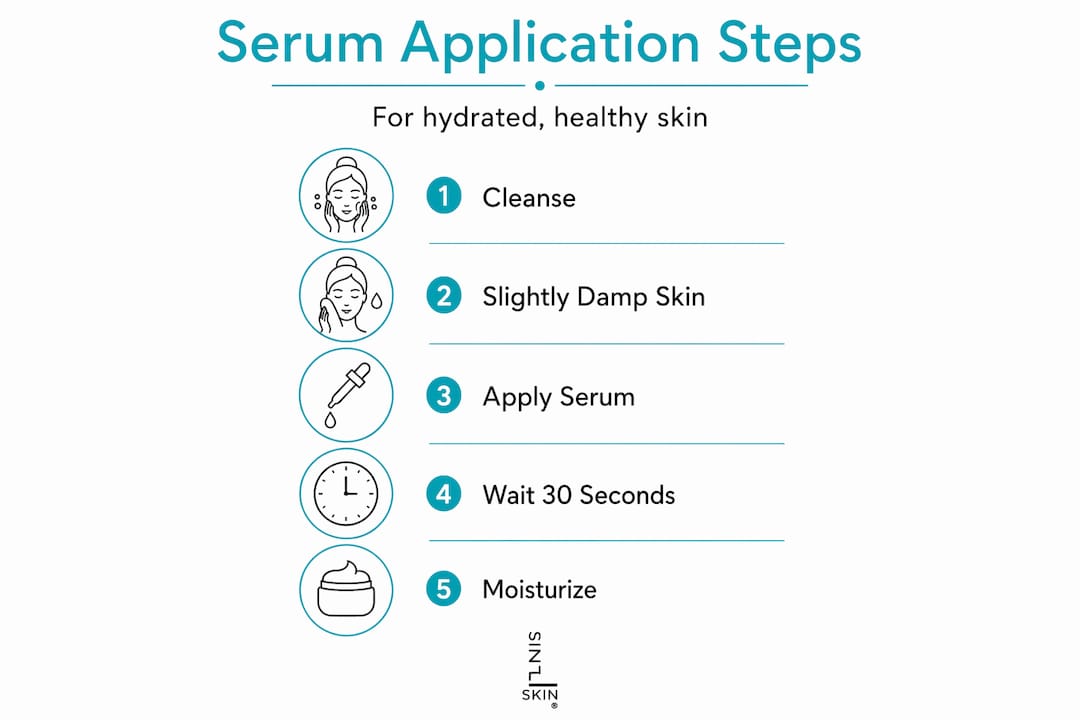
- Cleanse your face thoroughly. Use a gentle cleanser and warm (not hot) water. Pat your face dry with a clean towel, but leave it slightly damp. This is important, especially for hydrating serums.
- Apply toner or essence if you use one. Let it absorb for about 20 to 30 seconds before moving on.
- Dispense 3 to 5 drops of serum. Less is more. A pea-sized amount or a few drops covers your entire face without wasting product.
- Warm the serum in your palms. Gently rub your hands together to distribute the serum evenly, then press your palms lightly onto your face. Start with your cheeks, then forehead, nose, and chin.
- Use gentle pressing and smoothing motions. Technique matters as much as order: pressing and smoothing is recommended, while aggressive rubbing can worsen redness for sensitive skin and increases the chance of irritation or uneven distribution.
- Do not forget your neck and décolletage. These areas show aging and dehydration just as visibly as your face.
- Wait 30 to 60 seconds. Waiting between layers prevents pilling and gives the serum time to begin absorbing before you add your moisturizer.
- Apply moisturizer. Use gentle upward strokes to seal in the serum and complete your hydration routine.
- Apply sunscreen in the morning. This is your final step in an AM routine and protects everything underneath.
Here is a quick comparison of correct versus incorrect technique to make it easy to spot where you might be going wrong:
| Technique | Correct approach | Common mistake |
|---|---|---|
| Skin prep | Slightly damp after cleansing | Bone dry or soaking wet |
| Application | Press and smooth gently | Rubbing vigorously |
| Amount | 3 to 5 drops | Too much product |
| Waiting time | 30 to 60 seconds | Immediately layering moisturizer |
| Order | Serum before moisturizer | Moisturizer before serum |
Pro Tip: If you notice your serum or moisturizer balling up on your skin (pilling), it usually means you applied your next product too soon or used too much. Slow down and let each layer settle properly.
Exploring a serum guide for hydration can help you choose the right formula for your skin type alongside mastering the technique. For broader routine support, simple skincare routine tips are always a good reference point when you want to keep things streamlined and effective.
Different skin types may need slight adjustments. Oily skin benefits from lighter serums applied in minimal amounts. Dry skin types can apply serum to still-damp skin and follow immediately with a richer moisturizer. Combination skin may need targeted application, more serum on dry areas and a lighter touch on the T-zone. Understanding layering techniques can also inspire a more strategic, intentional approach to how you build your routine.
Common mistakes and troubleshooting
Even with best intentions, small mistakes can cut the effectiveness of your serum routine. Here is how to spot and fix them.
The most common errors we see fall into three main categories: wrong order, wrong skin state, and wrong combination of ingredients. Let us break each one down.
Mistakes to watch for:
- Applying serum to completely dry skin. This sounds harmless but can backfire badly, especially with hydrating serums. Hyaluronic acid applied to dry skin without an occlusive seal (moisturizer) can pull moisture from deeper layers of the skin rather than from the air, worsening that dry, tight feeling.
- Skipping moisturizer after serum. Serum is not designed to be a standalone treatment. Without moisturizer to seal it in, the active ingredients evaporate along with your skin’s natural moisture.
- Using too many actives at once. Layering strong actives in the same routine, such as retinol, AHAs, and vitamin C together, can raise your irritation risk significantly. It is not always about forbidden combinations. It is about volume and frequency.
- Not waiting between steps. This leads to pilling, uneven absorption, and a routine that feels frustrating rather than effective.
- Applying too much product. More serum does not mean faster results. It often leads to waste, potential irritation, and a tacky, heavy feeling on the skin.
“The best skincare routine is the one you can stick to consistently. Complexity creates room for error. Simplicity creates room for results.”
Knowing how to approach combining active ingredients is one of the most valuable things you can do for your skin long-term. It saves you from unnecessary sensitivity and helps your skin barrier stay strong and healthy.
Pro Tip: If your skin feels tight, irritated, or excessively oily after serum application, step back and simplify. Start with just one serum and a basic moisturizer. Introduce other actives gradually, one at a time, with at least a week between additions.
Understanding the role of occlusive skincare for hydration is also worth your time. Occlusives create a physical barrier on the skin’s surface that prevents transepidermal water loss (TEWL), which is how your skin loses moisture to the environment. Always finishing with a moisturizer or occlusive after serum is not optional. It is essential.
How to know it’s working: Signs of optimal serum application
Once you have refined your serum routine, watch for these signs to confirm your skin is reaping the rewards. It takes patience. Most serums need consistent daily use for four to eight weeks before you see measurable change. But there are early signs that tell you you are on the right track.
Positive signs your serum is working:
- Improved hydration within the first few days. Skin feels softer, more comfortable, and less tight shortly after you start applying serum correctly. This is especially noticeable with hyaluronic acid or peptide-based serums.
- Smoother texture over two to four weeks. Fine lines look less prominent. Pores appear smaller. Skin feels more even to the touch.
- A visible glow. Not shine, but a healthy luminosity that comes from well-hydrated, nourished skin. This typically appears around the three to four week mark.
- Fewer tight or dry patches. Consistent serum use, followed by moisturizer, gradually reduces the dry areas that used to flare up.
- Better makeup application. Well-hydrated skin holds makeup more evenly. Foundation sits smoother and lasts longer.
Research confirms that results are measurable. Skin hydration and TEWL improvements can be tracked in controlled studies using topical serums, though individual results always depend on formula, skin type, and consistency of use. This is why sticking to a simple, correct routine consistently beats jumping between products every few weeks.
Understanding why skin hydration matters goes beyond aesthetics. A well-hydrated barrier is more resilient, less prone to sensitivity, and better able to defend against environmental stressors. Hydration is the foundation of every other skin goal you have, whether that is anti-aging, brightening, or oil control.
If you want to do more for your skin beyond serum, exploring ways to boost hydration gives you a broader toolkit that complements your serum routine perfectly.
The minimalist’s serum secret: Why less (and better) is more
Here is what years of minimalist skincare and testing have revealed: the more products you layer, the harder it becomes to know what is actually working. When your skin reacts, you cannot tell which product caused it. When your skin improves, you cannot tell which product delivered the result.
We see this pattern constantly. Someone starts with two products, gets great skin, then adds five more because they read about new ingredients. Their skin freaks out. They blame the products, not the approach.
The truth is, mastery comes from doing the basics brilliantly and consistently, not from building a 10-step routine. One good serum, applied correctly on slightly damp skin, pressed in gently, followed immediately by a solid moisturizer, beats a crowded bathroom shelf every single time.
There is also a practical reality worth considering. The more products you use, the more opportunity there is for ingredient interactions that cause irritation, redness, or barrier disruption. Keeping your routine simple is not a compromise. It is a strategy.
Simplifying your skincare does not mean settling for less. It means being intentional about every product you choose and giving each one the space to actually work. A minimalist approach demands more confidence, not less knowledge.
We believe the right serum, used with the right technique, is more powerful than five mediocre products stacked together. Start with one. Learn it. Give it time. Then decide if you need more.
Find your perfect serum routine with SMPL SKIN
Ready to take the next step? Applying serum correctly is only as effective as the products you choose to work with.
At SMPL SKIN, we have built our entire range around this exact philosophy: fewer, better products that work harder for your skin. Our Pro Firm Serum is formulated with targeted, high-performance ingredients designed for visible results without unnecessary complexity. Pair it with our Gentle Cleanser to prep your skin perfectly before every application. Or explore the Cleanser and Moisturizer Duo to get your full routine essentials in one simple bundle. Simple, science-backed, and made to fit into your life without the fuss.
Frequently asked questions
Can I use multiple serums at once?
Yes, but layering strong actives in the same routine can raise your irritation risk, so introduce them gradually and monitor how your skin responds.
Should I apply serum to damp or dry skin?
Slightly damp skin is best for most serums, particularly hydrating ones. Hyaluronic acid on dry skin without a moisturizer seal can actually pull moisture away from the deeper layers, leaving skin feeling tighter.
How long should I wait before applying moisturizer after serum?
Wait about 30 seconds between your serum and moisturizer to allow absorption, prevent pilling, and get the most from each layer.
How do I know if my serum is working?
Look for skin that feels more hydrated, smoother, and less tight within the first few weeks. Measurable hydration improvements are documented in clinical studies, but consistent daily use over four to eight weeks gives you the clearest picture of results.
Recommended
- Why serum goes before moisturizer for hydrated skin – SMPL SKIN South Africa
- Serum guide: boost hydration and skin health simply – SMPL SKIN South Africa
- Why use serums? Skincare boosters that simplify routines – SMPL SKIN South Africa
- 10 simple ways to boost skin hydration for glowing skin – SMPL SKIN South Africa