

TL;DR:
- Dewy skin signifies a healthy, well-hydrated complexion that reflects natural light and looks alive. It differs from oily skin caused by excess sebum and from glass skin, which requires intensive layering and high effort. Achieving a dewy glow relies on simple routines focused on gentle cleansing, hydration, barrier support, and consistent protection.
Somewhere along the way, “glowing skin” got confused with “greasy skin,” and a lot of people quietly gave up on the idea of ever looking radiant without looking oily. We get it. But here’s the truth: shine is not the enemy. In fact, the right kind of shine, the soft, luminous glow you see on people who look healthy and well-rested, is exactly what dewy skin is all about. This article breaks down what dewy skin really means, how it’s different from oily or glass skin, and how to achieve it with a simple, focused routine that actually works.
Table of Contents
- What is dewy skin?
- Dewy skin vs. oily and glass skin: The real differences
- The science of dewy skin: Why hydration and barrier health matter
- How to achieve dewy skin with a minimalist routine
- The real secret behind lasting dewy skin: Simplicity over trends
- Start your dewy skin journey with SMPL SKIN essentials
- Frequently asked questions
Key Takeaways
| Point | Details |
|---|---|
| Dewy skin defined | Dewy skin means a hydrated, radiant glow that comes from healthy moisture and barrier support. |
| Not just shine | Dewy skin is different from oiliness; true dewiness is about light reflection and balanced hydration, not excess sebum. |
| Minimal routines work | Simple, targeted routines with hydration and barrier-boosting ingredients can achieve a dewy look without lots of products. |
| Hydration is key | Consistently using gentle cleansing, humectants, and SPF protects your skin barrier and enhances glow. |
What is dewy skin?
Dewy skin is not just skin that looks wet or shiny. It’s skin that looks alive. Think of early morning light on a plant leaf, soft, reflective, and full of moisture. That’s the visual. In skincare terms, dewy skin refers to a hydrated, naturally luminous complexion where the skin reflects light evenly, giving it a healthy, fresh appearance. It’s not about looking polished or airbrushed. It’s about looking like you, but on your best day.
Understanding skin hydration benefits is key here. When skin is properly hydrated from within and supported by a healthy moisture barrier on the surface, it naturally looks plumper, smoother, and more reflective. That’s the dewy effect. It’s not about adding shine artificially. It’s about giving your skin what it genuinely needs.
Dewy skin is often grouped with other popular trends like glass skin, glazed skin, and mirror skin. These terms get used interchangeably, but they’re not the same thing. As glass skin vs. dewy skin explains, the core distinction is that dewy skin focuses on natural hydration and luminous glow, while glass skin and similar trends aim for a perfectly poreless, ultra-polished finish. Glass skin is more of a high-effort, high-performance aesthetic. Dewy skin is accessible, real, and universally flattering.
Here’s what makes dewy skin stand out:
- It looks natural and effortless rather than heavily made-up or over-treated
- It reflects soft, diffused light rather than sharp, intense shine
- It signals that your skin’s moisture levels and barrier function are in a healthy state
- It works on all skin types, from dry to oily to combination
- It can be achieved through skincare alone, without relying on highlighters or makeup products
“Dewy skin is the visible result of skin that’s genuinely healthy from the inside out. It’s hydration you can see.”
That’s the foundation. Dewy skin is a health signal, not a makeup trick.
Dewy skin vs. oily and glass skin: The real differences
Understanding the definition helps. Now let’s see how dewy skin stacks up against other popular looks and common concerns, because this is where most people get confused.
The most important distinction is between dewy skin and oily skin. They can look similar at a glance, but the cause and the feel are completely different. Oily and dewy are not the same; oily shine is caused by excess sebum, while dewy shine comes from balanced hydration and a healthy skin barrier. Sebum is the oily substance your skin naturally produces. When your sebaceous glands overproduce it, typically due to genetics, hormones, or your skin’s attempt to compensate for dehydration, the result is a heavy, greasy shine that can clog pores and cause breakouts. Dewy skin, by contrast, has nothing to do with excess oil. It’s about water content and barrier integrity.
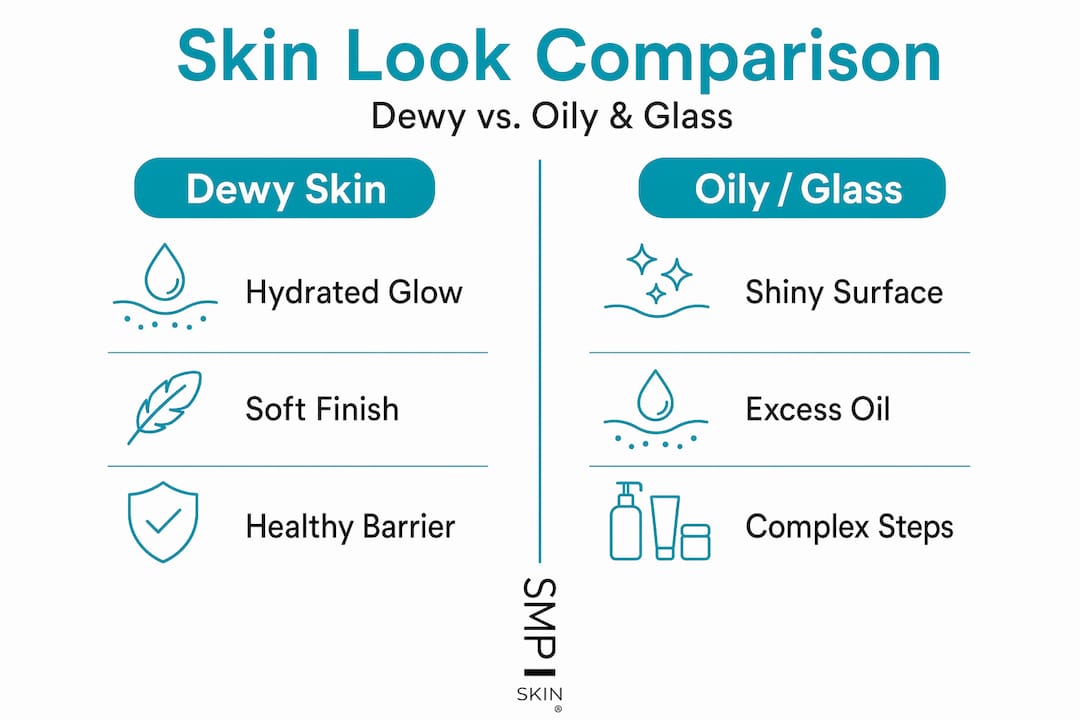
Here’s a quick comparison to make it clear:
| Feature | Oily skin | Dewy skin | Glass skin |
|---|---|---|---|
| Main cause | Excess sebum | Optimal hydration | Intensive skincare layering |
| Appearance | Greasy, heavy shine | Soft, luminous glow | Ultra-smooth, poreless finish |
| Skin feel | Slick, congested | Plump, supple | Tight, polished |
| Goal | Often unwanted | Natural radiance | High-effort aesthetic |
| Achievable with minimal products | No | Yes | Not easily |
| Works for all skin types | No | Yes | Depends on skin type |
Glass skin leans more toward perfection. It requires multiple layers of hydrating toners, essences, serums, and ampoules, often borrowed from Korean skincare culture. The goal is to make skin look like a piece of glass: completely smooth, reflective, and flawless. Glazed skin, made popular recently, is similar but with even more of a “wet” finish, almost like you’ve been dipped in a light gloss.
Dewy skin is none of that. It’s simpler, more achievable, and arguably more genuine. You don’t need a 12-step routine. You need the right ingredients in the right order.
Pro Tip: If you have oily skin and want a dewy look, the trick is to boost skin hydration rather than strip oil away aggressively. Over-cleansing or using harsh products removes too much sebum, which triggers your skin to produce even more. Light hydrating layers tell your skin it doesn’t need to overcompensate.
The science of dewy skin: Why hydration and barrier health matter
Recognising the difference between oil and water leads to the crucial foundation. What’s actually creating that healthy, lit-from-within look?
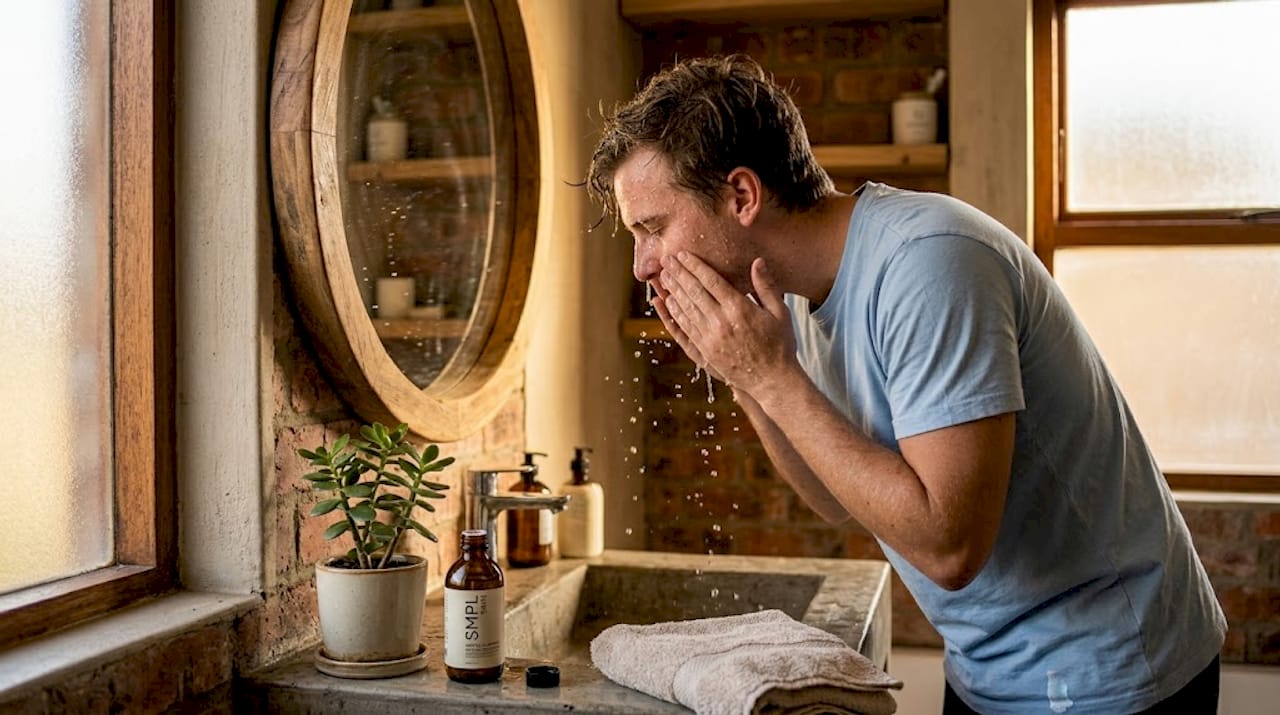
Your skin has a natural protective layer called the moisture barrier, sometimes called the lipid barrier or skin barrier. It’s made up of skin cells bound together by fats (ceramides, fatty acids, and cholesterol). When this barrier is healthy and intact, it does two critical things: it keeps moisture inside the skin, and it keeps irritants and pollution out. When it’s damaged, often from over-exfoliation, harsh cleansers, or environmental stress, water escapes rapidly. The skin looks dull, tight, and flat. That luminous quality disappears.
Here’s something that surprises a lot of people: your skin can be oily and dehydrated at the same time. Sebum (oil) and water are two completely different things. As noted in evidence-backed skincare guidance, skin can look shiny but still be dehydrated, so product choices should focus on replenishing water and supporting the barrier rather than simply adding more oil. This means a serum packed with humectants (ingredients that attract water) does far more for dewy skin than a heavy oil-based moisturiser.
Key factors that affect your skin’s luminosity include:
- Hydration levels: Water content in the skin cells directly impacts how much light reflects off the surface. Well-hydrated skin looks bouncy and glowy.
- Barrier integrity: A damaged barrier leads to water loss, which makes skin look flat and dull, regardless of how much product you apply.
- Humectants: Ingredients like glycerin and hyaluronic acid pull water from the air and deeper skin layers to the surface, plumping the skin visibly.
- Environmental factors: Low humidity, air conditioning, and sun exposure all accelerate water loss from the skin.
- Lifestyle habits: Sleep, water intake, and diet all impact the skin’s hydration from the inside.
Following expert hydration tips consistently is what shifts your skin from looking just “okay” to genuinely radiant. Understanding glow and barrier health together gives you the full picture.
“Hydration is not a luxury in skincare. It is the foundation everything else builds on. Without it, even the most expensive products will underperform.”
How to achieve dewy skin with a minimalist routine
With a scientific approach in mind, it’s time to get practical. Here’s how you can apply this knowledge to your daily routine, without overcomplicating things or spending a fortune.
-
Cleanse gently: Start with a mild, non-stripping cleanser that removes dirt and excess oil without disrupting your moisture barrier. Foamy or gel cleansers that leave your skin feeling tight are working against you. A gentle cleanser maintains your skin’s natural pH and keeps the barrier intact.
-
Apply a hydrating serum: This is your most important step for dewy skin. Look for serums containing hyaluronic acid, glycerin, or similar humectants. These ingredients draw water into the skin and hold it there. Apply to slightly damp skin for maximum absorption, as the evidence supports humectant-based routines for both hydration and barrier support.
-
Follow with a lightweight moisturiser: A moisturiser seals in the hydration your serum delivered. You don’t need a thick, heavy cream. A gel-based or light lotion moisturiser works well for most skin types and won’t feel greasy on the skin.
-
Always use SPF in the morning: Sun damage is one of the leading causes of a dull, uneven complexion. Daily sun protection keeps your skin tone even and prevents the breakdown of collagen that contributes to healthy-looking skin. SPF is non-negotiable if radiant skin is your goal.
-
Support your skin from the inside: Drink enough water throughout the day, aim for 7 to 9 hours of sleep consistently, and eat foods rich in antioxidants and healthy fats. These habits directly affect how your skin looks and feels.
Pro Tip: Layer your products from thinnest to thickest consistency. Applying a heavy moisturiser before your serum blocks absorption and wastes product. Thin to thick is the golden rule for effective layering.
Here’s a quick look at how minimalist and complex routines compare for achieving dewy skin:
| Factor | Minimalist routine | Complex multi-step routine |
|---|---|---|
| Number of products | 3 to 4 | 8 or more |
| Risk of irritation | Low | Higher |
| Cost | Affordable | Often expensive |
| Time required | 5 minutes | 15 to 30 minutes |
| Results for dewy skin | Excellent with right products | Variable, risk of over-treating |
| Barrier disruption risk | Low | Higher with active overload |
Following a morning skincare routine built around hydration gives you a strong foundation. A simple minimalist routine done consistently will almost always outperform a complicated routine done sporadically. For day-to-day guidance, a daily glow routine makes it easy to stay on track.
The real secret behind lasting dewy skin: Simplicity over trends
Here’s our honest take, and we say this from experience watching skincare trends come and go.
The skincare industry is brilliant at making people feel like they need more. More steps, more actives, more technology. Every season brings a new trend promising the secret to glass skin, glazed skin, lit-from-within skin. And what happens? People buy into it, layer product after product, and eventually wonder why their skin looks more irritated than glowing.
The truth we keep coming back to is this: a damaged skin barrier cannot look dewy. Full stop. All the hyaluronic acid and vitamin C in the world won’t give you a radiant complexion if your barrier is compromised. And barriers get compromised most often not from neglect, but from doing too much.
Trend-hopping introduces new actives constantly. Your skin never settles. It never builds the resilience it needs to glow consistently. The people with genuinely beautiful skin over the long term are almost always the ones with the simplest, most consistent routines. They cleanse, they hydrate, they protect, and they repeat. They follow an expert-backed routine rather than chasing the latest social media obsession.
We believe simplicity is not a compromise. It’s a strategy. When you strip your routine back to what actually matters, hydration and barrier support, your skin finally gets the consistency it needs to thrive. Dewy skin is not a trend. It’s what healthy skin looks like, and healthy skin comes from sustained, simple care.
Start your dewy skin journey with SMPL SKIN essentials
If you’re ready to streamline your products for a real glow, these essentials make it effortless.
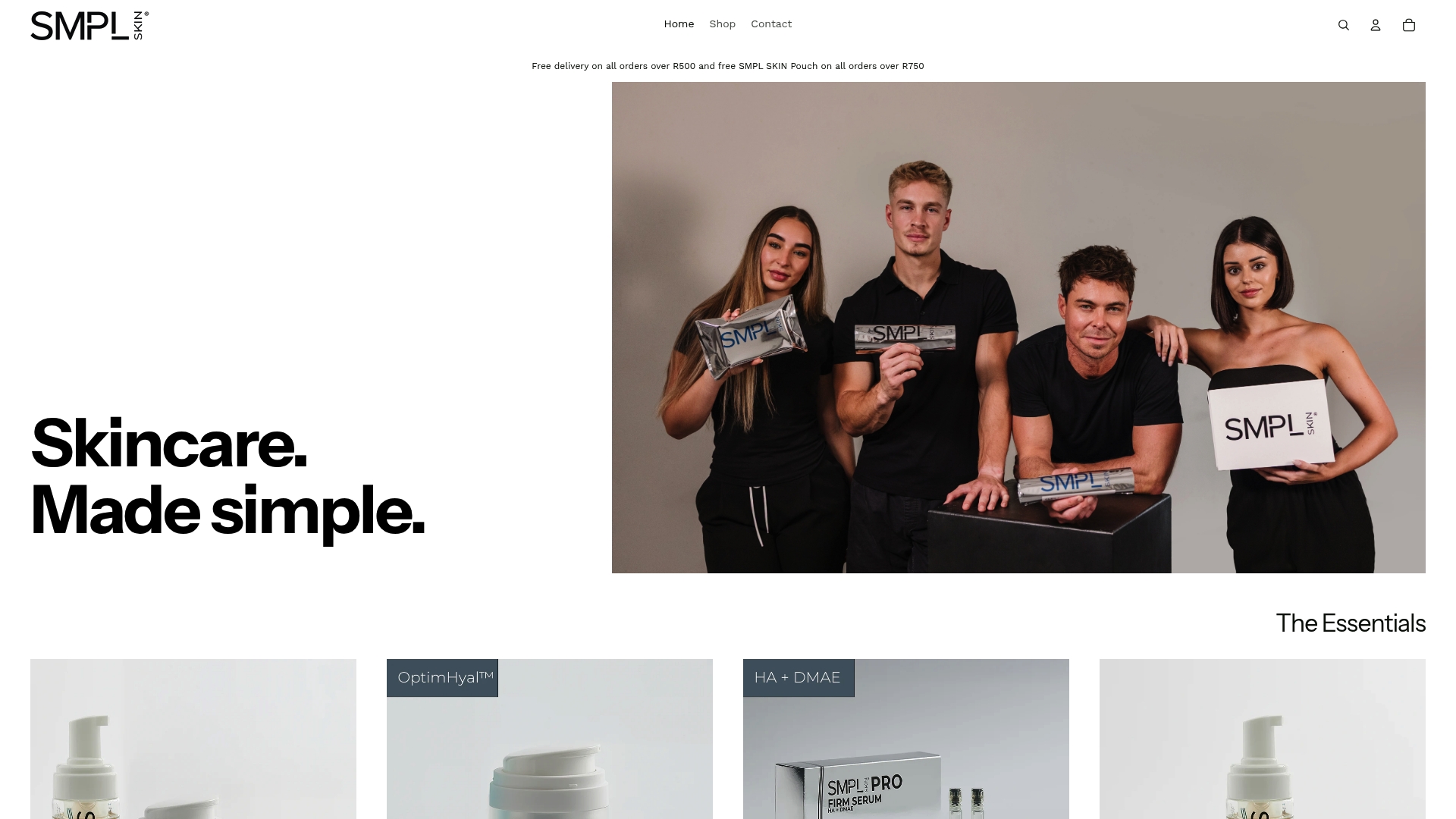
We’ve built our range around exactly what your skin needs for that healthy, dewy look: gentle cleansing, targeted hydration, and reliable daily protection. The Gentle Cleanser & SPF 15 Moisturiser Duo gives you a complete two-step morning foundation without overcomplicating your shelf. Pair it with the SPF 15 Daily Moisturiser for lightweight, daily hydration and sun protection in one step. For an extra boost of luminosity, the PRO Firm Serum delivers targeted actives that support skin firmness and that lit-from-within glow. Simple ingredients, real results, no unnecessary complexity.
Frequently asked questions
Is dewy skin suitable for all skin types?
Yes, anyone can achieve a dewy look by focusing on hydration and barrier support. As noted, people with oily skin may still achieve a dewy look when oil production is balanced and hydration is adequate.
Can I get dewy skin without using many products?
Absolutely. A minimalist routine using the right hydrating and barrier-supporting ingredients can deliver a dewy look without product overload. Humectants and barrier support are the core of any effective minimal approach.
Is shiny skin always dewy skin?
No. Oily shine comes from excess sebum, while dewy skin reflects balanced hydration and a naturally luminous appearance. The two can look similar, but the cause and skin feel are very different.
What ingredient helps skin look dewy?
Humectants like glycerin and hyaluronic acid attract water to the skin and help create a visible dewy glow. Evidence-backed skincare guidance consistently recommends hydration-focused ingredients for achieving and maintaining luminous skin.
Recommended
- 10 simple ways to boost skin hydration for glowing skin – SMPL SKIN South Africa
- Achieve glowing skin with a simple minimalist routine – SMPL SKIN South Africa
- Step-by-step facial cleansing for healthy, glowing skin – SMPL SKIN South Africa
- Why skin hydration matters: glow and barrier health – SMPL SKIN South Africa