

TL;DR:
- Effective skincare involves a simple, consistent routine of cleansing, moisturizing, and sunscreen protection. Using too many products or layering incorrectly can cause irritation and reduce effectiveness, while targeted ingredients like retinoids and vitamin C address common skin concerns. Building a routine tailored to your skin type and maintaining consistency over time yields better results than overcomplicating your regimen.
Effective skincare is defined as a consistent, three-step routine built around cleansing, moisturising, and protecting your skin with sunscreen. Northwestern Medicine confirms that sticking to these three core steps is all most people need for healthy skin. The idea that you need a shelf full of serums and treatments is one of the most persistent myths in skincare. What actually works is simpler than the beauty industry wants you to believe, and we are here to show you exactly what that looks like in practice.
What is effective skincare and why does simplicity win?
Effective skincare means giving your skin what it genuinely needs: a clean surface, a protected barrier, and defence against UV damage. Nothing more, nothing less. Dermatologists at the Cleveland Clinic, Harvard Health, and Northwestern Medicine all point to the same foundation. The science does not support complicated ten-step routines for most people.
Over-layering products is not just unnecessary. It actively causes harm. Too many products irritate skin and worsen the very conditions people are trying to treat. This means the average person chasing clear skin with a cabinet full of actives may be making things worse, not better. Simplicity is not a compromise. It is the strategy.
A practical skincare regimen works because it is consistent. Skin responds to routine, not novelty. The best skincare practices are the ones you actually do every day, with products that suit your skin type and do not fight each other.
What are the essential steps of an effective skincare routine?
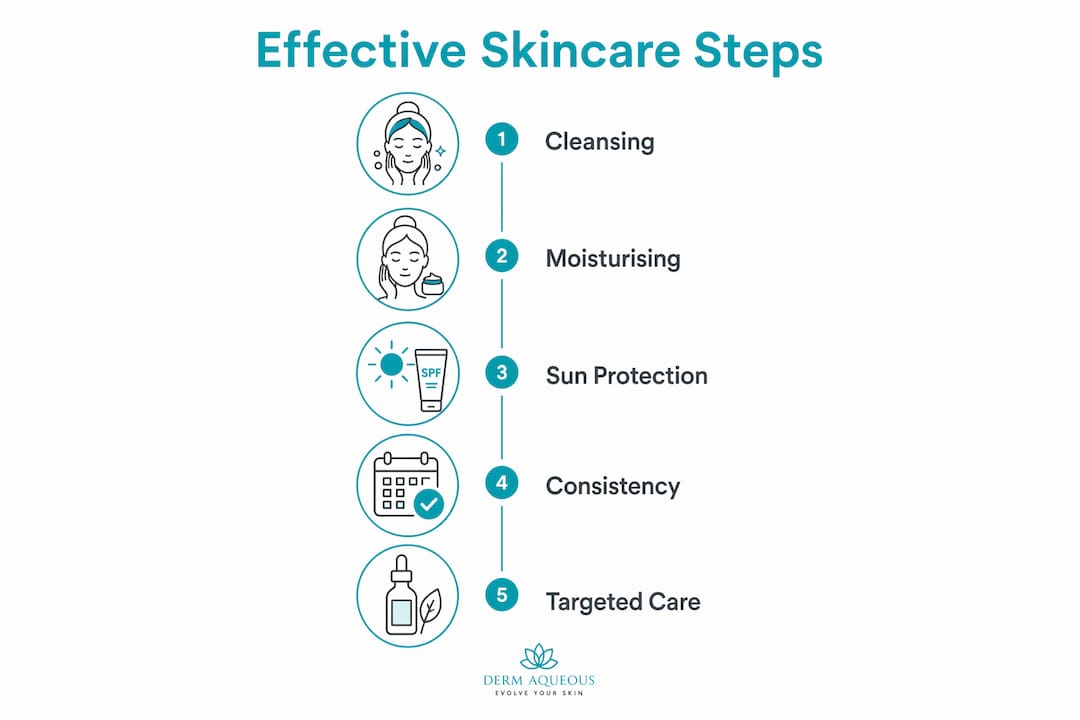
The three pillars of any effective routine are cleansing, moisturising, and sun protection. Each one has a specific job, and skipping any of them creates a gap that no serum can fill.
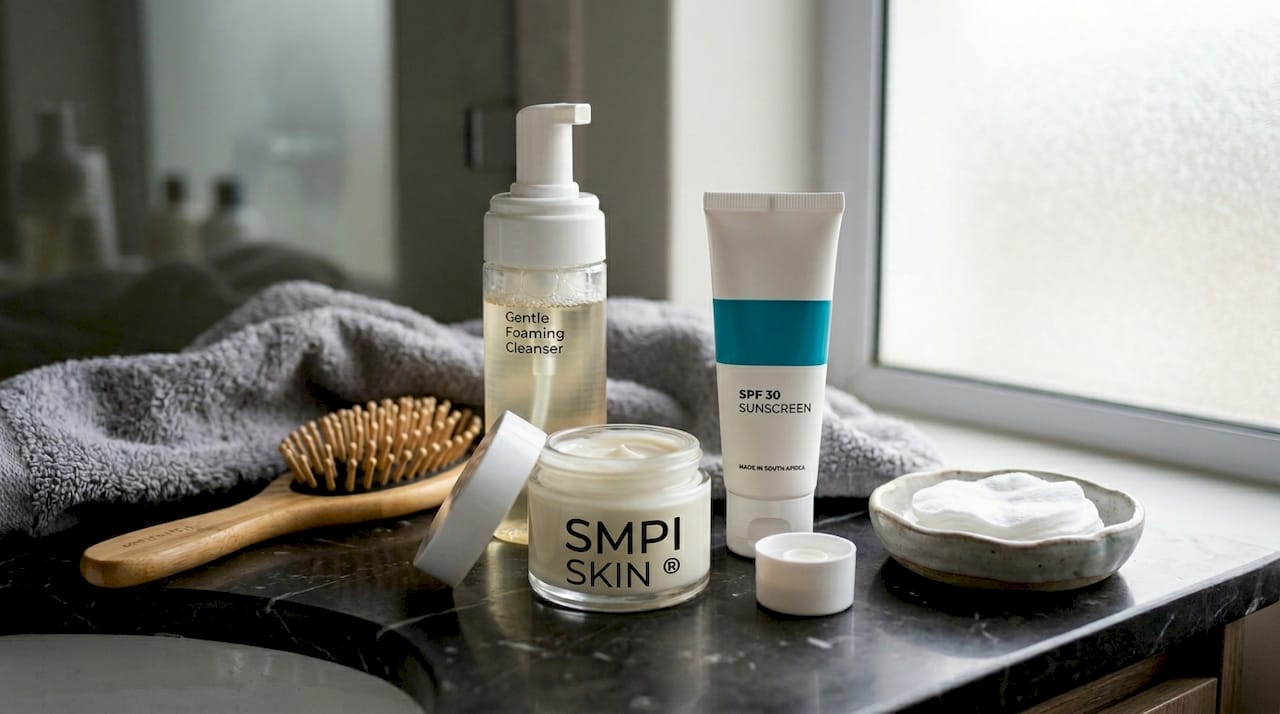
Cleansing: the foundation of healthy skin
Cleansing removes dirt, oil, pollution, and dead skin cells that accumulate throughout the day. Choose a gentle, pH-balanced cleanser that does not strip your skin’s natural oils. Harsh soaps disrupt the skin barrier and trigger excess oil production, which is the opposite of what you want. For most skin types, cleansing once in the morning and once at night is enough.
Moisturising: protecting your skin barrier
Moisturiser keeps your skin barrier intact and prevents water loss. A healthy barrier means skin that looks plump, feels comfortable, and resists irritation. Even oily skin needs moisture. Skipping moisturiser because your skin feels oily leads to dehydration, which often triggers even more oil production. Look for ingredients like hyaluronic acid, ceramides, or glycerin for reliable hydration.
Sun protection: the non-negotiable step
Daily broad-spectrum sunscreen with at least SPF 30 is the single most impactful step you can take for long-term skin health. UV exposure breaks down collagen and elastin, causes pigmentation, and is the leading cause of premature ageing. The Cleveland Clinic recommends applying sunscreen as the final step in your morning routine, after moisturiser. Mineral sunscreens containing zinc oxide or titanium dioxide are recommended by 96.8% of dermatologists for UV protection and reducing redness. That level of professional consensus is rare and worth paying attention to.
Pro Tip: Apply your morning products from lightest to heaviest texture: cleanser, then any lightweight serum, then moisturiser, then sunscreen. This order maximises absorption and prevents pilling.
- Cleanser: removes impurities without stripping natural oils
- Moisturiser: seals in hydration and supports the skin barrier
- Sunscreen (SPF 30+): blocks UV rays and prevents premature ageing
- Evening routine: swap sunscreen for a nourishing night moisturiser or targeted treatment
Which ingredients are proven effective for common skin concerns?
Evidence-backed ingredients are what separate a routine that works from one that just feels luxurious. Knowing which ingredients to reach for, and why, takes the guesswork out of choosing skincare products.
Retinoids are the most evidence-backed active ingredient for both anti-ageing and acne treatment. Dr. Danny Guo states that if you could use only one serum, it should be a retinoid. Retinoids increase cell turnover, stimulate collagen production, and clear blocked pores. They do require patience and a gradual introduction to avoid irritation, but the long-term results are well documented.
A 2025 review published by Springer found that patients are four times more likely to stick to retinoid routines when the product’s role and realistic expectations are clearly explained upfront. This means starting with a low concentration two or three nights a week, then building up slowly, makes a real difference to whether the ingredient actually works for you.
| Ingredient | Primary benefit | Best for |
|---|---|---|
| Retinoids | Anti-ageing, acne treatment | Ageing skin, acne-prone skin |
| Vitamin C | Antioxidant, brightening | Dull skin, hyperpigmentation |
| Hyaluronic acid | Deep hydration | Dry, dehydrated skin |
| Ceramides | Barrier repair | Sensitive, compromised skin |
| Zinc oxide | UV protection, calming | All skin types, especially sensitive |
Vitamin C is a powerful antioxidant that neutralises free radical damage from pollution and sun exposure. It also brightens uneven skin tone and supports collagen synthesis. Use it in the morning under sunscreen for maximum benefit. Hyaluronic acid and ceramides work best as hydration and barrier support, not as actives. They are the workhorses of any solid moisturiser.
Pro Tip: Do not mix retinoids with vitamin C in the same routine. Use vitamin C in the morning and retinoids at night to avoid irritation and get the best results from both.
Harvard Health recommends daily broad-spectrum sunscreen alongside gentle chemical exfoliation once or twice a week for ageing skin. Chemical exfoliants like AHAs (glycolic acid, lactic acid) remove dead skin cells without the micro-tears caused by physical scrubs, leaving skin smoother and more receptive to other products.
How do you avoid common skincare mistakes that reduce effectiveness?
Most skincare routines fail not because of the wrong products, but because of how those products are used. The most common mistakes are easy to fix once you know what to look for.
- Using too many products at once. Introducing multiple new products simultaneously makes it impossible to know what is working and what is causing a reaction. Add one new product at a time and wait at least two weeks before adding another.
- Applying products in the wrong order. Layering from lightest to heaviest is not just a preference. It determines how well each product absorbs. Applying a thick moisturiser before a water-based serum blocks the serum from reaching your skin entirely.
- Mistaking irritation for results. Skin irritation signals barrier disruption, not treatment effectiveness. Redness, stinging, and peeling are signs to scale back, not push through. Barrier disruption from incompatible products is one of the most common causes of chronic skin sensitivity.
- Over-exfoliating. Harvard Health warns that exfoliating more than twice a week can leave skin raw and compromised. Physical scrubs with large, irregular particles cause micro-tears in the skin surface. Gentle chemical exfoliants used as directed are a far safer choice.
- Skipping sunscreen on cloudy days or indoors. UV rays penetrate clouds and glass. Daily sunscreen use is not optional if long-term skin health is the goal.
Pro Tip: Always patch test a new product on the inside of your wrist or behind your ear for 24 hours before applying it to your face. This one step saves a lot of unnecessary breakouts and reactions.
How to build a simple, personalised skincare routine for your skin type
A personalised routine does not mean a complicated one. It means choosing the right version of the three core steps for your specific skin. Knowing your skin type is the starting point for every good decision you make about products.
Start with the basics and only add targeted treatments once your skin is stable and comfortable with the foundation routine. Chasing results before your barrier is healthy is like trying to paint a wall that is still wet.
- Dry skin: Use a cream-based cleanser, a rich moisturiser with ceramides or shea butter, and a hydrating SPF. Add hyaluronic acid serum if needed.
- Oily skin: Use a gel or foam cleanser, a lightweight oil-free moisturiser, and a non-comedogenic SPF. Niacinamide helps regulate sebum production.
- Sensitive skin: Use a fragrance-free gentle cleanser, a simple barrier-repair moisturiser with ceramides, and a mineral SPF with zinc oxide. Avoid actives until your barrier is strong.
- Ageing skin: Follow the core three steps, then add a retinoid at night and vitamin C in the morning. Chemical exfoliation once or twice a week improves texture and tone.
For a morning routine focused on hydration, the goal is to prep and protect. For your evening routine, the goal is to repair and restore. Night-time is when your skin regenerates most actively, making it the best time for retinoids and richer moisturisers. You can explore a full everyday skincare essentials list to build your routine without overcomplicating it.
Consistency matters more than perfection. A simple routine done every day outperforms an elaborate one done occasionally. Skin takes four to six weeks to show meaningful change, so give any new routine time before judging whether it works.
Key takeaways
Effective skincare requires three consistent steps: cleansing, moisturising, and daily SPF 30+ sunscreen, with targeted ingredients added only as needed.
| Point | Details |
|---|---|
| Three core steps | Cleanse, moisturise, and apply SPF 30+ sunscreen every morning without exception. |
| Proven active ingredients | Retinoids, vitamin C, hyaluronic acid, and ceramides address most common skin concerns. |
| Avoid over-layering | Too many products at once causes irritation and makes it impossible to identify what works. |
| Product order matters | Apply lightest to heaviest to maximise absorption and protect the skin barrier. |
| Consistency beats complexity | A simple routine done daily delivers better results than an elaborate one done occasionally. |
Why I think most people are overcomplicating their skin
I have seen this pattern more times than I can count. Someone starts with a cleanser and a moisturiser, their skin improves, and then they start adding products because they think more must mean better. Within a month, their skin is reactive, congested, or breaking out, and they blame the original routine.
Healthy skin generally needs less intervention, not more. The skin barrier is remarkably good at regulating itself when you stop disrupting it. The most dramatic improvements I have seen come from people who stripped their routines back to three products and stayed consistent for eight weeks. Not from people who added the latest serum.
Reassess your routine every season. Your skin’s needs change with humidity, temperature, and age. What worked in winter may be too heavy in summer. The goal is not a perfect routine. It is a routine that works for your skin right now, done consistently.
— Werner
Simple skincare that actually works, from Smplskin
At Smplskin, we built our entire range around the principle that your skin does not need complexity. It needs the right ingredients, in the right formulations, used consistently. Our products cover every step of an effective routine: gentle cleansers that respect your barrier, hydrating serums with German Chamomile and Cucumber Extract, and moisturisers designed for daily use without heaviness or irritation. The SMPL SKIN PRO line takes it further for those who want targeted, high-performance results at home. Browse our full skincare range and find a routine that fits your skin and your life, without the overwhelm.
FAQ
What does effective skincare mean?
Effective skincare means a consistent routine of cleansing, moisturising, and applying broad-spectrum sunscreen daily. These three steps, backed by dermatologists at Northwestern Medicine and the Cleveland Clinic, address the core needs of most skin types.
How many products do I actually need in my skincare routine?
Three products cover the foundation: a gentle cleanser, a moisturiser, and an SPF 30+ sunscreen. Targeted treatments like retinoids or vitamin C can be added once your skin is stable, one product at a time.
What is the correct order to apply skincare products?
Apply products from lightest to heaviest texture: cleanser first, then any water-based serum, then moisturiser, then sunscreen as the final morning step. The Cleveland Clinic confirms this order maximises absorption and reduces irritation risk.
Which skincare ingredient is most backed by evidence?
Retinoids are the most evidence-backed active ingredient for both anti-ageing and acne treatment. Dr. Danny Guo notes that if you could use only one serum, a retinoid would deliver the most long-term benefit.
How long does it take to see results from a new skincare routine?
Most skin changes take four to six weeks to become visible. Retinoids in particular require a gradual introduction over several weeks before the full benefit appears, as confirmed by a 2025 Springer review on topical retinoid adherence.
Recommended
- Sustainable skincare: A simple guide to eco-friendly routines – SMPL SKIN South Africa
- Everyday skincare essentials list for simple, healthy routines – SMPL SKIN South Africa
- How to choose skincare products for a simple routine – SMPL SKIN South Africa
- How to achieve healthy skin with a simple routine – SMPL SKIN South Africa