

TL;DR:
- Healthy skin is characterized by texture, hydration, resilience, and comfort, not just appearance.
- Regular self-checks can help identify signs of balanced, functioning skin.
- Consistent routines focused on hydration, protection, and barrier support promote real skin health.
Most people assume clear skin equals healthy skin. That’s one of the most common misconceptions we come across. Healthy skin is far more layered than that. It’s about texture, hydration, resilience, and comfort, not just the absence of pimples. Studies show that smooth texture, even tone, hydration, and resilience are the true benchmarks. If you’ve ever stood in front of the mirror wondering whether your skin is actually doing well, this checklist is for you. We’ve pulled together the key signs, backed by dermatologists and research, so you can assess your skin with confidence.
Table of Contents
- What truly makes skin ‘healthy’: Key criteria to know
- Smooth texture and even tone: The outer evidence
- Signs of deep hydration and elasticity
- Radiance, comfort, and consistent response
- Healthy vs. unhealthy skin: Side-by-side checklist
- Our perspective: Why perfection isn’t the goal—and what really counts
- Discover skincare that supports real skin health
- Frequently asked questions
Key Takeaways
| Point | Details |
|---|---|
| Multiple hallmarks matter | Healthy skin is smooth, even-toned, hydrated, elastic, and comfortable, not just clear or glowing. |
| Hydration and elasticity are key | Plump, resilient skin is a sign of good hydration and youthful mechanics at any age. |
| Unhealthy signs are action triggers | Persistent dryness, redness, or roughness are signs to adjust your routine or seek advice. |
| Perfection isn’t the goal | Realistic, functional skin health is unique to your age, genetics, and habits—not flawlessness. |
What truly makes skin ‘healthy’: Key criteria to know
Healthy skin isn’t a single look. It’s a collection of characteristics that work together. Think of it less like a beauty standard and more like a report card for your skin’s function.
At its core, healthy skin means your barrier is intact, your cells are turning over properly, and your skin is neither overproducing oil nor stripping itself dry. It’s balanced.
Here are the core signs dermatologists look for:
- Smooth texture with minimal bumps or rough patches
- Even skin tone without concentrated redness or blotchiness
- Good hydration that keeps skin plump and supple
- Elasticity so skin bounces back after movement
- Natural radiance that isn’t oily shine
- Absence of persistent breakouts or irritation
- Intact barrier function with no sensitivity or reactivity
Age matters here too. A 50-year-old’s healthy skin will look different from a 25-year-old’s. Fine lines don’t automatically signal unhealthy skin. Research confirms that healthy skin minimizes diverse ageing phenotypes beyond just wrinkles. Plumpness, minimal blotchiness, and no new moles after 30 are also useful benchmarks.
“Healthy skin is not about perfection. It’s about function, comfort, and visible vitality.”
Building a simple healthy skin routine around these criteria is the most practical way to maintain what you’ve got and improve what needs work. Now that you know why these signs matter, let’s look at each major hallmark of healthy skin and how to spot them.
Smooth texture and even tone: The outer evidence
Your skin’s surface tells a story. When you run your fingers across your cheek or forehead, what do you feel? Healthy skin feels consistently smooth and soft, with minimal bumps or rough patches.
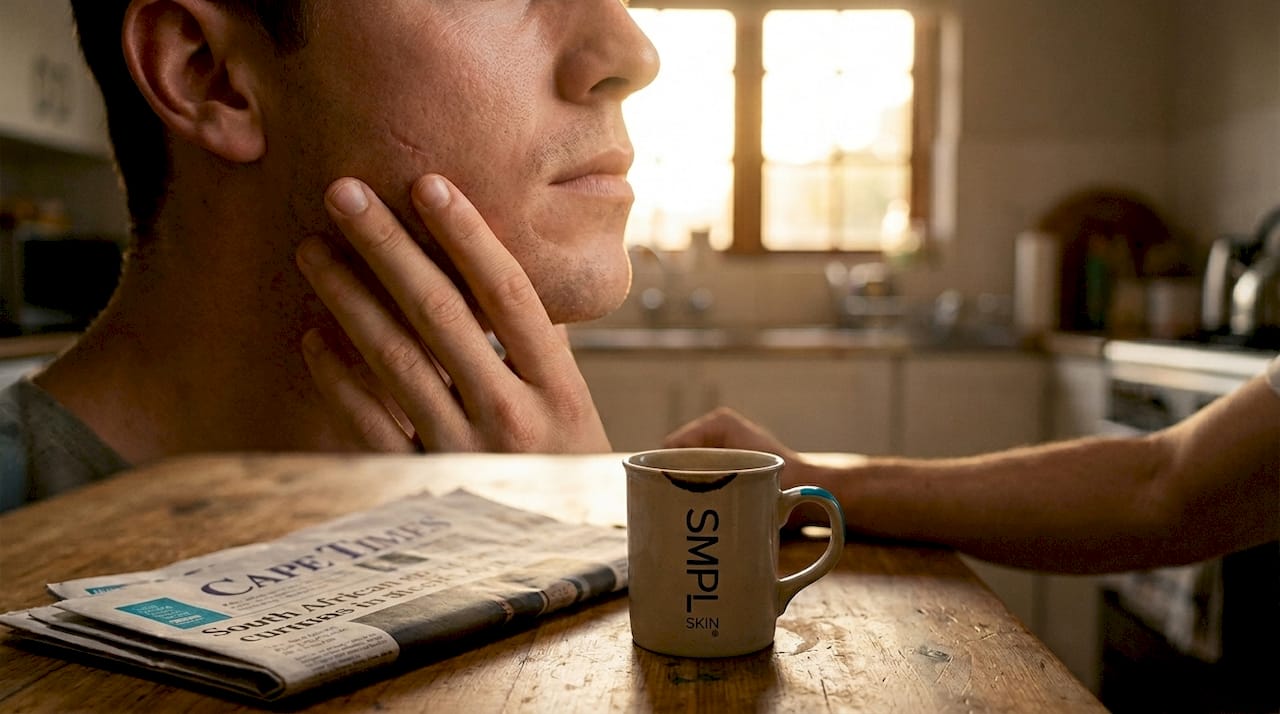
Pro Tip: Lightly glide one finger across your cheek in natural light. If it feels mostly uniform without catching on dry spots or raised bumps, your texture is in good shape.
Knowing your skin type helps you understand what ‘normal’ texture looks like for you specifically. Oily skin may feel slightly different from dry skin, but both can be healthy if they’re balanced.
Here’s what to look for in healthy texture and tone:
- Skin feels supple and consistent across different zones of your face
- Pores appear minimal and not congested or enlarged
- Tone is relatively even without concentrated patches of redness or discolouration
- No persistent blotchiness or flushing that doesn’t resolve quickly
Surface changes like roughness, persistent redness, or uneven patches can signal dehydration, sensitivity, or a compromised barrier. Healthy skin feels smooth with minimal visible pores and blotchiness. That’s a useful standard to hold yourself to.
If your texture feels rough or your tone looks patchy, it’s worth reviewing your routine. Sometimes a gentle skin detox can reset your skin’s surface and restore balance faster than you’d expect. Once you can identify texture and tone, the next sign to check is how hydrated and plump your skin feels.
Signs of deep hydration and elasticity
Hydration is one of the most visible signs of skin health, and also one of the easiest to test at home.
The bounce test is simple. Gently pinch a small section of skin on your cheek and release it. Healthy, well-hydrated skin springs back almost immediately. If it wrinkles, takes a moment to return, or feels tight, your skin is likely dehydrated.
Pro Tip: Do the bounce test in the morning before applying any products. That’s when your skin’s natural hydration state is most accurate.
Elasticity and hydration go hand in hand. Plump, resilient skin with a healthy bounce is a reliable marker of good hydration. Elasticity means your skin feels firm without being tight, and supple without being greasy.
| Sign | Hydrated skin | Dehydrated skin |
|---|---|---|
| Texture | Smooth, soft | Rough, flaky |
| Bounce test | Springs back quickly | Slow to return |
| Appearance | Plump, even | Dull, sunken |
| Feel | Comfortable | Tight, itchy |
Lifestyle plays a huge role here. Hydration and elasticity are directly influenced by how much water you drink, your sleep quality, sun exposure, and diet. A few simple habits go a long way.
To support healthy hydration levels, focus on:
- Drinking at least 1.5 to 2 litres of water daily
- Using a moisturiser suited to your skin type every morning and evening
- Applying SPF to prevent moisture loss from UV damage
- Prioritising 7 to 8 hours of sleep per night
For a deeper look at why this matters, our guide on the importance of skin hydration breaks it down clearly. You can also explore boosting skin hydration with simple, practical steps. Hydration and bounce are tell-tale signs, but healthy skin also glows naturally, not because of oil or makeup.
Radiance, comfort, and consistent response
Glow is often misunderstood. Many people confuse an oily sheen with radiance. Real glow is different. It’s the way light reflects evenly off well-hydrated, smooth skin. It’s subtle. It looks like health, not a highlight product.
Healthy skin has a natural glow, is free from irritation, and responds well to products. That last part matters more than most people realise.
Here’s how to identify genuine radiance and skin comfort:
- Skin looks luminous in natural light without being greasy
- No itching, stinging, or tightness throughout the day
- Your routine feels comfortable and doesn’t cause reactions
- Skin stays balanced without frequent flare-ups between product uses
“Comfort is a sign of balance. When your skin isn’t fighting anything, it can focus on looking its best.”
If your skin regularly reacts with redness, flaking, or persistent breakouts, that’s a signal worth paying attention to. Unhealthy skin often reacts with redness, flaking, or persistent breakouts, which means your barrier or routine needs adjusting.
Exploring postbiotic skincare benefits is one way to support a calmer, more balanced skin response. Pairing that with a consistent daily glow routine makes a real difference over time. Now that you recognise the signs, it helps to see them all side-by-side for an easy at-home self-check.
Healthy vs. unhealthy skin: Side-by-side checklist
Sometimes you just need a quick reference. Use this table and checklist to assess where your skin stands right now.
| Feature | Healthy skin | Unhealthy skin |
|---|---|---|
| Texture | Smooth, soft | Rough, bumpy |
| Tone | Even, consistent | Blotchy, uneven |
| Hydration | Plump, bouncy | Tight, flaky |
| Radiance | Natural glow | Dull, grey |
| Comfort | No irritation | Itchy, stinging |
| Breakouts | Occasional, mild | Persistent, worsening |
| Barrier | Resilient | Reactive, sensitive |
Unhealthy skin exhibits dryness, roughness, irritation, and dullness. These aren’t just cosmetic concerns. They point to deeper imbalances in your skin’s function. And research confirms that healthy skin minimizes diverse phenotypes beyond just lack of wrinkles.
If you spot more unhealthy signs than healthy ones, here’s what to do:
- Simplify your routine and remove anything that causes irritation
- Add a gentle hydrating step morning and evening
- Check your SPF habits and apply daily, even on cloudy days
- Give your skin time to respond before switching products again
Understanding your skin barrier is a great starting point if you’re seeing persistent sensitivity or reactivity. So, what’s the real-world takeaway from comparing these characteristics? Here’s our perspective.
Our perspective: Why perfection isn’t the goal—and what really counts
We’ll be honest with you. The skincare industry loves selling perfection. Flawless skin. Zero pores. No lines. But that’s not what healthy skin actually looks like for most people, and chasing that standard often does more harm than good.
Healthy skin adapts. It changes with your age, your season, your stress levels, and your lifestyle. As Cleveland Clinic notes, healthy mature skin may show reduced elasticity but still lacks dryness, itching, or persistent irritation. That’s a meaningful distinction.
What we’ve found, working with real people on real routines, is that the smartest approach is to focus on the core signs: hydration, comfort, texture, and tone. Not trends. Not miracle ingredients. Just the basics, done consistently.
For a deeper explanation of skin health and why the fundamentals always win, we think that’s the most empowering place to start. Your skin doesn’t need to be perfect. It just needs to be healthy.
Discover skincare that supports real skin health
Now that you know what to look for, the next step is finding products that actually support those signs. At SMPL SKIN, we build our range around the fundamentals: hydration, protection, and a calm, balanced barrier.
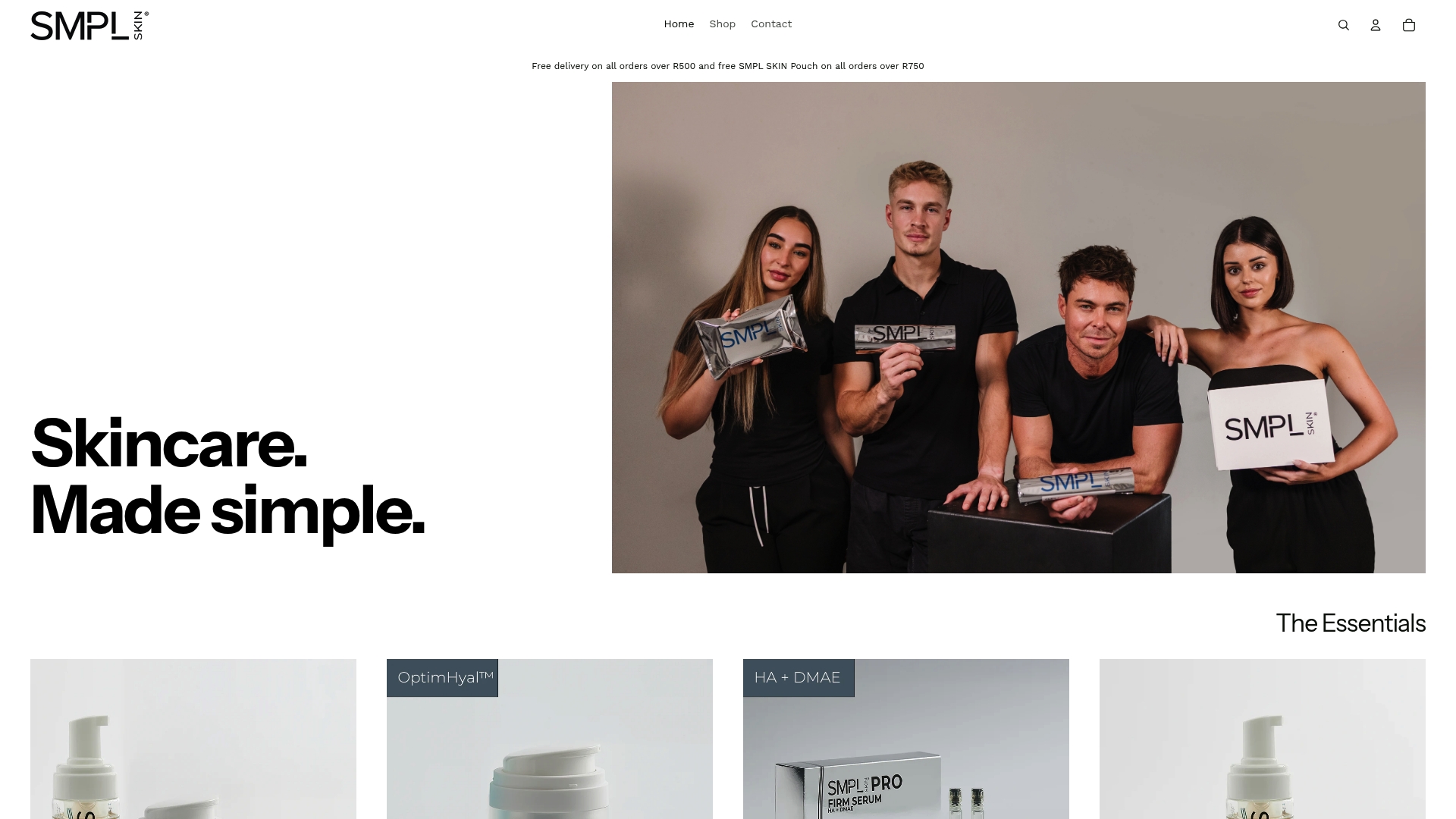
If your self-check flagged dryness or sensitivity, our SMPL SKIN Gentle Cleanser is a great starting point. It cleans without stripping. Pair it with our SPF 15 Daily Moisturiser to lock in hydration and protect your barrier daily. Or grab the Gentle Cleanser & SPF 15 Moisturiser Duo and simplify your whole morning routine in one step. Simple. Effective. Built for real skin.
Frequently asked questions
What is the simplest way to check if my skin is healthy?
Gently feel your skin. Healthy skin is smooth, hydrated, and even-toned without tightness or discomfort. If it feels balanced and looks consistent, you’re on the right track.
How does healthy skin look different as I age?
Healthy mature skin may have fine lines but remains comfortable and free from excessive dryness or irritation. As Cleveland Clinic confirms, reduced elasticity in older skin isn’t automatically a sign of poor health.
Are occasional breakouts or dryness normal in healthy skin?
Yes, occasional mild breakouts or brief dry patches are normal. The concern only arises when issues are persistent or worsening over time.
Which lifestyle habits help maintain all signs of healthy skin?
Staying hydrated, eating a balanced diet, using SPF daily, and getting enough sleep are the most impactful habits. Dermatologists consistently emphasise these four as the foundation of long-term skin health.
Recommended
- Skin health explained: simple science for better results – SMPL SKIN South Africa
- How to achieve healthy skin with a simple routine – SMPL SKIN South Africa
- Detoxify your skin at home: simple routines for results – SMPL SKIN South Africa
- 10 simple ways to boost skin hydration for glowing skin – SMPL SKIN South Africa